
You want a dog that will cuddle on the couch with your kids and make you feel safer at night. But when you start searching “best guard dog breeds,“ it’s easy to worry you’ll end up with a dog that’s too intense or hard to handle.
The good news: many classic guard dog breeds are also deeply affectionate, people‑oriented family pets when you choose carefully, train well, and meet their needs. In this guide, you’ll learn how to tell if a guard breed fits your home, which breeds are famously protective and loving, and how to raise a calm, reliable family guardian.
How To Tell If A Guard Dog Breed Fits Your Family
Before you fall in love with a cute puppy photo, it’s worth asking: Does this type of dog actually fit your lifestyle? Not every protective breed is right for every family.
Traits That Make A Good Family Guard Dog
A great family guard dog is more than just “tough.“ You’re looking for a balance of protectiveness and stability.
Key traits to look for include:
- Loyalty to their family – They bond closely and want to stay near you.
- High trainability – They’re eager to learn and respond well to structure.
- Stable temperament – They can handle noise, kids, and surprises without overreacting.
- Alert but not frantic – They notice what’s going on but don’t bark non‑stop.
- Gentleness with children – With proper supervision and training on both sides.
Many German Shepherds, Boxers, Rottweilers, Dobermans, Bullmastiffs, Giant Schnauzers, and Belgian Malinois score high in these areas when they come from good lines and are well socialized.
Common Myths About Guard Dogs And Aggression
Guard dog breeds often get an unfair reputation. You’ve probably heard things like:
- “Rottweilers are naturally vicious.”
- “Dobermans will turn on their owners.”
- “Guard dogs can’t be trusted around kids.”
These are myths, not facts.
Major veterinary and behavior groups, including the American Veterinary Medical Association (AVMA), point out that environment, training, and socialization are usually far more important than breed alone when it comes to aggression.
In reality:
- Well‑bred, well‑raised guard breeds are often calm and affectionate at home.
- Poor breeding, lack of training, and harsh handling can make any dog unstable.
- Socialized guard dogs can learn to welcome friends while still being wary of real threats.
Your goal isn’t to “make” your dog aggressive. It’s to channel their natural protectiveness into confident, controlled behavior.
Lifestyle And Home Factors To Consider
Ask yourself a few honest questions before choosing a guard breed:
- Activity level: Are you active enough for a high‑energy dog like a Belgian Malinois or Giant Schnauzer? Or would you do better with a calmer guardian like a Bullmastiff?
- Space: Do you have room for a large dog to move comfortably? A secure, fenced yard is ideal for most protective breeds.
- Time for training: Guard breeds are usually smart working dogs. They need daily training and mental challenges, not just quick walks.
- Kids and visitors: Is your home busy, with children’s friends coming and going? You’ll need a dog that can learn clear rules for greeting guests.
If you’re short on time or live in a very small apartment, a high‑drive working breed may not be the best match. In that case, a calmer breed, a smaller watchdog, or even a well‑matched adult rescue can be a better fit.
Best Guard Dog Breeds That Are Also Affectionate Companions
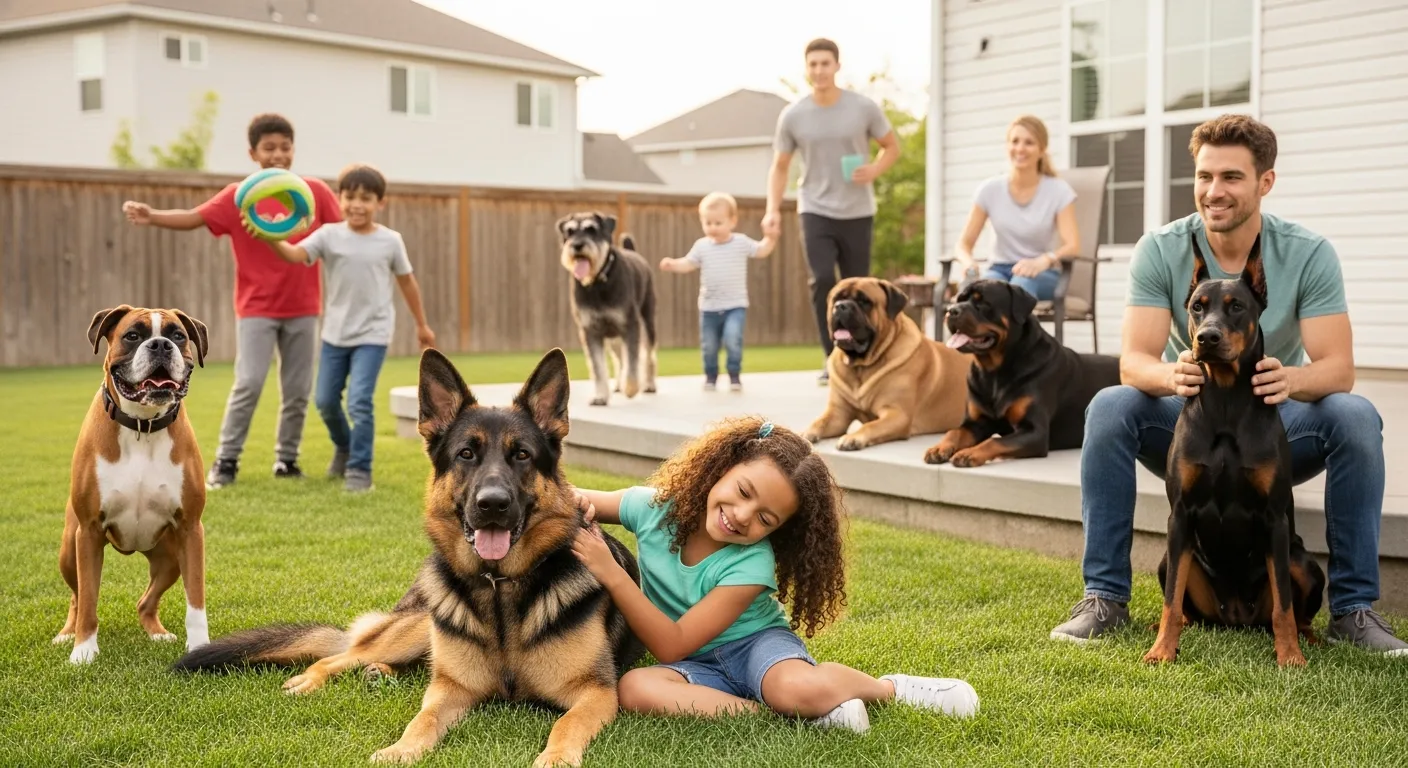
Not every guard dog is a good family dog, but these breeds are often top choices when you want both protection and affection.
Important: Individual temperament matters. Always meet the specific dog, not just the breed description.
German Shepherd: Loyal Protector And All‑Round Family Dog
German Shepherds are one of the most popular family guard dogs for a reason.
- Personality: Loyal, confident, deeply bonded to their people.
- Family life: Often excellent with children when socialized: they like to be included in everything.
- Training: Highly intelligent and eager to work. They thrive with obedience training, sports, and “jobs” like fetching items or learning tricks.
They do shed heavily and need regular exercise and mental stimulation. If you enjoy training and being active, a German Shepherd can be an incredible partner.
Boxer: Playful, Watchful, And Great With Kids
Boxers are sometimes called the “Peter Pan” of dog breeds because they stay puppy‑like and goofy for years.
- Personality: Playful, silly, people‑oriented, but naturally watchful.
- Family life: Often very good with kids: many act like patient, bouncy “babysitters” (with supervision, of course).
- Training: Smart but a bit clownish. Short, fun training sessions work best.
They make better watchdogs than true guard dogs, but their size, bark, and alert nature still provide a sense of security.
Doberman Pinscher: Elegant, Devoted, And Highly Trainable
Dobermans look intense, but many are total velcro dogs.
- Personality: Devoted, sensitive, extremely loyal to their family.
- Family life: Usually very affectionate with their own people: can be reserved with strangers.
- Training: One of the most trainable breeds, responsive and quick to learn.
They do best with confident, consistent owners who will provide structure, early socialization, and plenty of exercise.
Rottweiler: Calm Guardian With A Big Heart At Home
Rottweilers are often described by fans as “massive lap dogs.“
- Personality: Calm, thoughtful, and deeply attached to family.
- Family life: Often very loving with kids they grow up with, but supervision is essential due to their size and strength.
- Training: They need clear rules and positive, firm training from day one.
Good Rottweilers tend to be quiet protectors, they don’t usually bark at every leaf, but they’ll step between you and anything suspicious.
Bullmastiff: Gentle Giant And Natural Home Protector
If you want a big dog without a big exercise schedule, the Bullmastiff might appeal to you.
- Personality: Calm, laid‑back, and typically gentle with their own family.
- Family life: Often patient with kids, but because of their size, supervision and manners are crucial.
- Training: They’re smart but can be a bit stubborn. Short, consistent sessions work best.
Bullmastiffs don’t need marathon runs, but they do need daily walks, training, and close indoor companionship.
Giant Schnauzer: Smart, Energetic, And Deeply Attached To Their People
Giant Schnauzers are intense working dogs wrapped in a bearded, teddy‑bear package.
- Personality: Very intelligent, loyal, and protective.
- Family life: Usually very affectionate with their own people: can be aloof or suspicious with strangers.
- Training: Needs lots of positive training and jobs to do, great for active, experienced owners.
Regular grooming is a must, and they’re best for homes that love training and outdoor activity.
Belgian Malinois: Intense Worker Best For Very Active Families
You’ll see Belgian Malinois in police and military work for a reason: their drive and energy are extremely high.
- Personality: Intense, focused, and very work‑oriented.
- Family life: Can be loving with their family, but they’re not usually a “casual pet.”
- Training: Needs advanced training, daily mental work, and serious exercise.
Unless you’re highly active and excited about dog sports or working‑dog style training, a Malinois is often too much dog for the average household.
Smaller Options: Alert But Family‑Friendly Watchdogs
If a huge dog isn’t realistic, you can still have protection‑minded dogs in smaller bodies.
A common example:
- Staffordshire Bull Terrier: Loyal, brave, and famously affectionate with people. They’re strong but smaller, and often do well as family companions with early socialization.
Other medium‑sized breeds (and even some mixed‑breeds from shelters) can be excellent watchdogs, barking to alert you, without the size and power of giant guard breeds.
Training Your Family Guard Dog To Be Safe And Reliable
No matter which breed you choose, training is what turns natural protectiveness into calm, reliable behavior instead of chaos.
Early Socialization With People, Kids, And Other Pets
The American Veterinary Society of Animal Behavior (AVSAB) emphasizes that early socialization is one of the most important factors in raising a safe dog.
From the moment your puppy comes home (often 8–10 weeks):
- Gently expose them to different types of people: kids, adults, people wearing hats, carrying bags, etc.
- Pair new experiences with treats and praise so visitors feel positive, not scary.
- Supervise introductions with other dogs and pets so your puppy learns calm, polite behavior.
For adult or rescue dogs, go slower, but the same idea applies: short, positive experiences and lots of rewards for calm behavior.
Basic Obedience Cues Every Guard Breed Should Know
For safety and sanity, your dog should reliably respond to:
- Name recognition – looks at you when you say their name.
- Sit and down – to help them settle in busy situations.
- Stay/place – to keep them in one spot when guests enter.
- Come – a strong recall is essential for any powerful dog.
- Leave it – to prevent grabbing, chasing, or fixating on something.
Short daily sessions (5–10 minutes, a few times a day) are more effective than one long, frustrating session.
Setting Clear House Rules To Prevent Problems
Guard breeds feel safest when they know the rules.
Decide as a family:
- Where the dog is allowed (couch? beds? certain rooms?).
- How you’ll handle doorways and visitors.
- What behaviors are never allowed (jumping on people, rough play, guarding food or toys).
Consistency matters. If you let a Rottweiler puppy jump on you because it’s cute, it’s much harder to stop when they’re 100+ pounds.
Balancing Protection Instincts With Calm, Everyday Behavior
You don’t need to teach your dog to “be protective”, most guard breeds already are. What you do need to teach is when to relax.
Helpful habits:
- Reward your dog for quietly noticing things instead of barking non‑stop.
- Teach a strong “go to your bed“ or “place“ cue for when deliveries or guests arrive.
- Avoid rough, high‑intensity games that encourage over‑arousal with strangers.
If you’re unsure where to start, working with a reward‑based trainer or behaviorist who has experience with guard breeds can give you a huge head start.
Creating A Home Environment Where Guard Breeds Thrive
Even the best‑trained dog will struggle if their daily life doesn’t match their needs. A healthy routine helps your guard dog relax and feel secure.
Daily Exercise, Mental Stimulation, And Jobs To Do
Most guard breeds were created to work, herding, guarding property, or doing patrols.
To keep them happy:
- Aim for at least 60 minutes of physical activity daily for most medium‑to‑large breeds (often more for German Shepherds, Boxers, Dobermans, and Giant Schnauzers).
- Add brain work: puzzle feeders, scent games, obedience practice, short trick sessions.
- Give them “jobs”: carrying a backpack on walks, learning to pick up toys, practicing search games.
A tired mind and body make for a calmer, more content family guardian.
Managing Guests, Deliveries, And Alone Time
Because guard breeds are naturally suspicious of unfamiliar people, you’ll want clear routines.
For guests and deliveries:
- Put your dog on leash or send them to a mat/bed before opening the door.
- Reward them for staying calm and quiet while people enter.
- If they’re still learning, use baby gates or another room at first.
For alone time:
- Practice short separations, gradually building up, so your dog doesn’t panic when you leave.
- Provide safe chews or food puzzles when you go out.
This balance, knowing how to relax when you’re gone and how to behave when people visit, helps your dog feel confident instead of constantly “on duty.“
Health, Nutrition, And Preventive Care For Large Guard Breeds
Large and giant guard breeds have some specific health needs.
Things to keep in mind:
- Joint health: Breeds like German Shepherds, Rottweilers, and Bullmastiffs can be prone to hip and elbow dysplasia. Keep them lean, avoid over‑exercising young puppies, and talk to your vet about joint‑support supplements if appropriate.
- Balanced diet: Choose a high‑quality dog food appropriate for your dog’s age, size, and activity level. Your vet or a veterinary nutritionist can help if you’re unsure.
- Routine vet care: Yearly (or semi‑annual for seniors) checkups, vaccines, dental care, and parasite prevention (fleas, ticks, heartworms) are essential.
- Screening: If you’re buying from a breeder, ask for OFA or similar health testing for hips, elbows, heart, and any breed‑specific issues.
Catching health problems early keeps your dog more comfortable, and often extends their active years as a family protector.
Choosing And Bringing Home The Right Guard Dog For You
The “right” dog isn’t just about the breed list: it’s about matching a specific dog to your life and experience.
Puppy, Adult, Or Rescue: What To Know
Each option has pros and cons:
- Puppy:
- Pros: You can shape socialization and training from the start.
- Cons: Lots of work, and temperament is still developing: large‑breed puppies grow into powerful adults.
- Adult dog:
- Pros: What you see is closer to what you’ll get, energy level and temperament are more obvious.
- Cons: May come with habits you’ll need to retrain.
- Rescue or shelter dog:
- Pros: You give a dog a second chance: many rescues foster dogs and can tell you a lot about their behavior.
- Cons: History may be unknown, so plan on extra patience and training.
If you’re new to powerful breeds, a stable adult or foster‑evaluated rescue can actually be easier than a blank‑slate puppy.
Questions To Ask Breeders, Shelters, And Trainers
When you talk with breeders or rescue groups, ask:
- “How does this dog respond to strangers?”
- “What’s their energy level like?”
- “Have they been around children or other pets?”
- “What health testing has been done?“ (for breeders)
- “What training have you started, and what do you recommend next?”
A responsible breeder or rescue should be honest about both strengths and challenges. If someone brushes off your questions or pressures you to decide quickly, that’s a red flag.
Consider meeting with a positive‑reinforcement trainer before or right after adoption so you have a plan in place from day one.
Introducing Your New Guard Dog To Children And Other Pets
First impressions matter, especially with powerful, protective breeds.
For kids:
- Go over rules first: no hugging, no climbing on the dog, no disturbing while eating or sleeping.
- Let the dog approach at their own pace.
- Reward calm behavior from both dog and children.
For other pets:
- Start with separate spaces and scent swapping (blankets, beds) before face‑to‑face meetings.
- Use leashes and barriers at first: keep interactions short and positive.
- Don’t force closeness, many dogs warm up over days or weeks, not minutes.
Taking it slow at the start sets your new family guardian up for long‑term success in your home.