

You bring home this soft, big‑eyed rabbit, set up a cute little cage, and… a week later you realize: this isn’t a goldfish with ears.
Rabbits are high‑needs, high‑sensitivity pets. They’re prey animals, they hide pain, and they need way more space, time, and interaction than most people expect. The good news? Once you understand what belongs on your rabbit needs list, you can give your bun a safe, happy, and genuinely fun life.
This guide walks you through everything, housing, food, vet care, enrichment, and budget, so you can confidently care for your rabbit (or decide if a rabbit is really the right pet for you).
Understanding What Rabbits Really Need To Thrive
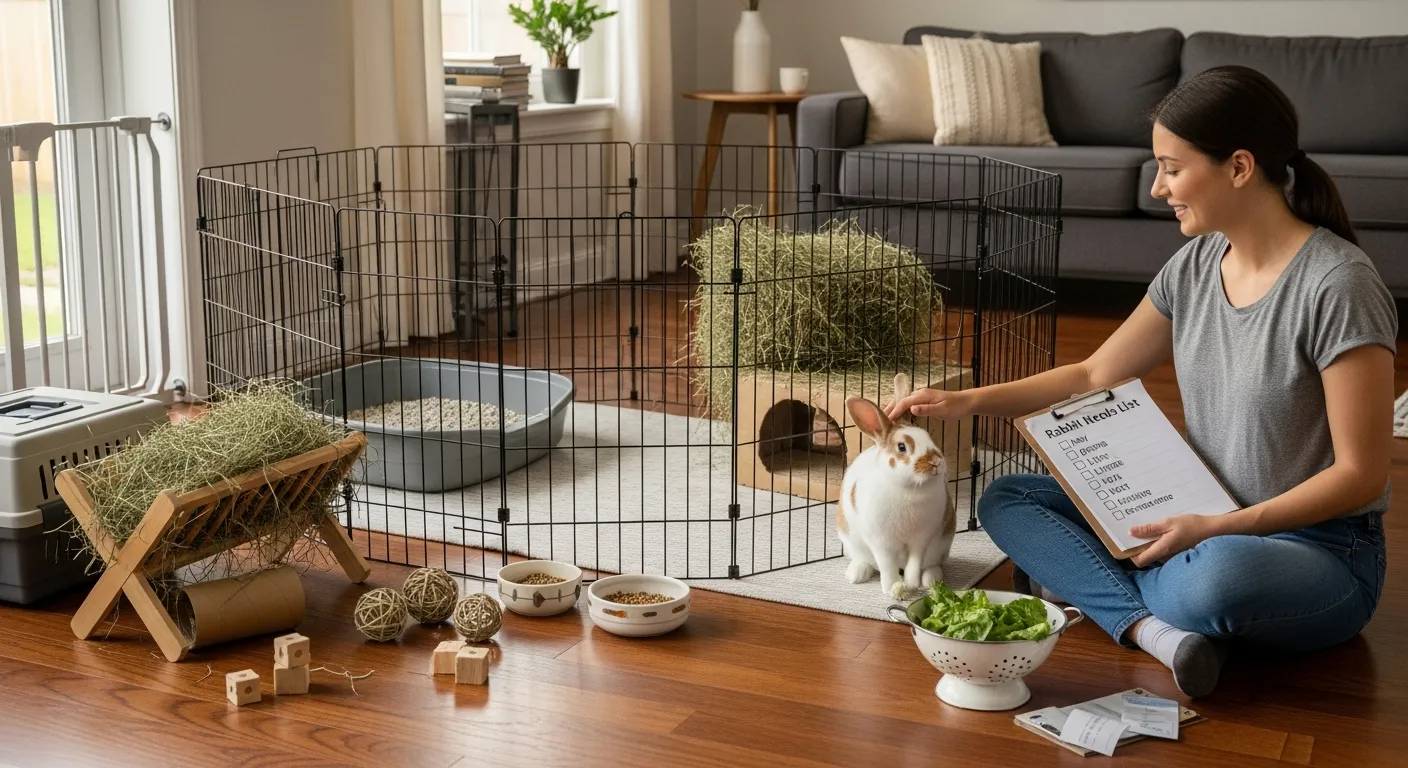
Rabbits aren’t “starter pets.“ Organizations like the House Rabbit Society and RSPCA are very clear: they need space, daily attention, and vet care just like dogs and cats. Let’s start with what makes them different.
Key Differences Between Rabbits And Other Common Pets
Compared to dogs and cats, rabbits:
- Are prey animals, not predators.
- Hide pain or illness instead of showing it.
- Startle easily with loud noises, sudden grabs, or predators (including your dog or cat).
- Often don’t enjoy being held for long, especially if they weren’t handled gently when young.
What that means for you:
- Your home needs quiet, safe spaces, not constant chaos or barking right next to the pen.
- Rough handling or “grab and hug“ from kids isn’t safe.
- You’ll watch behavior and poop as closely as you’d check a baby’s diaper, because changes can mean an emergency.
Rabbits can be incredibly affectionate and playful, but it’s usually on their terms. Think: sitting beside you on the floor, flopping nearby, or asking for head rubs, more than being carried around like a stuffed animal.
How Much Time, Space, And Money A Rabbit Truly Requires
Time needs (daily):
- Feeding hay, pellets, and greens
- Refreshing water
- Scooping or spot‑cleaning the litter box
- 3–5 hours of out‑of‑enclosure exercise in a safe area
- Social time: petting, talking, playing, basic training
- Quick health check: eating, poop size/amount, movement
Space needs:
Veterinary and rabbit‑welfare groups generally recommend housing that is at least 4× your rabbit’s body length in floor space, plus several hours free‑run time daily. In reality, bigger is always better.
For a medium rabbit, that usually means:
- A large x‑pen (exercise pen) or free‑roam room/area
- Not a tiny pet‑store “bunny cage” as the main home
Money needs:
You’ll have:
- Startup costs: pen/cage, litter boxes, bedding, hideouts, toys, carrier, bowls, hay rack, first vet visit, spay/neuter if not already done.
- Ongoing monthly costs: hay, leafy greens, pellets, litter, toy replacement, routine vet care.
- Emergency fund: rabbits are prone to dental issues and gut slowdowns (GI stasis) that need urgent vet care.
If you’re thinking, “This sounds more like a small dog than a hamster,“ you’re right. And that’s the mindset that keeps rabbits healthy and stress‑free.
Basic Daily Needs Every Rabbit Owner Must Cover
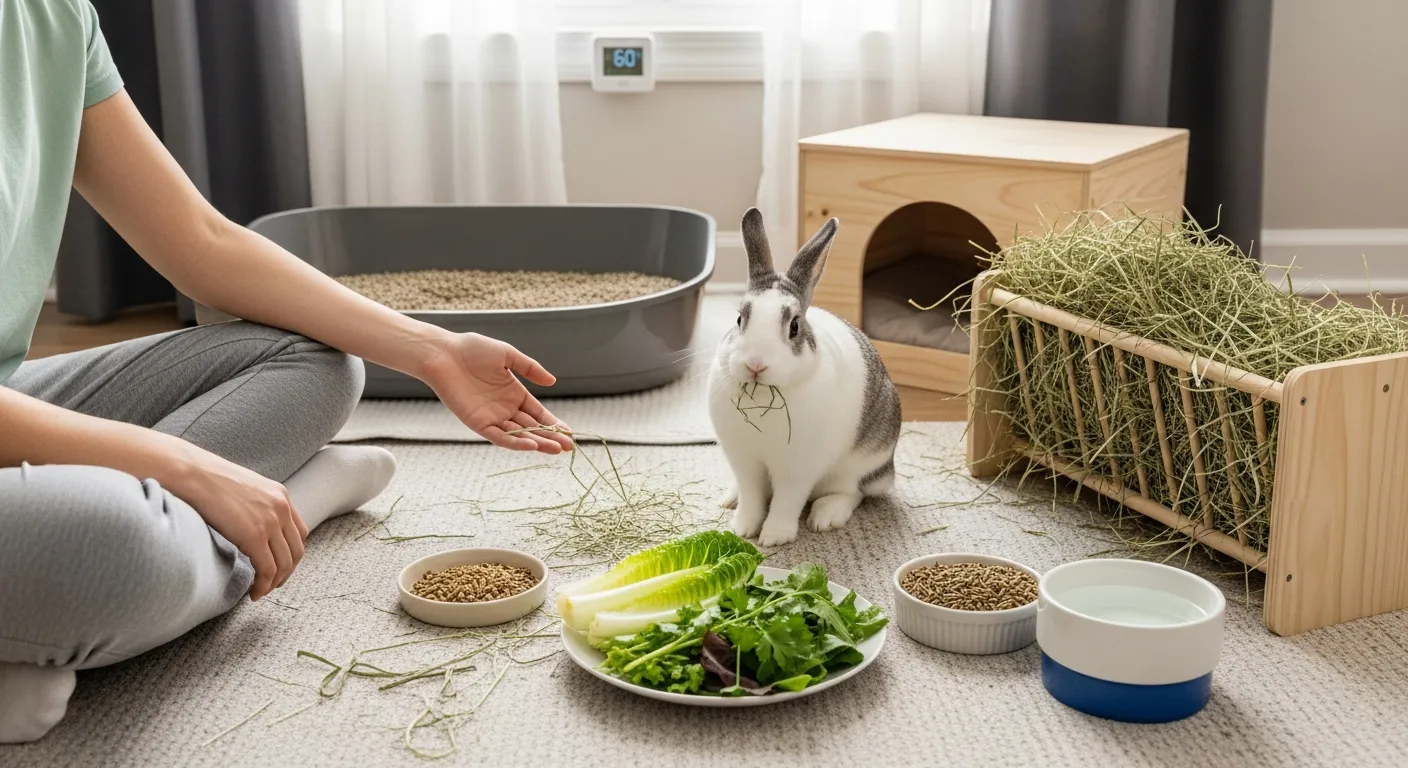
Think of this section as your daily rabbit checklist. If you cover these consistently, you’re already ahead of most new owners.
Fresh Water, Hay, And Food Routines
Every single day, your rabbit needs:
- Unlimited grass hay (about 80% of the diet)
- Timothy, orchard, or meadow hay are great options.
- Hay keeps the gut moving and wears down teeth, which grow continuously.
- Measured high‑fiber pellets
- General guideline: about ¼ cup per 5 lb of rabbit daily (your vet may tweak this).
- Look for plain, high‑fiber pellets, no colored bits, seeds, or flakes.
- Fresh leafy greens
- Examples: romaine, cilantro, parsley, spring mix, dandelion greens.
- Introduce new veggies slowly to avoid tummy upset.
- Fresh water 24/7
- Many rabbits drink better from a heavy bowl than a bottle.
- Rinse and refill daily: wash bowl regularly to prevent slime.
Feeding at roughly the same times every day helps stabilize digestion and lowers stress.
Safe Space, Cleanliness, And Comfort
Rabbits need a calm, clean, and safe base:
- Clean litter box:
- Scoop daily: full clean 1–2 times a week.
- Use paper‑based litter (never clumping cat litter, clay, or pine/cedar shavings).
- Solid flooring with absorbent bedding or mats
- Wire floors can cause sore hocks.
- A hideout (box, wooden house) so your rabbit can retreat and feel secure.
- Temperature control
- Ideally around 60–70°F (15–21°C).
- Heat is more dangerous than cold: avoid hot, stuffy rooms.
Affection, Observation, And Daily Check-Ins
Your rabbit also needs you every day:
- Sit on the floor and let your bunny come to you.
- Offer head rubs, gentle cheek strokes, and quiet company.
- Watch for:
- Normal eating and drinking
- Lots of round, grape‑sized poops
- Smooth movement, no limping or hunched posture
If your rabbit suddenly seems withdrawn, hides more than usual, or stops eating/pooping, that’s not a “wait and see“ situation. For rabbits, that’s a same‑day vet call item.
Housing And Space: Creating A Safe Home For Your Rabbit
Your rabbit’s home base should feel more like a studio apartment than a tiny cage.
Cage Versus Exercise Pen Versus Free-Roam
Traditional rabbit cages from pet stores are usually:
- Too small for real movement
- Often have wire floors
- Fine only as a temporary rest spot, not full‑time housing
Exercise pens (x‑pens):
- Give room to hop, stretch, and flop out
- Easy to reconfigure and clean
- Great for most homes when combined with daily free‑run time
Free‑roam setups:
- Your rabbit lives in a rabbit‑proofed room or area, like a dog.
- Often the happiest option if you can protect your belongings and your bun.
No matter which you choose, your rabbit needs several hours every day in a larger safe area to run, jump, and explore.
Bedding, Litter Boxes, And Hiding Spots
Inside the main area, provide:
- Litter box(es) in corners your rabbit naturally uses
- Low‑entry boxes are easier for senior or disabled rabbits.
- Fill with paper pellets or shredded paper: top with hay so your rabbit can eat and poop in one spot (they love this).
- Bedding or mats
- Fleece blankets, washable rugs, or straw/hay in specific zones.
- Hideouts and tunnels
- Cardboard boxes with two exits
- Fabric or cardboard tunnels
- Wooden hide houses
Rabbits feel safer when they have places to run through and under, not just open space.
Rabbit-Proofing Your Home And Yard
Rabbit‑proofing saves both your rabbit and your furniture:
- Cover or elevate wires and cords (cord protectors, cable raceways).
- Block access to baseboards and favorite chewing spots.
- Remove or secure toxic plants (lilies, philodendron, etc.).
- Block gaps behind appliances or furniture where a rabbit could get stuck.
For outdoor time (only when supervised and safe in your region):
- Use a secure pen with a roof and burrow‑proof bottom.
- Shade is non‑negotiable: rabbits overheat quickly.
- Never leave a rabbit alone outdoors, predators can show up fast, even in cities.
Diet Essentials: What Rabbits Need To Eat Every Day
A healthy rabbit diet is the foundation of good gut health, dental health, and long life.
Unlimited Hay And Why It Matters
Hay should make up around 80% of what your rabbit eats:
- Keeps food moving through the gut and prevents GI stasis.
- Naturally wears down teeth to prevent painful overgrowth.
Good options:
- Timothy hay (most common for adults)
- Orchard grass (softer, good for picky eaters)
- Meadow hay (a mix of grasses)
Offer large piles or use a hay rack above the litter box so your bun can graze all day.
Fresh Vegetables, Pellets, And Safe Treats
Leafy greens (daily):
- Romaine, green or red leaf lettuce
- Cilantro, parsley, basil
- Bok choy, endive, dandelion greens
Rotate a few types and introduce new ones slowly. Avoid feeding huge amounts of just one thing right away.
Pellets (daily, in moderation):
- Choose a plain, high‑fiber pellet made for rabbits.
- Use your rabbit’s healthy adult weight to measure the right portion.
Treats (small and occasional):
- Tiny pieces of carrot, apple, or banana
- Commercial rabbit treats that are hay‑based and low in sugar
Treats should be just that, treats, not a major part of the diet.
Foods To Avoid And Signs Of Diet Problems
Dangerous or unhealthy foods include:
- Seeds, nuts, granola, and muesli‑type mixes
- Most cereals and crackers
- Chocolate, candy, and sweet human snacks
- Iceberg lettuce (very low nutrition, can cause soft stools)
- Any plant you can’t positively identify as rabbit‑safe
Watch for diet‑related red flags:
- Not eating for more than a few hours
- Very small, misshapen, or no poops
- A bloated belly or grinding teeth (pain)
- Drooling or wet chin (possible dental issues)
If you notice any of these, call a rabbit‑savvy vet right away. Gut slowdowns can become life‑threatening in less than a day.
Health, Hygiene, And Veterinary Care
Groups like the AVMA and House Rabbit Society recommend treating rabbits as full veterinary patients, not “exotics you never bring in.“
Core Vet Needs: Exams, Spay/Neuter, And Vaccinations (Where Applicable)
Your rabbit needs:
- Annual wellness exams with a rabbit‑savvy vet
- Spay/neuter (usually recommended after maturity)
- Reduces aggression and spraying
- Greatly lowers risk of uterine cancer in females and testicular issues in males
- Vaccines (in regions where they’re used)
- For diseases like myxomatosis and Rabbit Hemorrhagic Disease (RHD/RHDV2) in some countries
Ask your local vet what’s standard and recommended in your area.
Grooming, Nail Trims, And Litter Box Hygiene
Rabbits groom themselves, but they still need your help:
- Brushing:
- Weekly for most rabbits
- More often during shedding/molt to reduce hair ingestion and blockages
- Nail trims:
- Every 4–8 weeks depending on growth and flooring
- Have a vet or tech show you how the first time
- Litter boxes and habitat:
- Daily spot‑clean, frequent full changes
- Regular wipe‑downs of floors and pen bars
A clean environment helps prevent skin problems, sore hocks, and respiratory issues.
Warning Signs You Need A Vet Right Away
Call a vet the same day if you notice:
- No eating or very little eating for 6–8 hours
- Little or no poop, or very tiny poops
- Sudden lethargy, hiding, or a hunched, painful posture
- Loud tooth grinding (different from quiet purring when petted)
- Labored breathing, runny nose, or severe diarrhea
Rabbits go downhill fast when sick. It’s always better to be the “over‑cautious“ owner than the one who waited too long.
Social, Mental, And Physical Enrichment Needs
A bored rabbit is a destructive rabbit, chewing carpets, baseboards, and anything they can sink their teeth into. Enrichment keeps their mind and body busy.
Companionship: Human Attention And Rabbit Bonding
Rabbits are social animals. Many are happiest:
- With daily human attention and
- A bonded rabbit companion (introduced slowly and safely)
Not everyone can have two rabbits, and that’s okay, but it does mean you become the main source of social interaction:
- Sit near your rabbit during TV or reading time.
- Offer head rubs and talk softly.
- Let your rabbit come and go rather than forcing contact.
Daily Exercise, Playtime, And Safe Toys
Aim for 3–5 hours of exercise time per day outside the main enclosure.
Offer:
- Tunnels and cardboard boxes to run through
- Sturdy cardboard to shred
- Willow or apple‑wood chews
- Foraging toys: hay stuffed in toilet‑paper rolls, treat balls with a few pellets inside
Rotate toys every few days to keep things interesting.
Preventing Boredom, Stress, And Destructive Behavior
To cut down on unwanted chewing and digging:
- Provide acceptable outlets: dig boxes with shredded paper, old towels, or soil (if you can manage the mess).
- Offer plenty of hay and chew toys so your rabbit doesn’t turn to your furniture.
- Make sure your rabbit isn’t confined for long stretches with nothing to do.
When a rabbit’s needs are met, you’ll see more relaxed flops, zoomies, and binkies (happy jumps) and less damage to your home.
Handling, Training, And Routine For A Calm Rabbit
Rabbits respond best to gentle handling, positive training, and predictable routines.
How To Safely Pick Up And Hold A Rabbit
Improper handling can seriously injure a rabbit’s spine, so technique matters.
Do:
- Support the chest with one hand and the hindquarters with the other.
- Keep your rabbit close to your body so they feel secure.
- Hold them only as long as needed: most prefer having all four feet on the ground.
Don’t:
- Never lift by the ears, scruff, or legs.
- Don’t grab from above without warning, it feels like a predator attack.
If your rabbit hates being picked up, focus on cooperative care: train them to hop into a box or carrier in exchange for a treat.
Litter Training, Simple Cues, And Positive Reinforcement
Most rabbits litter train quite well:
- Place litter boxes in the corners they naturally choose.
- Put some soiled hay/pellets in the box at first so it “smells right.”
- Reward with a small treat and praise when they use the box.
You can also teach simple cues using positive reinforcement:
- “Come” for a treat
- “Up” to hop on a low platform
- Target training (touching a stick or your hand with their nose)
Short, fun sessions build trust and make vet visits and nail trims easier.
Building A Predictable, Low-Stress Daily Routine
Rabbits love predictability. Try to keep a fairly set schedule for:
- Morning hay, pellets, and fresh greens
- Midday or evening play sessions
- Quiet times when the home is calmer
A steady routine helps reduce stress, aggression, and anxiety, especially in high‑energy or previously neglected rabbits.
Budgeting And Planning Before You Bring A Rabbit Home
Before you say yes to that cute face, it helps to be honest about the money, time, and lifestyle a rabbit needs.
Startup Supplies Every Rabbit Owner Should Have
On your initial rabbit needs list, plan for:
- Large exercise pen or roomy cage/condo
- 1–2 litter boxes and paper‑based litter
- Hay rack and heavy food/water bowls
- Hideouts and tunnels
- Chew toys and foraging toys
- Grooming brush and nail clippers
- Carrier for vet visits
- First vet exam and spay/neuter (if not already done)
Buying quality upfront (especially for housing) usually saves money and stress later.
Ongoing Monthly Costs And Time Commitments
Expect ongoing costs for:
- Hay (they go through a lot.)
- Leafy greens and a small amount of pellets
- Litter and toy replacement
- Annual vet visits and occasional meds
- A savings buffer for emergencies
Time‑wise, plan on at least an hour or two of direct interaction and care daily, plus your rabbit’s out‑time in a safe area.
When A Rabbit Might Not Be The Right Fit
A rabbit may not be the best choice if:
- Your home is very loud or chaotic with no quiet room.
- You can’t give several hours of free‑run time most days.
- You don’t have room in the budget for yearly vet care and emergencies.
- Young kids in the home want a pet they can carry around all the time.
It’s kinder to recognize that now than to bring home a rabbit you can’t comfortably support. When the fit is right, though, rabbits can be deeply rewarding, affectionate companions for 8–12+ years.
Key Takeaways
- A realistic rabbit needs list includes ample time, space, and money, treating your rabbit more like a small dog than a low‑maintenance cage pet.
- Daily essentials for a healthy rabbit are unlimited grass hay, a small measured portion of high‑fiber pellets, a variety of leafy greens, and constant access to fresh water.
- Your rabbit’s housing should prioritize safety and movement with an x‑pen or free‑roam area, solid flooring, litter boxes, hideouts, and thorough rabbit‑proofing of wires and furniture.
- Regular vet care, spay/neuter, grooming, nail trims, and close monitoring of eating and pooping are non‑negotiable items on any rabbit needs list to prevent fast‑moving health emergencies.
- Rabbits need 3–5 hours of daily exercise, mental enrichment, gentle handling, and a predictable routine to stay happy, reduce destructive behaviors, and build trust with you.