
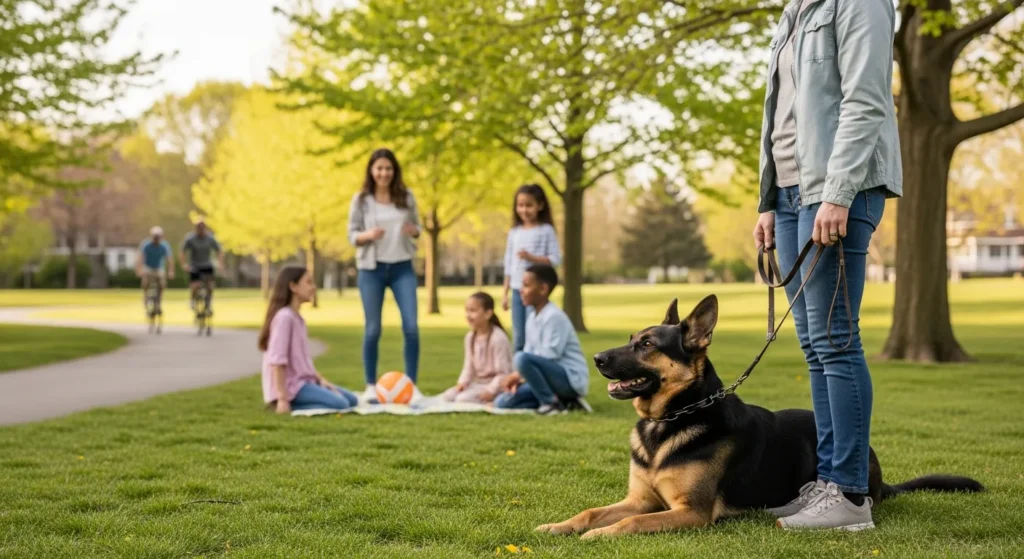
You’ve probably seen the videos: a calm dog walking beside their owner… and in a split second, they step in front, bark, and “block” a bad guy.
It looks impressive, and maybe you’ve wondered if protection dog training is right for you and your family.
Here’s the honest truth: real protection work isn’t about turning your dog into an “attack machine.“ It’s about control, stability, and safety first, with protection skills layered on top of rock-solid obedience and socialization.
In this guide, you’ll learn what protection dog training actually is, who it’s (really) for, how ethical trainers work. Also what daily life looks like with a trained protection dog, so you can decide with clear eyes, not fear or hype.
What Protection Dog Training Really Means (And What It Does Not)
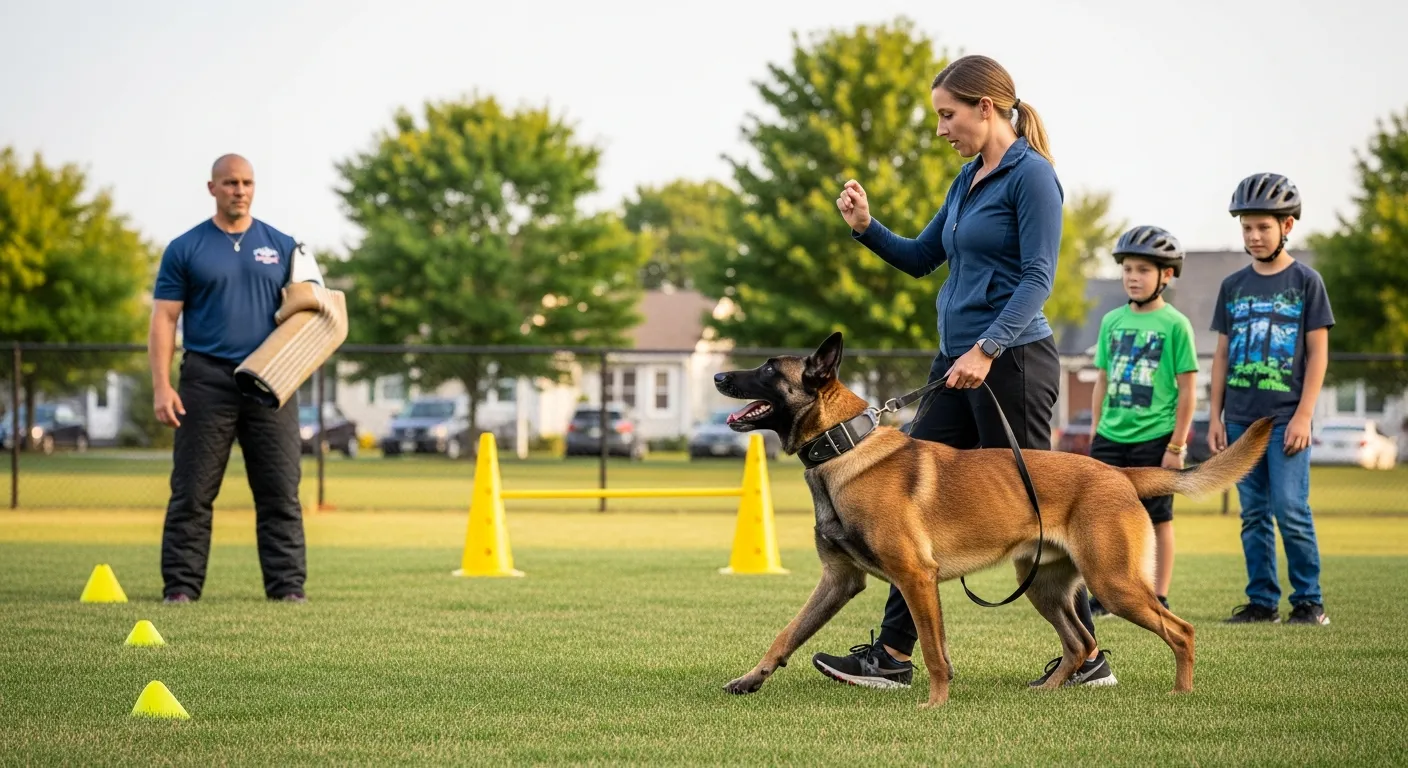
Protection dog training is advanced work built on top of excellent manners, impulse control, and clear communication between you and your dog. The focus is on controlled responses to real threats, not random aggression.
A well-trained protection dog should:
- Be safe and polite in public
- Ignore everyday triggers (delivery drivers, joggers, kids on scooters)
- Turn on when there’s a genuine threat, then turn off on cue
It’s closer to training a canine bodyguard than an attack dog. The goal is deterrence, defense, and control, not chaos.
Guard Dog, Protection Dog, And Personal Companion: Key Differences
People often use these terms like they’re the same thing. They aren’t.
- Guard dog
- Job: Alert and deter by barking
- Often works in a yard or property, not always closely handled
- May not have advanced obedience or bite work
- Think: dog that barks at the fence when someone walks by
- Protection dog (personal protection or family protection)
- Job: Stay by you, read situations, intervene only when needed
- Trained to bite equipment or a decoy on command and release on command
- Highly social with the family: travels with you, lives indoors
- Needs serious, ongoing training with a pro
- Personal companion (what most family dogs are)
- Job: Be your buddy, bring comfort and joy
- Basic manners and maybe some fun sports
- No expectation they’ll defend you, and that’s okay
Many families discover that what they actually want is a well-trained companion that’s confident, social, and maybe a bit “watchful,“ not a full-on protection dog.
Myths About “Attack Dogs” That Put Families And Pets At Risk
A few dangerous myths float around online:
- Myth 1: “Any dog can be turned into an attack dog.”
Reality: Trying to force protection work on a dog without the right temperament and foundation is a recipe for fear, anxiety, and unpredictable bites, especially around kids and visitors.
- Myth 2: “Teaching bite work first makes them better protectors.”
Reality: Ethical trainers start with months of obedience and stability before any bite work. Without that, the dog can’t reliably tell real threats from normal life.
- Myth 3: “The meaner, the better.”
Reality: Modern protection dogs are stable, clear-headed, and social. Chronic stress, harsh punishment, and constant arousal actually make dogs less reliable and more dangerous.
Veterinary behaviorists and organizations like the AVSAB (American Veterinary Society of Animal Behavior) strongly caution against punishment-heavy “attack dog” programs for exactly these reasons.
Is A Protection Dog Right For Your Home And Lifestyle?
Before you go down the protection dog training rabbit hole, it’s worth zooming out. Not “Can my dog do this?“ but “Should we?“
Protection work can be appropriate if:
- You work in high-risk settings (certain public figures, jewelers, cash transport, etc.)
- You’ve already put in serious time on training and enjoy it
- You’re prepared for ongoing lessons, practice, and management
It’s usually not a good fit if:
- You’re already overwhelmed with basic manners
- You want a shortcut instead of solid training and security habits
- You mainly want your dog to feel safer, not actually intervene in threats
Many trainers will tell you: for most families, good obedience + smart home security (lights, cameras, alarms) is safer and far less stressful than adding protection work.
Safety And Liability: Laws, Insurance, And Neighborhood Concerns
If you do move toward protection training, you have to think like an adult about safety and liability:
- Local laws: Some areas have breed restrictions, leash rules, and extra regulations for “guard” or “protection” dogs. Check your city/county rules.
- Homeowner or renter’s insurance: Certain breeds or bite histories can raise premiums or void coverage. Always tell your insurer the truth.
- Neighborhood impact: An intense dog lunging at the fence or barking constantly damages relationships with neighbors and can trigger complaints or legal issues.
A well-trained protection dog shouldn’t be a neighborhood menace. If your dog is already a problem to walk or control, protection training isn’t the next step, it’s time for solid behavior help first.
Temperament, Breed, And Age: Which Dogs Can Learn Protection Work?
Protection trainers usually look for dogs that are:
- Confident, not fearful
- Curious and engaged with the world
- Able to recover quickly from surprises
- Highly motivated by toys or play
You’ll most often see working-line breeds in this space:
- German Shepherds
- Belgian Malinois
- Dutch Shepherds
- Rottweilers
- Some Dobermans and similar breeds
Age matters too. Many dogs start foundation work as puppies (socialization, obedience, building confidence) and don’t see real bite equipment until they’re emotionally mature.
Could your rescue mix do some protection-style work? Maybe. But ethical trainers will do a careful temperament evaluation first and may say “this isn’t safe for your dog,“ which is actually a good sign.
Household Factors: Kids, Visitors, And Busy Schedules
You also need to honestly assess your home:
- Kids: A protection dog has to be rock-solid around children, yours and others. That means constant supervision, training, and strong boundaries.
- Frequent visitors: If people are in and out (nannies, cleaners, friends, contractors), you’ll need a clear plan: where the dog goes, what rules apply, and how introductions work.
- Time and energy: You’re signing up for regular training sessions, practice, physical exercise, and mental work. A protection dog is not a low-maintenance option.
If your life already feels like a juggling act, basic manners and enrichment will give you much more peace than layering on protection training.
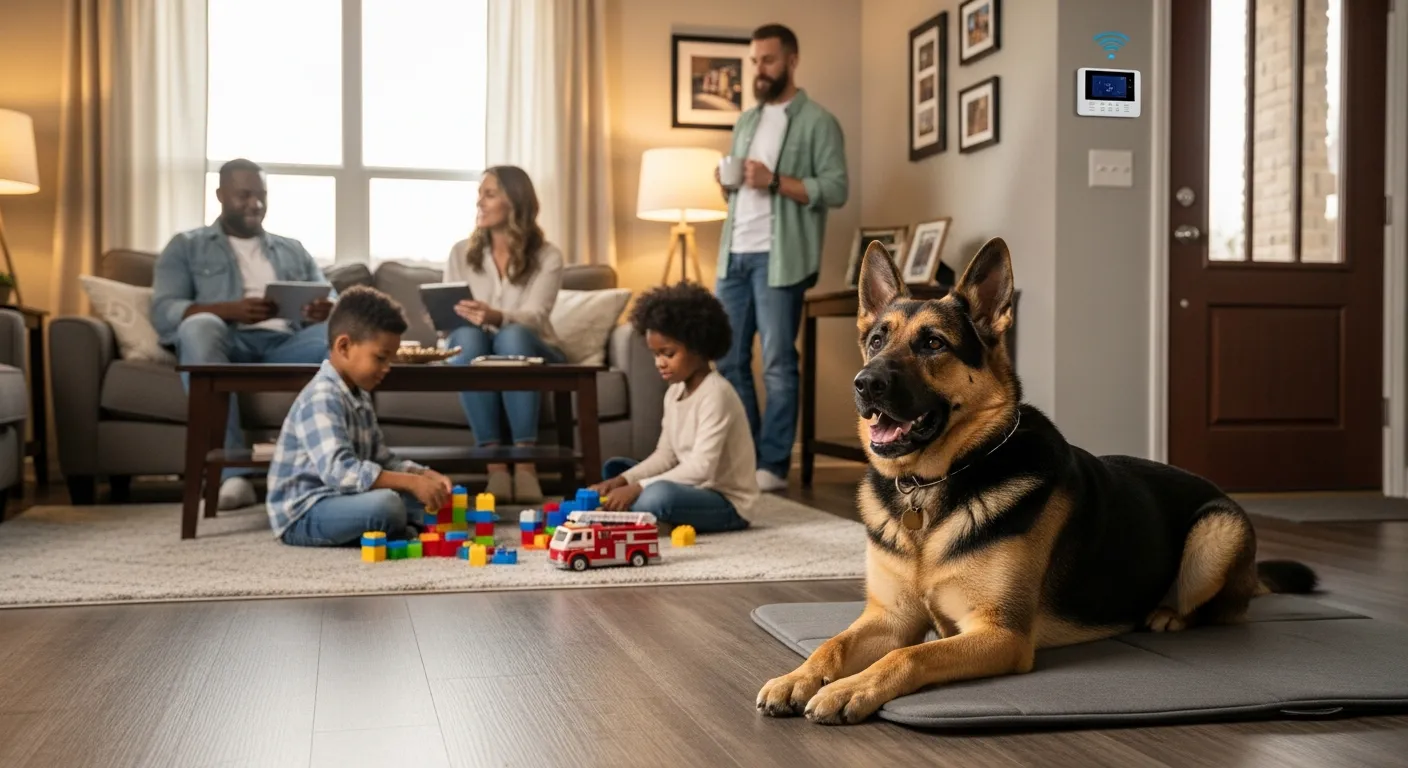
Suggested supporting image: A family in a living room with a large dog lying calmly on a mat while kids play nearby, showing relaxed home management.
Foundation Skills Every Protection Dog Needs First
Whether you’re aiming for formal protection sports (like IPO/IGP) or simply exploring the idea, every dog needs the same base skills first.
Obedience Basics: Sit, Down, Stay, Come, And Heel Under Distraction
Your dog should be able to:
- Sit, down, and stay when asked, even if someone knocks on the door
- Come when called away from other dogs, toys, or food
- Walk in a loose heel around distractions, bikes, strollers, loud vehicles
Most ethical trainers won’t even discuss bite work until this level is in place. Positive reinforcement (rewarding what you like with treats, toys, or praise) is the gold standard, supported by groups like the AVSAB and AAHA.
Impulse Control And Calmness Around Strangers
Protection-type dogs need self-control more than anything else. Helpful exercises include:
- Waiting at doors and gates until released
- “Place” or “mat” training, relaxing on a bed while guests come in
- Taking treats gently and waiting before eating
- Neutral walks where you pass strangers and dogs without greeting
The goal is not a dog that’s suspicious of everyone, but a dog that can notice new people and stay calm until you give clear information.
Socialization, Confidence Building, And Environmental Exposure
From puppyhood (or as early as you get your dog), focus on positive exposure to:
- Different surfaces (stairs, metal grates, grass, sand)
- Noises (traffic, sirens, kids, construction)
- People of different ages, sizes, and clothing styles
- Vet clinics, grooming salons, pet-friendly stores
Think of it as “life-proofing“ your dog. A confident, social dog is far better equipped to do any advanced work, and is simply easier and safer to live with.
Suggested supporting image: A young dog walking confidently through a busy but controlled environment (like a town square), with their owner, showing exposure and training.
Safe, Ethical Methods Used In Modern Protection Dog Training
Modern protection dog training has moved a long way from old-school “make the dog mean“ methods. The focus now is clear communication, motivation, and safety for both dog and handler.
Why Punishment-Heavy Training Is Dangerous For Protection Work
Relying mostly on fear, pain, or intimidation can:
- Increase anxiety and defensive aggression
- Teach the dog that people or the environment are unsafe
- Damage your bond, making your dog less responsive in real emergencies
Studies in veterinary behavior show that heavy punishment is linked to more behavior problems, not fewer. In protection work, that’s the last thing you want.
How Professional Trainers Use Play, Prey Drive, And Positive Reinforcement
Ethical trainers build protection skills through play and structure, for example:
- Using tugs, balls, or bite pillows to channel your dog’s natural play and prey drive
- Rewarding correct behaviors, like barking on command or targeting the right spot on a sleeve
- Building strong “on” and “off” switches: start the game, then end it cleanly
The dog learns, “When I follow the rules and listen to my handler, fun things happen.“ That makes them more reliable and easier to control under pressure.
Bite Work, Equipment, And Decoys: What Owners Should Understand
Real bite work isn’t just your buddy putting on a hoodie and running around the yard.
Professional setups use:
- Protective gear: Bite sleeves, bite suits, hidden sleeves to keep people safe
- Decoys: Trained helpers who know how to move, pressure, and reward the dog safely
- Clear cues: Specific commands and body language so the dog knows when to engage and when to release
You, as the owner, should be involved and educated. You’ll learn:
- How to handle the dog on leash and off
- How to give clean, consistent commands
- How to practice safely (or not practice certain things) at home
Any trainer pushing bite work without safety gear, a trained decoy, or proper foundation is a major danger sign.
Working With A Professional Protection Dog Trainer
If you’re still interested in protection dog training at this point, the next step is finding the right professional.
How To Vet A Trainer Or Training Facility
Here are good signs you’re in the right place:
- They start by asking about your goals, lifestyle, and your dog’s history
- They require an evaluation before agreeing to protection work
- They emphasize obedience, socialization, and control
- You see kind, fair handling, not yelling, kicking, or hanging dogs
- They’re open about their methods and encourage you to watch sessions
Look for trainers with experience in recognized sports or organizations (IGP, PSA, police K9 backgrounds) and who keep up with continuing education and modern behavior science.
Red Flags To Avoid In Protection Dog Programs
Walk away if you see:
- Promises of a “fully trained attack dog in 2 weeks”
- No focus on obedience or home manners, only biting
- Heavy use of shock, prong, or harsh corrections with no reward-based training
- Trainers who brag about making dogs “mean” or “vicious”
- No written policies, no liability waivers, and no clear safety rules
Your dog’s welfare and your legal risk are on the line. If your gut says something feels off, you can absolutely say no.
What A Typical Protection Training Plan Looks Like
While every program is a bit different, a realistic outline might look like:
- Foundation phase (weeks to months)
- Solid obedience and leash skills
- Socialization and environmental exposure
- Building toy drive and engagement with you
- Intro protection skills
- Bark on command, “watch” command
- Basic bite work on a pillow or sleeve with a decoy
- Clear release and out commands
- Advanced skills and scenarios
- Guarding, blocking, and positioning near you
- Drills that mimic real life: car parks, front doors, walks
- Proofing around distractions so the dog stays under control
- Maintenance phase
- Regular refreshers with your trainer
- At-home practice that keeps skills sharp without overdoing arousal
Living With A Trained Protection Dog Day To Day
A trained protection dog isn’t “on duty” 24/7. In a healthy home, they’re a family dog first, with protection skills as a backup, not a lifestyle.
House Rules, Management, And Clear Routines
You’ll want simple, consistent rules so your dog knows what’s expected:
- Where they sleep and eat
- When they’re allowed to greet people (and when they’re not)
- Clear commands for getting on/off furniture, going to their bed, and waiting at doors
Management tools like crates, baby gates, and leashes are still useful, especially with kids or visitors. Even elite dogs benefit from structure.
Balancing Protection Skills With A Relaxed Family Life
To keep your dog from feeling “on edge” all the time:
- Schedule off-duty time, relaxed walks, sniffing, play, cuddles
- Keep most social interactions neutral and calm, not suspicious
- Let your dog be a dog: puzzle toys, training games, and decompression time
Well-run programs work hard to keep dogs social and stable, not paranoid. If your dog seems constantly wired, jumpy, or reactive, that’s a signal to step back with a qualified trainer or veterinary behaviorist.
Ongoing Practice, Mental Enrichment, And Retirement Planning
Protection-trained dogs, like working dogs, need ongoing work to stay sharp and happy:
- Short obedience refreshers during daily walks
- Occasional sessions with your trainer or club
- Mental enrichment: scent games, fetch with rules, trick training
As your dog ages, plan for a gentle retirement:
- Scale back physically intense work
- Shift focus to brain games, easy obedience, and comfort
- Talk with your trainer and vet about when it’s time to fully retire protection work
This helps your dog transition from “worker” to relaxed senior companion, which is just as valuable a job.
Conclusion
Putting Safety, Welfare, And Realistic Expectations First
Protection dog training can look impressive online, but behind every stable, reliable dog is months or years of careful work: socialization, obedience, ethical methods, and clear household rules.
Before you jump in, ask yourself:
- Do you truly need a protection dog, or do you mostly want a well-trained companion?
- Do you have the time, energy, and budget for ongoing professional training?
- Is your dog’s temperament suited for this, or would it be kinder to focus on confidence and manners instead?
If you decide to explore protection work, prioritize:
- Your dog’s welfare and mental health
- Evidence-based, reward-focused methods
- Trainers who talk more about control and stability than “making your dog tough”
And if you realize a loving, confident, well-mannered companion is all you need, that’s not settling. For most families, that’s the safest, happiest outcome for both you and your dog.
Either way, investing in good training, enrichment, and a solid routine will always pay off in the same currency: a stronger bond, better behavior, and a dog who feels secure in their world.