
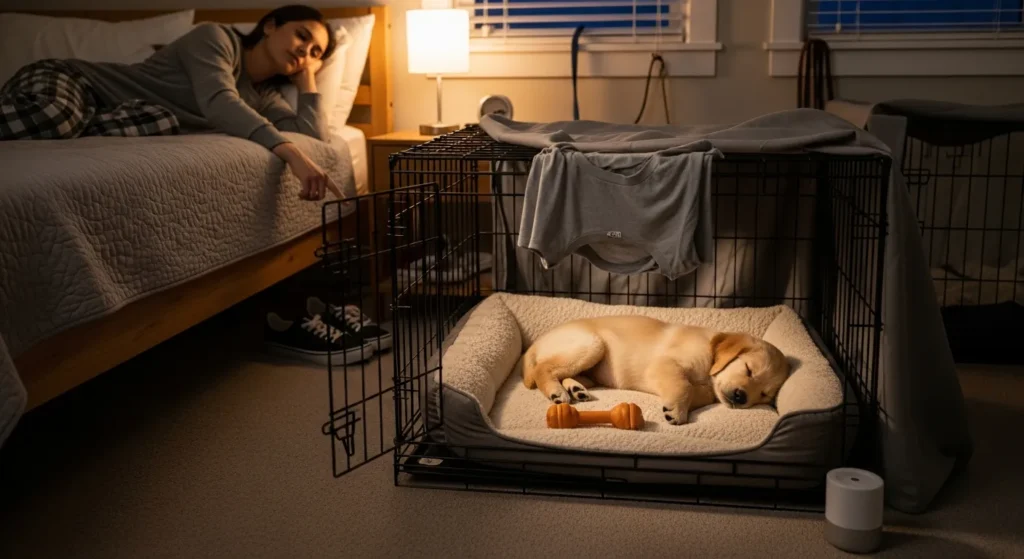
We’ve all had that moment: it’s 2 a.m., the house is dark, and our new puppy starts howling like a tiny wolf that just realized it’s all alone.
We’re exhausted, we feel guilty, and we start wondering, “Are we doing this completely wrong?“
The good news: night howling is incredibly common with young puppies, and with a few smart changes to our routine, most of us can get from chaotic nights to peaceful sleep surprisingly fast.
In this guide, we’ll walk through why puppies howl at night, how to set them up for better sleep, and exactly what to do in the moment when the howling starts, all in a calm, realistic, no-guilt way.
Why Puppies Howl At Night In The First Place
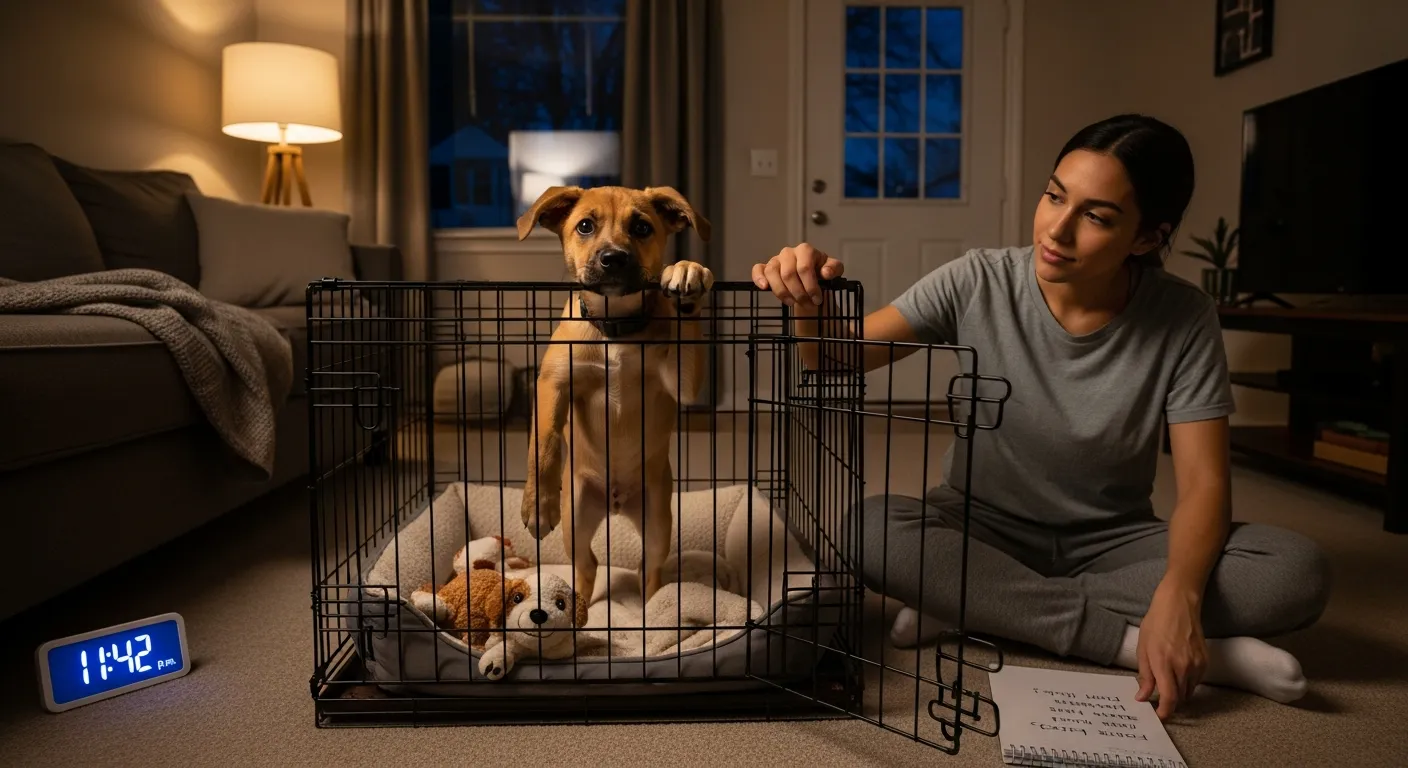
When we understand what’s going on in our puppy’s brain, it’s much easier to respond calmly instead of getting frustrated.
Normal Puppy Behavior Versus Red Flags
For most new pups, some level of crying, whining, or howling at night is completely normal for the first days or weeks. They’ve just:
- Left their mom and littermates
- Landed in a strange home with new smells and sounds
- Been asked to sleep alone for maybe the first time ever
Typical normal adjustment howling looks like:
- Starts soon after lights-out
- Comes in bursts, then settles
- Paired with pacing, some whining, maybe scratching the crate
- Gradually improves over a couple of weeks
Red flags to watch for:
- Sudden new howling in a puppy who previously slept fine
- Intense, constant screaming or panic for long stretches
- Signs of pain: limping, yelping when touched, bloated belly, vomiting, diarrhea
- Very frequent straining to pee or poop with crying
If the howling is new, gets worse over time, or comes with other symptoms, it’s time to call a veterinarian. The American Veterinary Medical Association (AVMA) recommends checking for medical causes any time behavior suddenly changes.
Common Causes: Loneliness, Fear, And Confusion
Most nighttime howling in young puppies comes down to a mix of:
- Loneliness – They’re used to sleeping in a puppy pile. Now they’re alone and their instinct is to call the “pack.”
- Fear – New house, new crate, strange noises like fridges, neighbors, traffic.
- Confusion – There’s no clear routine yet, so they don’t know what’s supposed to happen when it gets dark.
- Needing to potty – Young pups simply can’t hold it all night. If they’re uncomfortable, they’ll vocalize.
When we respond with structure and reassurance instead of punishment, most pups adapt quickly.
How Long Night Howling Usually Lasts
This part varies by puppy, breed, and past experiences, but as a general guideline:
- Many puppies improve noticeably within 3–7 nights with a solid routine.
- Some take 2–3 weeks to really settle.
- Rescue or very sensitive puppies may need a month or more of patient, consistent support.
Our goal isn’t to force silence overnight: it’s to slowly teach that nighttime is safe and predictable. With that mindset, the process feels a lot less stressful for everyone.
Set Your Puppy Up For Sleep Success During The Day
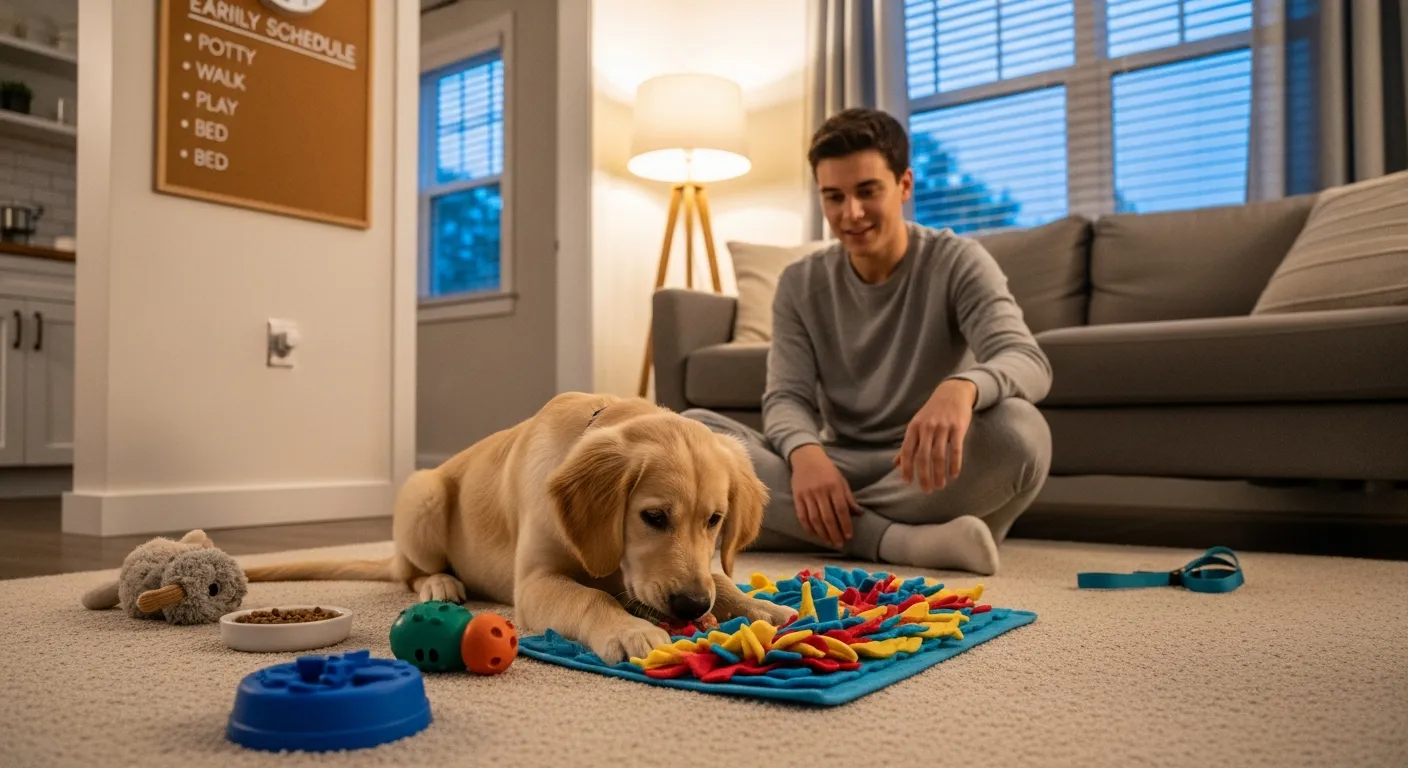
A calm night starts long before bedtime. If our puppy’s been napping all day, bored, and under-stimulated, of course they’ll be restless at midnight.
Age-Appropriate Exercise And Play
We want our pups pleasantly tired, not over-exhausted and wired.
Guidelines:
- Use the rule of thumb many trainers suggest: about 5 minutes of structured exercise per month of age, up to twice a day (plus normal play). So a 3‑month‑old might get about 15 minutes of walk or training twice a day.
- Focus on short walks, gentle fetch, and basic training instead of long runs or stairs for young joints.
- Avoid high-impact activities (repetitive jumping, long runs) with very young puppies: the American College of Veterinary Surgeons notes their joints are still developing.
Good pre-bed activities (about 60–90 minutes before sleep):
- Short sniffy walk
- A few minutes of basic cues (sit, down, touch)
- Calm indoor play on rugs (to avoid slipping)
Mental Enrichment To Tire Out The Brain
A mentally tired puppy is usually a quieter puppy.
Try:
- Food puzzles or slow feeders at one meal
- Snuffle mats with part of their kibble hidden in the fabric
- Treat-stuffed toys (like Kongs) frozen for extra challenge
- Simple scent games: scatter a few treats around a room and encourage them to “find it”
Even 10–15 minutes of problem-solving can help them settle much better at night.
Creating A Predictable Daily Routine
Puppies feel safer when life is fairly predictable. We don’t have to be perfect, but a basic rhythm helps:
- Morning: potty → breakfast → short play/training
- Midday: potty → play/enrichment → nap
- Late afternoon/early evening: potty → walk → play
- Evening: potty → calm time → bedtime routine
Keep mealtimes, walks, and bedtimes roughly consistent each day. Over a week or two, our puppy’s body clock begins to match the household, and night howling often drops just from this structure alone.
Designing A Nighttime Setup That Feels Safe
Our puppy’s sleep space should feel like a cozy little den, not a punishment zone.
Crate Versus Puppy Pen: Pros And Cons
Both crates and pens can work: it depends on our puppy and our home layout.
Crate (appropriately sized):
Pros
- Feels den-like and secure for many dogs
- Helps with potty training (less room to wander and have accidents)
- Safer at night, prevents chewing wires or furniture
Cons
- Some puppies protest more at first
- Needs careful introduction so it doesn’t feel like “jail”
Puppy pen (larger enclosed area):
Pros
- More space to move, especially good for very active pups
- Room for a sleeping area, water, and a separate potty pad (if needed)
Cons
- More likely to have overnight accidents
- Some puppies climb or push at the sides and get worked up
We can even combine them: crate as the bed inside a small pen for extra safety.
Whatever we choose, the crate or pen should be just big enough for the puppy to stand up, turn around, and lie down comfortably, but not so big that one corner becomes a bathroom.
Where To Put The Crate Or Bed
In the first few weeks, most puppies do best when they sleep close to us:
- Set the crate by our bed or on a stable bedside stand.
- If the bedroom isn’t possible, sleep on the couch near the crate for a few nights.
Being close:
- Lets us hear if they genuinely need a potty break
- Reduces that intense feeling of isolation
- Helps build trust, we’re nearby, not gone forever
As the puppy becomes more confident, we can gradually move the crate toward its long-term spot (if that’s different) over several nights.
Comfort Items: Bedding, Scents, And Sounds
We want the sleep area to feel inviting and familiar:
- Soft bedding that’s washable and safe to chew on
- A T‑shirt or blanket that smells like us (many puppies find this calming)
- A safe chew like a puppy-safe rubber chew or stuffed Kong
- White noise or a fan to mask outside sounds
For very young pups, there are also:
- Heartbeat toys that mimic a littermate’s heartbeat
- Warming pads (made for pets) that make the crate feel extra cozy
Just make sure any item we use is safe to leave unsupervised and can’t be easily shredded and swallowed.
A Step-By-Step Bedtime Routine To Reduce Howling
A consistent, calm routine before bed teaches our puppy, “Okay, this is the part where we wind down and sleep.“
Pre-Bed Potty, Water, And Food Timing
About 60–90 minutes before bed:
- Last meal should be done 3–4 hours before bedtime if possible.
- Last big drink of water about 1–2 hours before sleep (don’t withhold water all evening, just avoid giant gulps right before bed).
- Final potty trip right before crate time.
- If the puppy isn’t fully vaccinated, use a safe area like a backyard, balcony grass pad, or indoor puppy pad zone.
Young puppies (under about 4 months) often can’t make it all night. Plan on at least one middle-of-the-night potty trip for a while.
Wind-Down Activities And Calm Handling
The hour before lights out should feel boring in the best way:
- Gentle brushing or massage
- Quiet cuddling
- Low-key chewing on a stuffed toy
- Soft voice, slower movements from us
Try to avoid:
- Rough play or zoomies right before bed
- Exciting, high-pitched talk
- New visitors or big changes in that window
We want to shift our puppy’s energy from “party” to “pajamas.“
What To Do The Moment The Lights Go Out
When it’s time for sleep:
- Take the puppy for a quick final potty.
- Bring them calmly to their crate/pen.
- Give them a special bedtime chew or stuffed Kong that only appears at night.
- Say a short, consistent phrase like, “Night-night,“ in a soft tone.
- Lights off or dimmed: white noise on if using.
If they start to fuss immediately, we can:
- Stay nearby for a minute or two, talking softly.
- Put a hand near (but not necessarily inside) the crate to reassure.
Then we quietly settle ourselves and give them a chance to figure things out. Over time, this routine becomes a strong sleep cue.
How To Respond When Your Puppy Howls
This is the hardest part emotionally. We don’t want to reinforce howling, but we also don’t want our puppy panicking or sitting in a soiled crate.
When To Comfort And When To Ignore
Ask ourselves:** Why might they be howling right now?**
We respond (don’t ignore) when:
- It’s been a few hours since the last potty break
- The howling is urgent, intense, and comes with pacing or circling
- They’re very young (8–10 weeks) and still adjusting
In that case:
- Take them straight to the potty spot on leash.
- Keep it boring: no play, no chatter, dim lights.
- When they finish, calmly back to the crate.
We wait it out (briefly) when:
- We just took them out
- The howling sounds more like complaining than panic
- They settle after a minute or two
Ignoring short bouts of mild complaining is okay: we don’t have to respond to every tiny sound.
Using Gradual Check-Ins Instead Of “Tough Love”
The old “just let them cry it out“ approach can sometimes make fear and separation anxiety worse.
Instead, we can:
- Wait a minute or two when they start howling.
- If they’re still going strong, do a quick, calm check-in:
- Quietly go over.
- Soft, brief praise when they pause.
- Hand through bars or gentle touch.
- No big light show or party.
- Leave again when they’re even slightly calmer.
Over time, we increase the gap between check-ins as they learn that we always come back, and nothing bad happens when they’re alone.
Reinforcing Quiet With Rewards
We want our puppies to learn: being calm and quiet gets you the good stuff.
Ways to reward quiet:
- When we wake up and they’re quiet, praise and let them out instead of waiting until they scream.
- If they’re fussing and take a short break to listen or sigh, we can quietly say, “Good quiet,“ and then do a low-key check-in.
- Use night-only chews or Kongs that they get for being calm in the crate.
Avoid:
- Yelling “quiet.“ from the other room, it usually just adds more emotion.
- Letting them out of the crate at the peak of howling: whenever possible, wait for a second or two of calmer behavior first.
Troubleshooting Persistent Night Howling
Sometimes we do all the “right” things and the howling still feels stuck. That’s when we zoom out and look for deeper issues.
.Owner comforting a puppy at night on a couch
Separation Anxiety Versus Normal Adjustment
Normal adjustment howling:
- Improves week by week
- Is mostly at bedtime or brief wakes overnight
- Puppy still eats, plays, and explores normally by day
Separation anxiety (even in young dogs) often looks like:
- Extreme panic when left alone, even briefly
- Destructive chewing or digging at doors and crates
- Drooling, panting, or attempts to escape
- Vocalizing not just at night but during daytime departures
If we’re seeing those signs, it’s more than just “puppy being dramatic.“ It’s time to loop in a veterinarian and a qualified trainer or behavior consultant who uses positive, fear-free methods. The American College of Veterinary Behaviorists strongly advises against punishment or harsh tools for anxious dogs.
Health Issues That Can Make Puppies Vocal
A few medical problems can make nights much harder:
- GI upset: diarrhea, gas, or bloating is uncomfortable.
- Urinary tract infections: frequent, painful peeing.
- Injuries or orthopedic pain: especially after rough play or a fall.
- Overheating or chills: too hot or too cold in their sleep area.
If we notice:
- Changes in appetite
- Vomiting or diarrhea
- Trouble peeing or pooping
- Sudden refusal to move or jump
…we should call our vet. The American Animal Hospital Association (AAHA) reminds us that behavioral changes are often the first sign of illness.
When To Call A Veterinarian Or Trainer
Reach out for professional help if:
- The howling is not improving at all after 2–3 weeks of consistent routine
- We see any signs of pain, illness, or sudden behavior changes
- The puppy becomes more frantic the longer they’re left alone
- The situation is taking a real toll on our own sleep and mental health
A veterinarian can:
- Rule out medical issues
- Discuss whether calming pheromones, diets, or (in older pups) supplements might help
A certified trainer or behaviorist can:
- Create a step-by-step separation training plan
- Help us adjust crate or pen use
- Coach us through the nighttime routine in more detail
We don’t have to figure this out alone, support is there if we need it.
Conclusion
Nighttime puppy howling can make us feel like we’re failing, but in reality, it’s usually a normal part of growing up and learning how to be a dog in a human world.
If we:
- Give our puppy age-appropriate exercise and enrichment during the day
- Create a cozy, safe sleep setup near us at first
- Follow a calm, predictable bedtime routine
- Respond to howling with quiet, consistent check-ins instead of punishment
- Watch for red flags that need a vet or trainer
…most of us will start to see real progress in a matter of days or weeks.
Our puppies aren’t trying to be difficult: they’re just little animals figuring out a big, strange world. With patience, structure, and a bit of empathy at 2 a.m., we can teach them that nighttime is safe, and everyone in the house can finally get some sleep.