

You probably already know your dog’s food matters, but standing in front of a wall of bags and cans, all shouting “premium,“ “natural,“ and “superfood,“ can feel like guesswork.
Is that pricey bag actually better? What does “high quality dog food“ even mean? And how do you know you’re not falling for clever marketing?
In this guide, you’ll learn how to spot truly high quality dog food using simple, practical checks: what nutrients your dog really needs, how to read labels, which buzzwords to ignore, and how to switch foods without upsetting your dog’s stomach.
By the end, you’ll feel a lot more confident choosing a food that actually supports your dog’s health, not just the brand’s advertising budget.
What “High Quality” Dog Food Actually Means
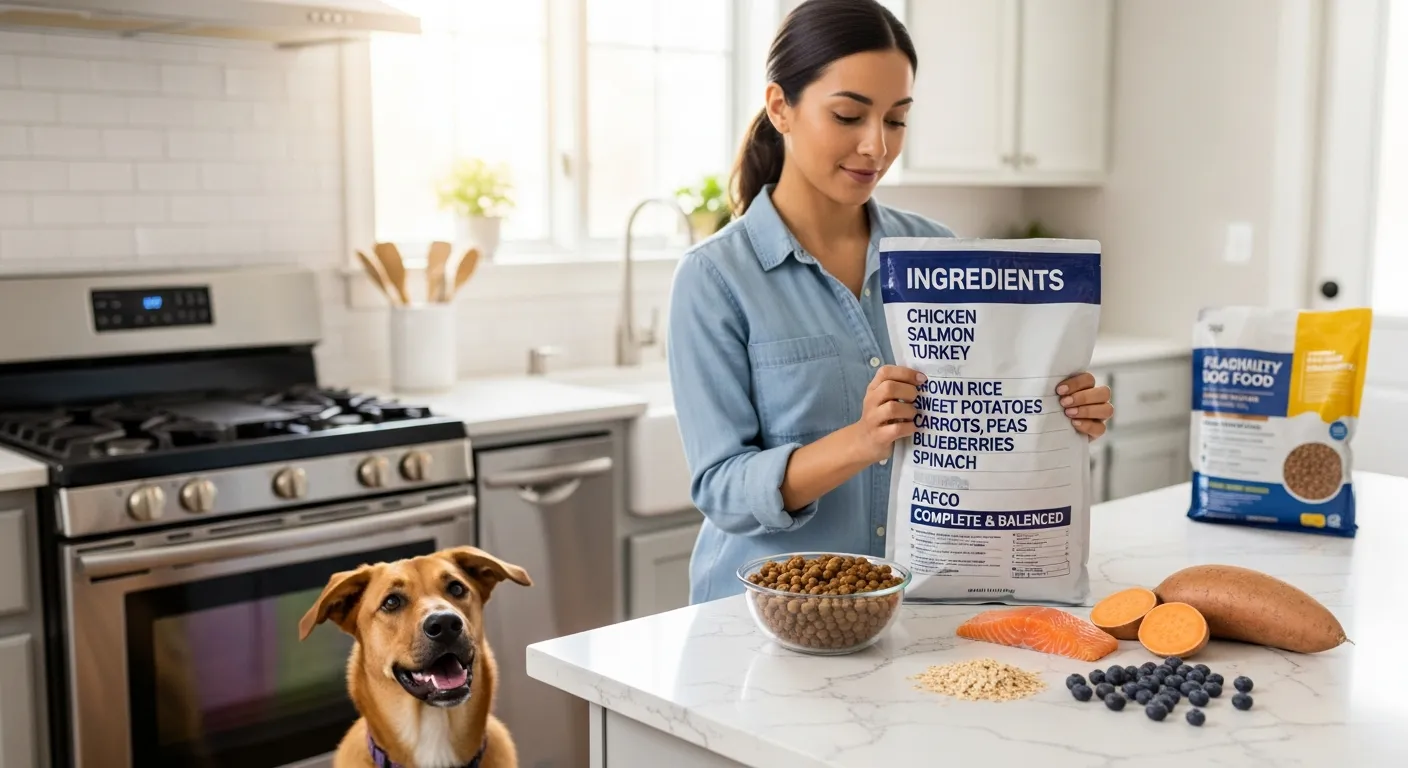
When you strip away all the marketing, high quality dog food comes down to a few key ideas:
- Real, named animal proteins lead the recipe
- Whole-food ingredients over cheap fillers
- Proper nutrient balance backed by AAFCO standards
Let’s break that down.
Ingredients To Look For In High Quality Dog Food
You don’t need to be a nutritionist, but you do want to see:
- Named animal proteins first
Look for things like chicken, salmon, turkey, lamb, beef, chicken meal. The word “meal” isn’t automatically bad, chicken meal can actually be very protein-dense. What you want to avoid are vague terms like:
- “meat meal”
- “animal by-product meal“ (without a species)
- Whole-food ingredients you recognize
Examples:
- Brown rice, oats, barley
- Sweet potatoes, pumpkin, carrots, peas
- Blueberries, spinach, apples (often in small amounts)
- Healthy fat sources
Such as chicken fat, salmon oil, or flaxseed, which help with energy, skin, and coat health.
- AAFCO “complete and balanced“ statement
Somewhere on the bag or can you should see wording like:
“This food is formulated to meet the nutritional levels established by the AAFCO Dog Food Nutrient Profiles for [life stage].”
or
“Animal feeding tests using AAFCO procedures substantiate that this product provides complete and balanced nutrition for [life stage].”
That tells you the food meets basic nutrient standards for your dog’s age (puppy, adult, or all life stages).
Common Red Flags And Marketing Tricks
Some things that look impressive on the front of the bag don’t actually mean much.
Watch out for:
- Vague proteins
“Meat meal,“ “animal fat,“ or “poultry by-product” without a named species. If they can’t tell you what animal it is, that’s a red flag.
- Ingredient splitting
A brand might break one ingredient into several parts to make it look like there’s less of it. For example: peas, pea protein, pea fiber, three forms of the same plant, making peas look less dominant in the list.
- “Natural,“ “holistic,“ “premium”
These words are mostly marketing, not regulated quality standards. They can appear on excellent foods and very average ones.
- Tiny “with chicken” or “with beef” claims
In labeling rules, “with chicken” can mean as little as 3% chicken. The front might show a big steak or chicken breast, but most of the protein could still be from other sources.
- No AAFCO statement anywhere
That’s a sign the diet may not be complete and balanced. Use foods without AAFCO guidance only under direct veterinary supervision (for example, some therapeutic or home-prepared diets).
In short: high quality dog food is honest about what’s inside, prioritizes well-sourced animal protein, and backs it up with proper nutrition standards, not just pretty packaging.
Key Nutrients Every Dog Food Should Provide
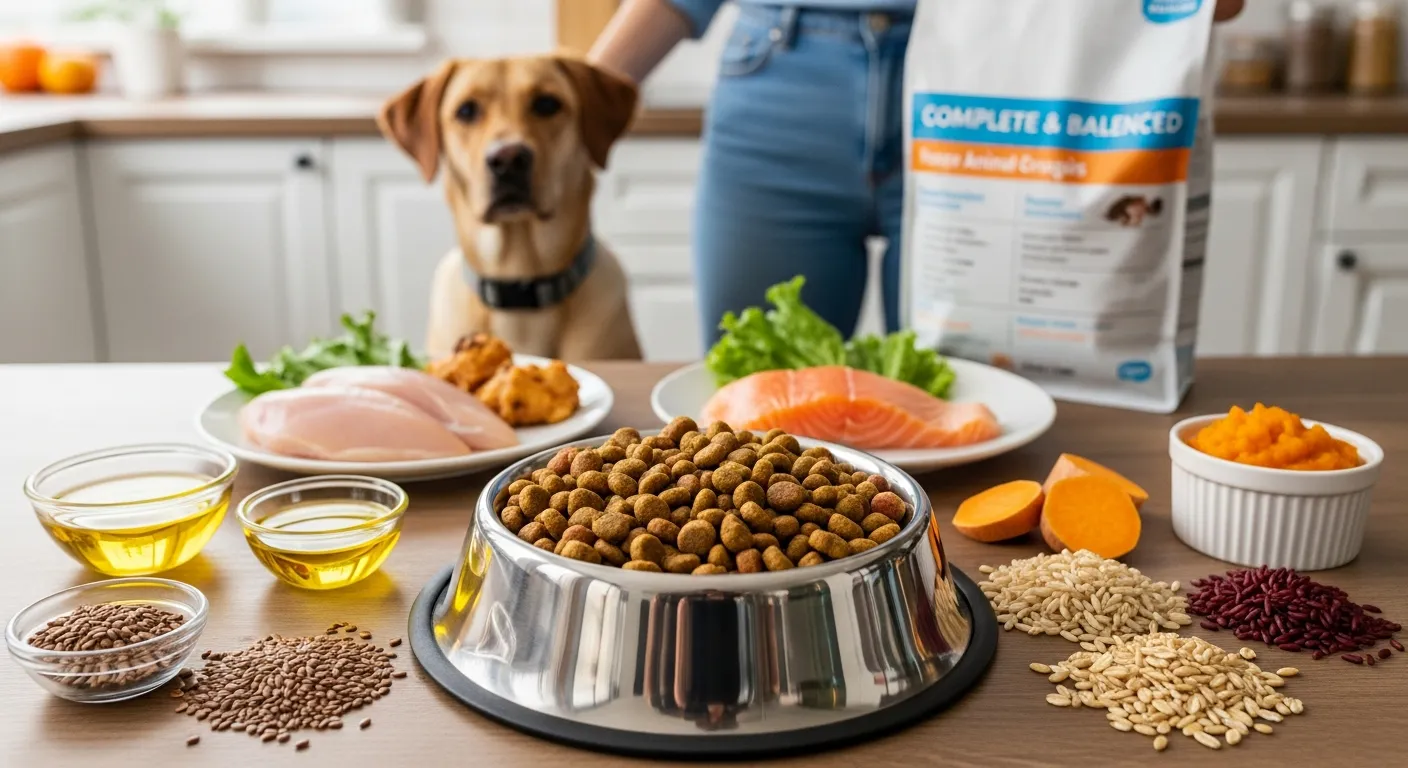
Dogs are omnivores with a strong need for animal protein. According to veterinary nutrition guidelines (like those from AAFCO and the World Small Animal Veterinary Association, WSAVA), a complete and balanced dog food must provide all the essential nutrients in the right ratios.
Core Components Of A Complete And Balanced Diet
Every high quality dog food should cover:
- Protein – for muscles, immune system, and tissue repair
- Fats and fatty acids – for energy, hormone health, brain function, skin, and coat
- Carbohydrates – for energy and fiber
- Fiber – for digestive health and stool quality
- Vitamins and minerals – for everything from bone strength to nerve function
If a food says “for intermittent or supplemental feeding only,“ it’s not complete and balanced. Treat it like a snack, not your dog’s main meal, unless your vet has a specific plan.
Protein Quality: Animal Vs. Plant Sources
Dogs can digest plant proteins (like peas, lentils, or soy), but animal proteins usually provide a more complete amino acid profile.
High quality dog foods typically:
- Use named animal proteins as the primary protein source
- May include some plant proteins, but not as the main star
- Avoid relying on cheap plant proteins just to boost the protein number on the label
Better examples:
- Chicken and chicken meal
- Turkey
- Salmon or other named fish
- Lamb, beef (if your dog tolerates them)
Less ideal if they’re doing all the “heavy lifting”:
- Pea protein
- Potato protein
- Corn gluten meal
Your dog’s body cares less about the marketing term and more about, “Can I actually use these amino acids to build muscle and stay healthy?“ Animal proteins usually win that battle.
Fats, Carbs, Fiber, And Micronutrients
Fats
Healthy fats are crucial. Look for:
- Named fat sources like chicken fat or salmon oil
- Omega-3s from fish oil or flaxseed for skin, coat, and joint support
Carbohydrates & Fiber
Carbs give energy and help with stool quality. In high quality dog food, you’ll see:
- Whole grains like brown rice, oats, barley (if your dog tolerates grains)
- Starchy veggies like sweet potato or pumpkin
- Added fiber from beet pulp, pumpkin, or chicory root to support gut health
Vitamins & Minerals
You’ll usually see a long list at the end of the ingredients. That’s normal. Even when foods use whole ingredients, they still often add vitamins and minerals to hit precise AAFCO targets. The key is that the overall recipe, protein, fat, carbs, fiber, plus those micronutrients, works together to meet your dog’s needs.
How To Read A Dog Food Label Like A Pro
Once you know where to look, labels stop being so mysterious.
Decoding The Ingredients List
A few quick rules:
- Ingredients are listed by weight
The first few ingredients are the most important. Fresh meats include water weight, so a food might list “chicken” first but actually get more protein from “chicken meal” or plant proteins further down.
- First 3–5 ingredients tell you the story
For a high quality dog food, you want at least one or two named animal proteins in that top group.
- Look at the pattern, not just single words
Example of a more balanced list:
Chicken, chicken meal, brown rice, barley, chicken fat, dried beet pulp, flaxseed…
Less ideal if you see:
Pea protein, peas, lentils, chickpeas, potatoes, potato protein…
That’s a lot of legumes and potatoes carrying the load.
Understanding The Guaranteed Analysis And AAFCO Statement
The Guaranteed Analysis panel shows minimum protein and fat and maximum fiber and moisture. To compare different foods (like dry vs canned), nutritionists use a dry matter basis, but you don’t have to do math every time.
Some simple guidelines:
- For most healthy adult dogs, you generally want:
- Protein: at least mid-20s % on a dry food label
- Fat: often 10–18% depending on energy needs
- Higher isn’t always better, very high protein or fat can be too rich for some dogs.
More important than the exact number is the AAFCO statement, usually near the feeding guidelines.
Look for wording like:
- “Formulated to meet the nutritional levels established by the AAFCO Dog Food Nutrient Profiles for maintenance of adult dogs.”
- Or, even better: “Animal feeding tests using AAFCO procedures substantiate that this product provides complete and balanced nutrition for….”
Feeding trials are often considered the gold standard, because real dogs ate the food and did well.
If you’re unsure, WSAVA and many veterinary nutritionists suggest choosing brands that:
- Employ at least one full-time board-certified veterinary nutritionist or PhD nutritionist
- Do quality control testing
- Have published feeding trials or research
You don’t have to email the company with a list of questions, but knowing they take testing and quality seriously is a big plus.
Comparing Types Of High Quality Dog Food
There’s no single “best” format. Dry, wet, fresh-cooked, and raw can all be high quality dog food if they’re well-formulated and safe. The right choice depends on your dog, your lifestyle, and your comfort level.
Dry, Wet, Fresh, And Raw: Pros And Cons
Dry (kibble)
Pros:
- Convenient, usually most affordable
- Easy to store and measure
- Often compatible with puzzle feeders and slow bowls
Cons:
- Typically lower moisture
- Quality varies a lot between brands
Wet (canned or pouched)
Pros:
- Higher moisture (great for hydration and many senior dogs)
- Often very palatable for picky eaters
Cons:
- Can be more expensive per calorie
- Harder to leave out without spoilage
Fresh-cooked (refrigerated or frozen)
Pros:
- Often very digestible and palatable
- Simple ingredient lists: easy to see what you’re feeding
Cons:
- Usually more expensive
- Needs fridge/freezer space, more handling
Raw (commercial raw or home-prepared)
Pros:
- Some owners feel dogs do very well on it
- Can be high in protein with minimal processing
Cons:
- Safety concerns with bacteria for humans and pets, especially kids, seniors, or immunocompromised family members (AVMA and many veterinary groups are cautious here)
- Harder to balance at home without guidance
- Needs careful handling and storage
If you’re interested in fresh or raw, it’s worth talking to your vet or a board-certified veterinary nutritionist to make sure it’s complete, balanced, and handled safely.
Grain-In Vs. Grain-Free: What Matters Most
Grain-free got trendy fast, but it’s not automatically more “high quality.“ In fact, the FDA has looked into possible links between some grain-free diets heavy in legumes and certain heart issues in dogs.
Key points:
- Most dogs do fine with grains like rice, oats, or barley.
- True grain allergies are uncommon: many dogs with itching are reacting to fleas, environmental allergens, or specific proteins instead.
- Grain-free foods often replace grains with potatoes, peas, lentils, and chickpeas, which are fine in moderation, but can get overused.
What matters more than grain vs grain-free is:
- Is the food AAFCO complete and balanced?
- Is the brand transparent and well-regulated?
- Does your individual dog feel and look better on it? (Good stool, skin, coat, energy, weight.)
If your vet recommends a grain-free or grain-inclusive diet for a specific reason (like a diagnosed food sensitivity), follow their guidance. Otherwise, don’t let marketing scare you away from well-made foods that contain grains.
Tailoring Food Quality To Your Dog’s Age, Size, And Health
Even the best high quality dog food isn’t right for every dog. Age, size, and health issues all change what “ideal” looks like.
Life Stage Nutrition: Puppy, Adult, And Senior
Puppies
Puppies, especially large-breed puppies, have very specific needs:
- Look for foods labeled for “growth“ or “all life stages“ that specify they’re appropriate for large-breed pups if you have one.
- Calcium and phosphorus must be in the right range to support steady, healthy growth.
Adult dogs
Most healthy adult dogs do well on foods for “adult maintenance” or “all life stages.“ Focus on:
- Balanced protein and fat
- Good stool quality
- Healthy body condition (you should feel ribs without digging, but not see them sharply in most breeds)
Senior dogs
Older dogs may need:
- Slightly fewer calories if they’re slowing down
- Or more protein to protect muscle if they’re losing weight or muscle mass
- Added joint support (omega-3s from fish oil can help)
Not all seniors need a “senior” food label, but they do need a food that fits how their body is aging. Your vet can help you decide when to tweak their diet.
Breed Size, Activity Level, And Sensitive Dogs
Small vs large breeds
- Small dogs often do well with smaller kibble pieces and slightly higher calorie density.
- Large and giant breeds benefit from foods that support joint health and controlled growth (in puppies) to reduce stress on developing bones.
Active vs couch potato
- A high-energy herding dog might need a higher fat performance-style food.
- A laid-back apartment companion may need fewer calories to prevent weight gain, even if the ingredients are “top shelf.”
Sensitive stomachs or allergies
If your dog has chronic loose stool, vomiting, or intense itching, the food may need to change, but don’t assume it’s just “bad food.“
- Some do better on limited-ingredient diets with fewer protein sources.
- Others need a veterinary prescription diet, especially for true food allergies or chronic GI disease.
- Always talk to your vet before doing elimination diets on your own: it’s easy to miss something.
High quality dog food is personal. What’s perfect for your neighbor’s Labrador might be too rich, too low-calorie, or too high in certain ingredients for your own dog.
Practical Tips For Upgrading Your Dog’s Diet Safely
Once you’ve picked a better option, the next step is getting it into your dog’s bowl without creating stomach drama.
Transitioning To Better Food Without Upsetting Your Dog’s Stomach
Dogs’ guts don’t love sudden change. To reduce the risk of diarrhea or vomiting, transition over 7–10 days:
- Days 1–3: 75% old food, 25% new
- Days 4–6: 50% old, 50% new
- Days 7–10: 25% old, 75% new
- Then move to 100% new food
If your dog gets gassy or loose stool, slow the transition down and hold at the current mix for a few extra days.
Portion Sizes, Treats, And Maintaining A Healthy Weight
Even the best high quality dog food can cause problems if you feed too much.
- Use the feeding guide on the bag as a starting point, not a rule. Many dogs need less than the chart suggests.
- Adjust every couple of weeks based on:
- Body shape (can you feel the ribs?)
- Energy level
- Stool quality
- Treats (including dental chews, table scraps, and training snacks) should stay around 10% or less of daily calories.
A simple check: stand over your dog and look down. You want a visible waist (a little inward curve) behind the ribs, and you should feel ribs with light pressure.
Working With Your Veterinarian For Long-Term Nutrition
Your vet (or a veterinary nutritionist) is your best ally in making sure your dog’s food really fits their health.
A good rhythm:
- Bring photos of the food label or the actual bag/can to wellness visits.
- Ask, “Does this look complete and balanced for my dog’s age and health?”
- If your dog has chronic issues (itching, ear infections, loose stool, or weight changes), ask whether diet might be part of the puzzle.
Veterinary organizations like the AVMA, AAHA, and WSAVA all emphasize that nutrition is a key part of preventive care, not an afterthought. You don’t have to chase every trend. You just need a solid, evidence-based diet that your individual dog does well on.
Conclusion
Choosing a high quality dog food doesn’t mean memorizing every nutrient or falling for the fanciest label. It means focusing on a few reliable cues:
- Named animal proteins near the top of the ingredients list
- Whole-food ingredients and healthy fat sources
- An AAFCO “complete and balanced“ statement for your dog’s life stage
- A format (dry, wet, fresh, or raw) that fits your dog and your lifestyle
From there, your dog will tell you a lot: watch their stool, skin, coat, energy, and weight over a few weeks on a new food. If those are moving in the right direction, and your vet is happy with the plan, you’re on the right track.
High quality dog food is really about helping your dog feel better, move easier, and enjoy more good years with you. And you absolutely can do that without getting overwhelmed. Start with one upgrade, make changes slowly, and keep the conversation open with your vet.
Your dog doesn’t care what the bag looks like, they care how they feel. If you keep that as your north star, you’ll make great choices.