
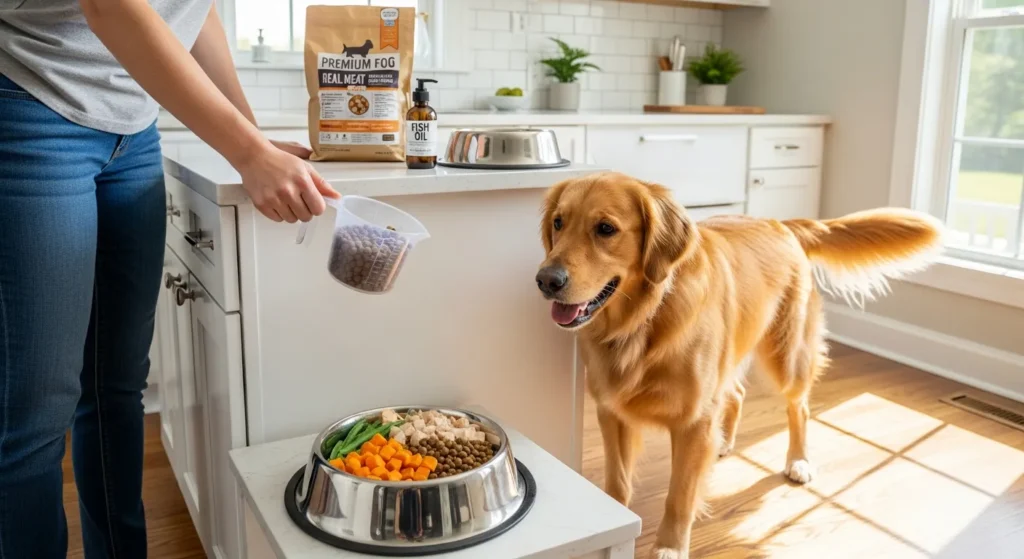
You’ve brought home (or already live with) a wiggly, sweet Golden Retriever who’ll happily eat… pretty much anything that fits in their mouth.
That’s adorable, but it also means what you choose to put in their bowl really matters.
Golden Retrievers are prone to obesity, joint issues, and skin problems, so the right food can literally add healthy, comfortable years to their life. This guide breaks down golden retriever food in simple terms, what to feed, how much, and how to adjust for age, activity, and common issues.
Let’s walk through what your Golden actually needs and how to build an easy, realistic feeding routine you can stick with.
Understanding Golden Retriever Nutrition Needs
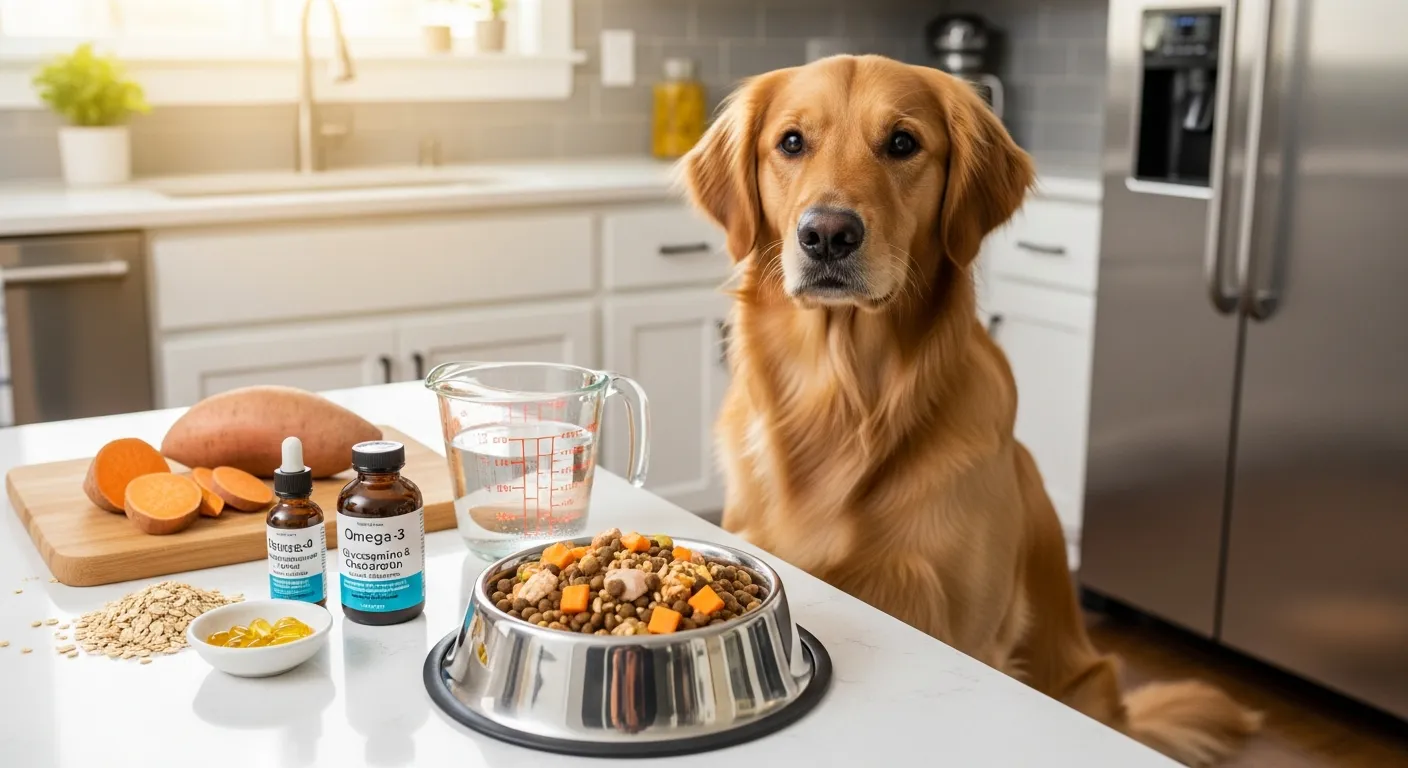
Golden Retrievers are active, medium-to-large dogs (usually 55–75 pounds) with big appetites and soft hearts. Nutritionally, they need the same basic building blocks as any dog, but a few areas deserve extra attention.
Key Nutrients For A Healthy Golden
When you’re choosing golden retriever food, look for these essentials:
- High-quality protein
Goldens do best with animal protein as the first ingredient, such as:
- Chicken, turkey, or duck
- Lamb or beef
- Fish (salmon, whitefish)
Protein helps maintain lean muscle, supports immune function, and keeps your dog strong and energetic.
- Healthy fats
Fats are a key energy source and keep that classic Golden coat shiny.
- Chicken fat or fish oil for calories and taste
- Omega-3 fatty acids (from fish oil or flaxseed) to support joints, brain, and skin
- Complex carbohydrates & fiber
Good options include:
- Oats
- Brown rice
- Barley
- Sweet potatoes
These provide steady energy and support healthy digestion.
- Vitamins and minerals
Complete and balanced foods (meeting AAFCO standards) include:
- Calcium and phosphorus for bones and teeth
- Antioxidants like vitamin E and C for immune support
- Zinc and biotin for skin and coat
- Joint support
Because Goldens are prone to hip and elbow dysplasia and arthritis, it’s a plus if your dog’s food or supplement includes:
- Glucosamine
- Chondroitin
- Omega-3s (again.)
- Water
Goldens usually need about ½–1 ounce of water per pound of body weight per day. For a 70‑lb Golden, that’s around 4–8 cups, including what’s in wet, fresh, or raw food.
How Goldens Differ From Other Breeds
Goldens aren’t just “big dogs that love food.“ They have a few unique risks that should shape how you feed them:
- Obesity
They’re often very food-motivated and can easily become overweight. Extra pounds put more stress on joints and can worsen hip dysplasia or arthritis.
- Joint problems
Goldens are a large, fast-growing breed. Too many calories as puppies or too much weight as adults can strain developing joints.
- Heart concerns and grain-free diets
There’s ongoing research into a type of heart disease called dilated cardiomyopathy (DCM) potentially linked to some grain‑free diets heavy in peas, lentils, and potatoes. Many cardiologists and the FDA have warned that certain boutique, exotic, and grain‑free diets may be a risk for some dogs. Talk with your vet before going grain‑free.
- Bloat risk
Like many deep‑chested breeds, Goldens can be at risk for bloat (gastric dilatation-volvulus), a life‑threatening twisting of the stomach. Meal timing, portion size, and not letting them gulp water and then exercise hard can help lower that risk.
Because of these factors, Goldens usually do best on:
- Measured meals (not free‑feeding from a full bowl all day)
- Controlled calories to prevent extra weight
- Balanced diets with appropriate grains or vets‑approved grain‑free formulas
- Built‑in or added joint support
Life Stage Feeding: Puppy, Adult, And Senior Goldens

Your Golden’s food needs change a lot from wiggly puppyhood to gray‑muzzled senior years. Feeding the right life-stage formula matters.
Feeding Golden Retriever Puppies (8 Weeks To 18 Months)
Puppy feeding is where you can really set your Golden up for long‑term joint health.
Key tips:
- Choose a large‑breed puppy food that meets AAFCO growth standards. These are designed to control calcium, phosphorus, and calories for healthy, steady growth.
- Most Golden puppies eat 3–4 small meals per day until about 6 months old, then 2–3 meals.
- As a rough starting point, many puppies eat around 2–3% of their body weight per day (if on raw/fresh) or the amount listed on the bag for their current weight and age.
You want your puppy to be lean, not chubby. You should:
- Feel ribs easily under a thin layer of fat
- See a defined “waist” when viewed from above
Too much food = too‑fast growth = more strain on joints.
Adult Golden Retriever Food Needs (1–7 Years)
By around 12–18 months, most Goldens are ready to switch to an adult formula.
Calorie needs vary a lot:
- Less active/neutered adult: around 989–1,200 calories/day
- Active adult: up to 1,500–1,740 calories/day
Many adult Goldens do well on about 2 cups of premium kibble per day, split into:
- 1 cup in the morning
- 1 cup in the evening
This is just a starting point. Adjust up or down based on:
- Body condition (ribs and waist check)
- Activity level (hikes, swimming days, daycare)
- Whether you’re using lots of training treats
Senior Golden Retriever Diet Adjustments (7+ Years)
Around 7 years old (sometimes earlier), Goldens usually start to slow down. Joints may ache, and metabolism may drop.
For senior Goldens, you’ll often want to:
- Reduce calories slightly
So they don’t gain weight as activity decreases.
- Look for senior formulas or adult foods with:
- Added joint support (glucosamine/chondroitin)
- Higher omega‑3s
- Moderate protein to maintain muscle
- Consider these simple tweaks if your dog needs to lose weight:
- Cut kibble by about ⅓
- Add low‑calorie fillers like green beans or plain pumpkin
Example: instead of 1 cup of kibble twice a day, you might feed:
- ¾ cup kibble + ¼ cup green beans per meal
Always make changes slowly over 5–7 days to avoid stomach upset.
Choosing The Right Food Type For Your Golden
You’ve got options: dry, wet, fresh, raw. Each has pros and cons, and many Golden owners end up mixing types.
Dry, Wet, Fresh, And Raw: Pros And Cons
Here’s a quick breakdown:
- Dry kibble
- Pros: Convenient, usually most affordable, easy to store, complete and balanced, can help reduce plaque when chewed.
- Cons: Lower moisture: some picky eaters find it boring.
- Wet (canned) food
- Pros: Higher moisture (great for dogs that don’t drink much), very tasty and aromatic for picky eaters, easy to mix with kibble.
- Cons: Pricier per calorie, doesn’t clean teeth, open cans must be refrigerated.
- Fresh food (gently cooked, refrigerated or frozen)
- Pros: Easy to digest, often great for skin and coat, usually high‑quality ingredients and portioned by weight: many owners report smaller, less smelly stools.
- Cons: More expensive, needs fridge/freezer space, you must follow the brand’s feeding guide closely.
- Raw food
- Pros: Minimally processed, high meat content, can be very palatable: some owners feel their dogs have improved coat and stools.
- Cons: Needs careful handling for food safety, can be unbalanced if home‑prepared without expert guidance, not ideal for households with small kids or immunocompromised people according to many veterinary groups (like the AVMA). Always talk to your vet first.
You don’t have to pick just one. Many owners:
- Use kibble as the “base”
- Add a spoonful of wet or fresh food for taste
- Mix in warm water or low‑sodium broth to boost aroma
Reading Labels: What To Look For And What To Avoid
When you’re comparing golden retriever food brands, flip the bag or can over and read the fine print.
Look for:
- A clear statement that it is “complete and balanced“ for your dog’s life stage (puppy, adult, all life stages).
- Named animal protein first (e.g., “chicken,“ “salmon,“ “lamb”).
- Healthy fats like chicken fat or fish oil.
- Whole grains such as brown rice, oats, or barley if your dog tolerates grains.
- Natural preservatives like mixed tocopherols (vitamin E) or rosemary extract.
Be cautious with:
- Foods where grains or plant proteins (corn gluten, pea protein) dominate the first ingredients.
- Long lists of peas, lentils, chickpeas, and potatoes high up on the label, especially in grain‑free foods, until you’ve discussed DCM concerns with your vet.
- Artificial preservatives like BHA, BHT, ethoxyquin.
- Added sugars, sweeteners, or lots of artificial colors.
If you’re ever unsure, your vet (or a board‑certified veterinary nutritionist) can help you choose a reliable brand that fits your budget and your dog’s needs.
Portion Sizes, Feeding Schedules, And Weight Management
What you feed matters, but how much and how often matter just as much for a Golden.
How Much To Feed Based On Age, Size, And Activity
Use the feeding guide on your dog food as a starting point, then adjust.
For an average adult Golden (60–75 lbs):
- Many do well on about 2 cups of quality kibble per day, split into two meals.
- Very active Goldens (running, agility, long hikes) may need more.
- Couch‑potato or senior Goldens often need less.
Quick body‑condition check:
- You should feel ribs easily but not see them sticking out.
- From above, your dog should have a gentle waistline behind the ribs.
- From the side, you should see a tuck‑up (belly rises slightly toward the hips).
If ribs are hard to feel → reduce food slightly.
If ribs are obvious and hips look bony → increase food slightly.
Most Goldens do best with:
- Twice‑daily feeding (morning and evening). This helps with digestion and may reduce bloat risk compared to one large meal.
Preventing Obesity And Joint Strain
Because Goldens are so prone to weight gain, a few simple habits go a long way:
- Measure every meal.
Use a real measuring cup, not a scoop that “looks about right.“
- Watch the treats.
Treats should be no more than 10% of daily calories. If you train a lot, reduce meal portions a bit to balance.
- Use low‑calorie fillers.
If your Golden is always “starving,“ try:
- Green beans (no salt)
- Plain canned pumpkin (not pie filling)
- Crunchy veggies like carrots or cucumber slices
- Keep them moving.
Good food plus daily walks, play, and brain games will help protect their joints and keep them happy.
If your Golden is already overweight, slow, steady weight loss (with your vet’s guidance) is far safer than crash diets.
Treats, Snacks, And Safe Human Foods For Goldens
Treats are part of the fun of living with a Golden. The trick is keeping them fun and healthy at the same time.
Healthy Treat Ideas And Daily Limits
Aim to keep treats around 10% or less of your Golden’s daily calories.
Healthier treat ideas:
- Kibble taken from their regular meal portion and used as training rewards
- Small pieces of carrot, cucumber, or green beans
- A spoonful of plain pumpkin (high fiber, low calories)
- Small bits of cooked chicken or turkey (unseasoned, no skin)
- Commercial low‑calorie training treats broken into tiny pieces
Tips:
- Break treats into pea‑sized bits, your dog cares more about how often they get a treat than how big it is.
- If you know you’ll be training a lot that day, reduce meal size by 10–20%.
Human Foods That Are Safe, And Those To Skip
Some people‑foods are perfectly fine in small amounts: others are dangerous.
Generally safe in moderation (plain, no seasoning):
- Carrots, green beans, cucumbers
- Small amounts of apple (no seeds or core)
- Blueberries, strawberries
- Plain cooked chicken, turkey, or lean beef
- Plain white rice or boiled potato (helpful during mild tummy upset)
Avoid or never feed:
- Grapes and raisins (can cause kidney failure)
- Onions, leeks, chives, garlic (can damage red blood cells)
- Chocolate (especially dark and baking chocolate)
- Alcohol, xylitol (in sugar‑free gum and some peanut butters), caffeine
- Fatty, salty table scraps, bones that can splinter
If your Golden eats something questionable, call your vet or a pet poison hotline (like ASPCA Animal Poison Control in the US) right away.
Common Food Issues In Golden Retrievers
Even with good golden retriever food, some dogs struggle with allergies, sensitive stomachs, or skin issues.
Allergies, Sensitive Stomachs, And Skin Problems
Goldens are known for:
- Itchy skin
- Ear infections
- Soft stools or intermittent diarrhea
Sometimes, food plays a role.
Possible signs food isn’t agreeing with your dog:
- Chronic itching or licking (especially paws and belly)
- Recurrent ear infections
- Frequent soft stool, gas, or vomiting
- Red, inflamed skin or hot spots
Common culprits can include:
- Certain proteins (chicken, beef, dairy, egg)
- Storage mites in old kibble
- Less often, specific grains
What you can do:
- See your vet first. Skin and tummy issues often have multiple causes (allergies, parasites, infections), and guessing at home can drag things out.
- Ask whether a limited‑ingredient diet or a hydrolyzed prescription diet makes sense for a trial period.
- Make diet changes slowly over at least 5–7 days.
When To Talk To Your Veterinarian Or Nutritionist
Reach out to your vet (or a veterinary nutritionist) if:
- Your Golden is losing or gaining weight unexpectedly
- You see chronic itching, ear infections, or tummy problems
- You’re thinking about home‑cooked or raw feeding
- Your dog has heart disease, kidney disease, or other chronic conditions
A board‑certified veterinary nutritionist can design a custom diet if your Golden has complex medical needs or lots of food sensitivities.
Simple Sample Feeding Plans For Everyday Life
To make this all feel more real, here are some simple example menus. Always adjust based on your dog’s food brand, body condition, and your vet’s advice.
Example Daily Menus For Puppy, Adult, And Senior Goldens
Puppy (4–6 months, ~35 lbs)
- Breakfast:
- ¾ cup large‑breed puppy kibble
- Lunch:
- ¾ cup large‑breed puppy kibble
- Dinner:
- ¾ cup large‑breed puppy kibble
- Training treats:
- Part of the daily kibble ration used as rewards
Adult (3‑year‑old, 65‑lb active Golden)
- Morning:
- 1 cup high‑quality adult kibble
- 1 Tbsp wet food or a splash of warm water mixed in
- Evening:
- 1 cup adult kibble
- Treats:
- Small training treats, carrot sticks, or kibble from the daily amount
Senior (10‑year‑old, 70‑lb Golden needing to lose a few pounds)
- Morning:
- ¾ cup senior or weight‑management kibble
- ¼ cup green beans (no salt)
- Evening:
- ¾ cup kibble
- ¼ cup green beans
- Treats:
- A few pieces of kibble or veggies only
Remember: these are examples, not strict rules. Your dog’s brand, calorie density, and health will change the exact amounts.
Adjusting Meals For Busy Schedules And Training Days
Life’s busy. Your feeding plan has to fit your routine too.
On hectic days:
- Stick to two set mealtimes you can commit to (for example, 7 am and 6 pm).
- Use an automatic feeder if you’re stuck at work, but avoid free‑feeding.
On heavy training or activity days:
- Increase food by about 10–20% if your Golden is doing long hikes, swimming, or big training sessions.
- Use some of your dog’s regular kibble as training rewards, so you’re not adding lots of extra calories.
On lighter‑activity days:
- Drop back to the normal portion.
Check your Golden’s weight and body condition every couple of weeks and adjust gradually rather than making big jumps.
Conclusion
Feeding your Golden Retriever well doesn’t have to be complicated. If you focus on high‑quality protein, healthy fats, balanced nutrients, and sensible portions, you’re already doing a lot right.
To recap the big pieces:
- Choose a complete and balanced food that fits your dog’s life stage.
- Keep your Golden lean to protect their joints and heart.
- Feed measured meals twice a day, not a constantly full bowl.
- Keep treats to about 10% of calories and favor healthy options.
- Watch for signs of skin, ear, or tummy trouble and loop your vet in early.
Most of all, remember: food isn’t just fuel, it’s part of your daily bond. A calm, consistent feeding routine, the right golden retriever food, and a little bit of label‑reading can help your Goldie stay goofy, shiny, and comfortable for years to come.
If you’re ever unsure, bring your questions and your food bag to your vet. You don’t have to figure it all out alone, and your Golden will thank you in tail wags and happy mealtime dances.