
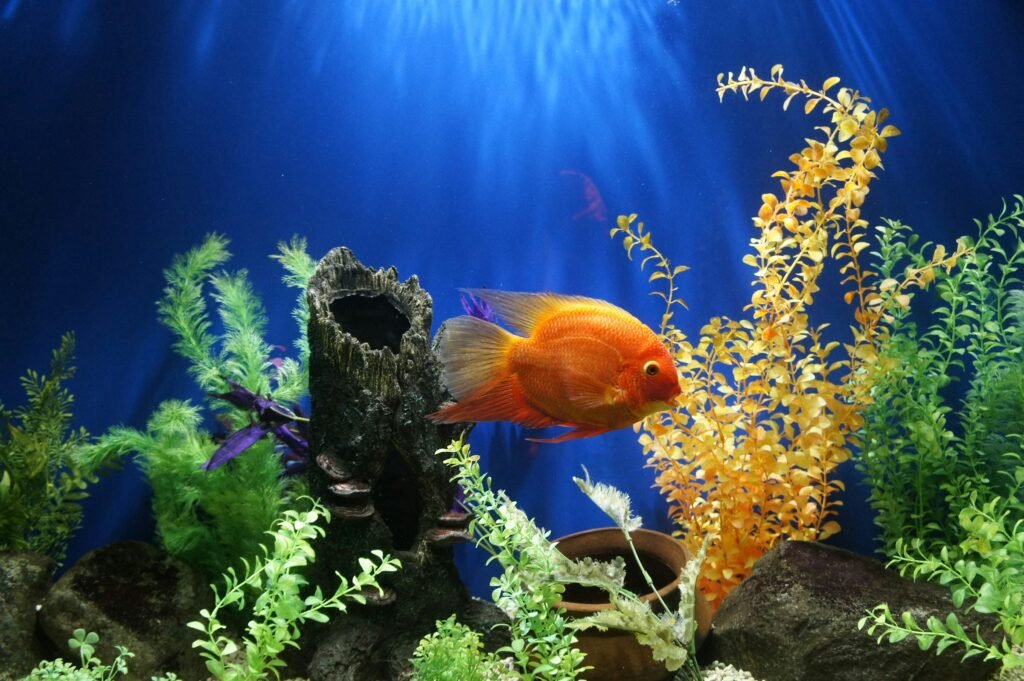
You know that moment when you’re staring at a wall of fish at the pet store thinking, “I just wanted something that doesn’t die in a week…“ Relate?
You’re not alone.
The good news: some beginner-friendly fish really are tougher, more forgiving, and easier to care for, as long as you set things up the right way. In this guide, you’ll learn the easiest freshwater fish to take care of and the simple daily and weekly habits that keep them alive, happy, and actually fun to watch.
Let’s start with the basics (so you don’t accidentally turn your tank into a tiny underwater disaster movie).
Freshwater Fish Care Basic Tips
Before you even pick the easiest freshwater fish to take care of, it helps to know what they actually need to survive. Fish may look “low-maintenance,“ but they’re still living animals with real care requirements, just much simpler than a dog.
Here are the big rocks you’ll want to get right.
Tank size and cycling
If pet stores could stop selling those tiny bowls for anything except maybe a single snail, that’d be great.
For most easy freshwater fish:
- Start with at least a 10-gallon tank (bigger is more stable and forgiving).
- Avoid overstocking: a rough rule many aquarists use is 1 inch of fish per gallon for small community fish, but this is just a guideline, not law.
- Run the filter and heater (if tropical species) for 4–6 weeks before adding fish. This is called cycling the tank.
Cycling lets beneficial bacteria build up in the filter and gravel so they can process fish waste (ammonia → nitrite → nitrate). It’s basically setting up your fish’s plumbing system before they move in.
Fast-cycling shortcuts and “instant start” products exist, but most aquarium vets and experienced hobbyists still recommend patience. Test kits that measure ammonia, nitrite, nitrate, and pH are absolutely worth it.
Temperature and water parameters
Most beginner-friendly tropical species (platies, tetras, corydoras, danios, etc.) are happiest at:
- Temperature: 75–82°F (24–28°C)
- pH: 6.5–7.5 (slightly acidic to neutral)
White Cloud Mountain Minnows and some danios do well cooler (mid–60s to low 70s°F), so they’re great if you don’t want a heater.
The key is consistency. Big, sudden swings in temperature or pH stress fish even more than a number that’s slightly off.
Feeding the easy way
Overfeeding is fish-keeping’s most common crime. The fish look happy: the food disappears: you feel like a good parent… until the water turns gross and everybody gets sick.
Use this rule:
- Feed once or twice a day.
- Only give what they can eat in about 2–3 minutes.
- For community tanks, use:
- Flake food or micro-pellets for mid/top swimmers
- Sinking pellets or wafers for bottom-dwellers like corydoras
Uneaten food = extra waste = more ammonia = stressed fish. When in doubt, feed a bit less. Healthy fish are usually eager eaters.
Schooling and social needs
Many of the easiest freshwater fish to take care of are schooling fish, which means they’re calmer and healthier in groups.
For most small, peaceful schooling species, aim for:
- 6 or more of the same species (danios, tetras, white cloud minnows, etc.)
This helps them feel safe and reduces bullying. One lonely schooling fish is like one lone kid on a playground: it just feels wrong.
Cleaning Tanks
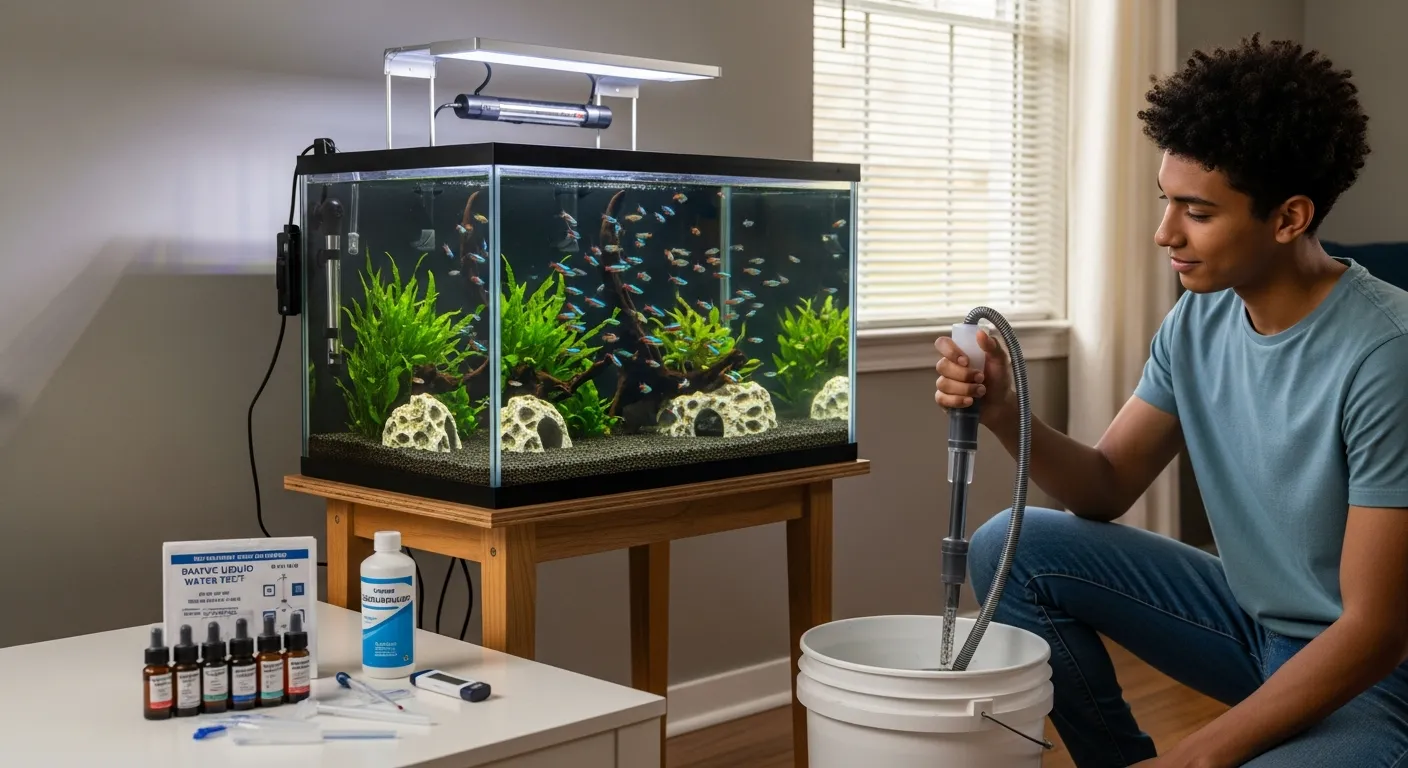
You don’t need to be a full-time janitor, but you do need a basic cleaning routine to keep things healthy.
Here’s a simple schedule that works for most beginner tanks:
Every week:
- Change 20–25% of the water.
- Use a siphon or gravel vacuum.
- Always treat tap water with dechlorinator before adding it.
- Match the new water’s temperature to the tank.
- Vacuum the gravel to pull up fish poop, uneaten food, and plant debris.
Every month (or as needed):
- Rinse filter sponges or cartridges in old tank water, not under the tap.
- Chlorinated tap water can kill your helpful bacteria.
- Gently wipe algae from the glass with a dedicated aquarium sponge.
Live plants can help soak up nitrates and improve water quality, and they look great. Even low-light, easy plants like java fern, anubias, or hornwort can make maintenance easier and your fish happier.
If cleaning day sounds like a lot, remember: for a well-stocked, healthy tank, this is usually 30 minutes once a week. You can absolutely handle that.
Keeping Fish Healthy
Fish can’t bark or meow when something’s wrong, but they do show signs. The trick is to catch problems early.
Watch for:
- Lethargy – hanging at the bottom or hiding all day
- Clamped fins – fins held close to the body
- White spots – could be ich (a common, treatable parasite)
- Frayed or rotten-looking fins – may be fin rot
- Rapid breathing or gasping at the surface
If you notice these signs:
- Test your water. Ammonia or nitrite above 0 is a red flag.
- Do a partial water change (20–30%).
- If symptoms match common issues like ich or fin rot, use aquarium salt or a fish-safe medication according to the label.
Quarantine new fish
New fish can bring in diseases even if they look fine. Ideally you:
- Set up a separate quarantine tank.
- Keep new fish there for 2–4 weeks.
- Only move them to the main tank if they stay healthy.
It’s a little extra work, but it can save your entire tank from a nasty outbreak.
Make the tank feel safe
Stress is a major reason fish get sick. To reduce it:
- Add plants, caves, and decorations for hiding.
- Keep the tank away from slamming doors and pounding speakers.
- Choose compatible tankmates, peaceful community fish are your best bet.
A varied diet helps, too. Many fish enjoy the occasional treat of:
- Frozen or freeze-dried bloodworms or brine shrimp
- Blanched peas or zucchini (especially goldfish and some livebearers)
Think of it as their version of “cheat day,” minus the guilt.
Easiest Freshwater Fish to Take Care Of
Now to the fun part: who actually makes the list?
These species are widely recommended by experienced aquarists and many vet-backed resources as some of the easiest freshwater fish to take care of. They’re hardy, forgiving of minor beginner mistakes, and generally peaceful.
Quick note: “easy” doesn’t mean “indestructible.” They still need a filter, proper tank size, and regular care.
1. White Cloud Mountain Minnows
- Best for: Cooler rooms, nano setups, peaceful community tanks
- Tank size: 10+ gallons
- Temperature: 64–72°F (18–22°C), so they often don’t need a heater
Why they’re great:
- Very hardy and tolerant of a wide range of conditions
- Peaceful schooling fish, keep in groups of 6 or more
- Active, fun to watch, but not aggressive
They’re perfect if your home runs on the cooler side or you don’t want to fuss with heaters. Add a dark substrate and some plants, and their subtle colors really pop.
2. Zebra Danios
- Best for: Lively, beginner community tanks
- Tank size: 10+ gallons, longer tanks preferred
- Temperature: 70–78°F (21–25°C)
Zebra danios are tiny striped rockets with fins. They’re:
- Extremely adaptable and hardy
- Peaceful and fast, so they rarely get picked on
- happiest in groups of 6+
If you want a tank that always looks busy, zebra danios are your team of tiny personal trainers.
3. Platies
- Best for: Colorful, friendly community tanks
- Tank size: 10+ gallons (bigger if you have lots)
- Temperature: 72–78°F (22–26°C)
Platies are often the first fish people fall in love with, and for good reason:
- Come in tons of colors and patterns
- Very peaceful and easy-going
- Great for beginners learning basic fish care
They’re livebearers, which means they give birth to live babies. If you have males and females together, you may end up with surprise fry. Cute, but you’ll need a plan if the population starts booming.
4. Corydoras Catfish
- Best for: Bottom-cleaning buddies in community tanks
- Tank size: 15+ gallons (for a small group)
- Temperature: 72–78°F (22–26°C)
Corydoras (often just called “corys”) are small, armored catfish that scoot around the bottom like tiny Roombas.
Why they’re favorites:
- Very peaceful and social, keep in groups of at least 4–6
- Help clean up leftover food on the bottom (but they still need dedicated sinking food)
- Cute whiskers, constant busy behavior, and lots of personality
Give them smooth sand or fine gravel, because sharp gravel can damage their barbels (those little whisker-like organs they use to find food).
5. Neon Tetras
- Best for: Classic, vibrant community tanks
- Tank size: 10+ gallons (longer is better)
- Temperature: 72–78°F (22–26°C)
Neon tetras are the iconic bright blue and red schooling fish you’ve probably seen a million times.
They’re:
- Small, peaceful, and very pretty in groups
- Best kept in groups of 8+ to feel safe
- Great with other calm, small fish
They’re a little more sensitive than danios or white clouds but still very manageable if you keep the water stable and clean.
6. Betta Fish (with caveats.)
- Best for: A single “wet pet” with attitude
- Tank size: 5 gallons minimum, filtered and heated
- Temperature: 78–80°F (25–27°C)
Bettas are often sold as desk-pet fish in tiny cups, which is… not ideal.
They can be one of the easiest freshwater fish to take care of if you:
- Give them a proper tank with a heater and gentle filter
- Keep them alone (males especially are aggressive to other males, and sometimes to other fish)
- Provide plants and hiding spots
They breathe some air from the surface using a special organ (the labyrinth organ), so they’re more forgiving of low oxygen than other fish, but they still need clean, warm water.
7. Cherry Barbs
- Best for: Slightly larger beginner tanks
- Tank size: 15+ gallons
- Temperature: 73–81°F (23–27°C)
Cherry barbs are peaceful, colorful, and less nippy than some other barb species.
- Keep them in groups of 6+
- Combine well with platies, corydoras, and peaceful tetras
- Males are usually brighter red: females are more coppery
They like planted tanks and do well when they have places to dart in and out of cover.
8. Guppies & Swordtails
- Best for: Colorful, active community setups
- Tank size: 10+ gallons for guppies: 20+ for swordtails
- Temperature: 72–80°F (22–27°C)
Guppies and swordtails are also livebearers like platies. They’re:
- Hardy, active, and very beginner-friendly
- Available in a wild variety of colors and tail shapes
- Generally peaceful, though swordtails can be a bit more assertive
Again, if you mix males and females, be ready for babies. Lots of babies.
Quick stocking idea for a first 10–20 gallon tank
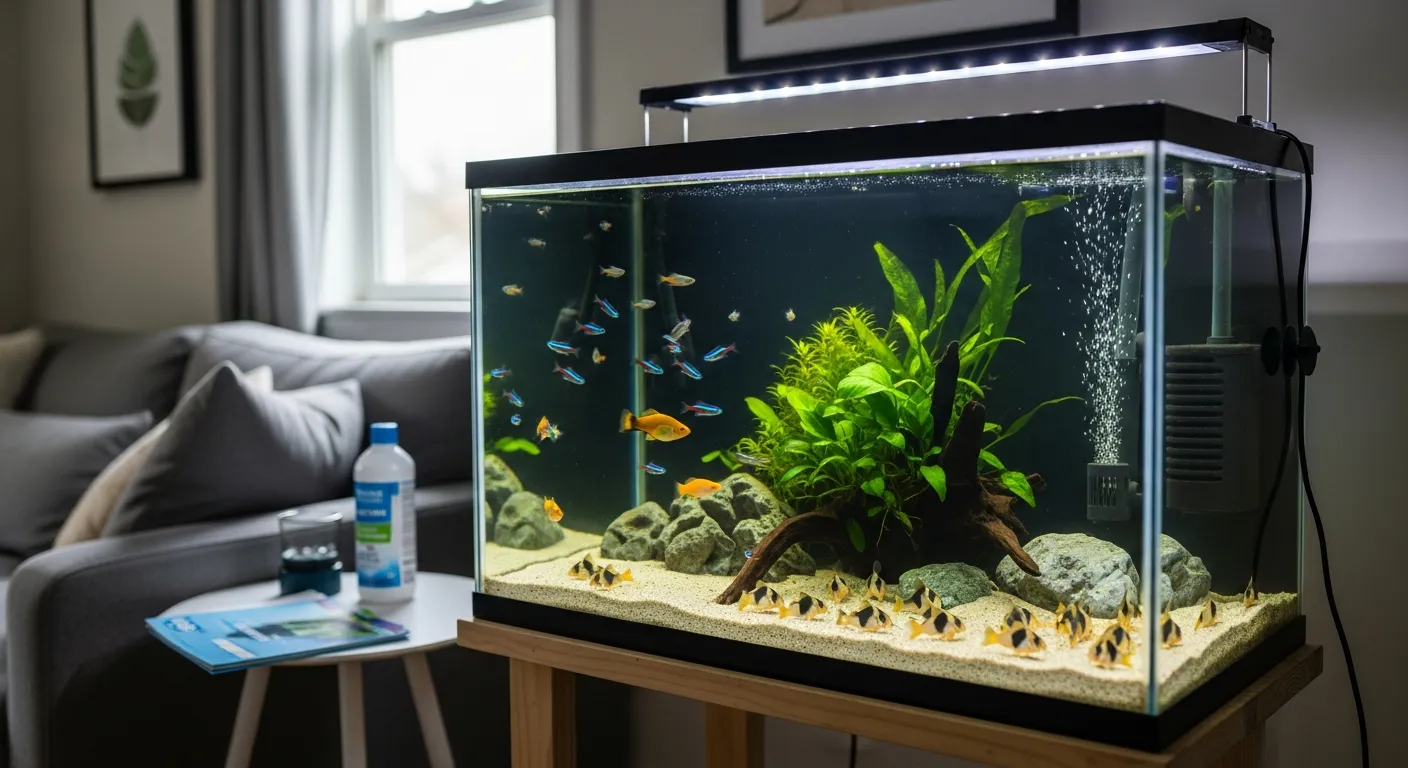
If you want a low-stress starter combo, consider something like:
For a 10–20 gallon tropical tank:
- 6–8 neon tetras or zebra danios
- 4–6 corydoras catfish (dwarf or smaller species for 10-gallon)
- Optional: 3–4 platies if the tank is closer to 20 gallons
- A few easy plants and hiding spots
For a simple cold/room-temp tank:
- 6–10 White Cloud Mountain Minnows
- Plants, rocks, and a small filter
Or, if you want one fish with big personality:
- 1 betta in a planted 5–10 gallon, with a heater and gentle filter
Pick the setup that fits your space, your time, and your vibes, and remember that a slightly under-stocked tank is almost always easier to care for than one that’s packed to the glass.
Conclusion
If you set up a stable tank, keep up with simple weekly water changes, and choose hardy species like White Cloud Mountain Minnows, Zebra Danios, Platies, Corydoras Catfish, Neon Tetras, Cherry Barbs, Guppies, Swordtails, or a well-kept Betta, you’re already way ahead of the curve.
The real secret isn’t one magic “unkillable” fish. It’s:
- A tank that’s big enough and fully cycled
- Consistent temperature, pH, and filtration
- Modest feeding and regular cleaning
- Choosing peaceful, beginner-friendly species
Do that, and your fish will stop being “those things I’m trying not to kill” and start becoming relaxing, surprisingly charming pets you actually look forward to watching.
If you’d like, tell your local fish store you’re looking for the easiest freshwater fish to take care of and use this list as your cheat sheet. Your future self (and your fish) will thank you every time you sit down and watch your tiny underwater world do its thing.