
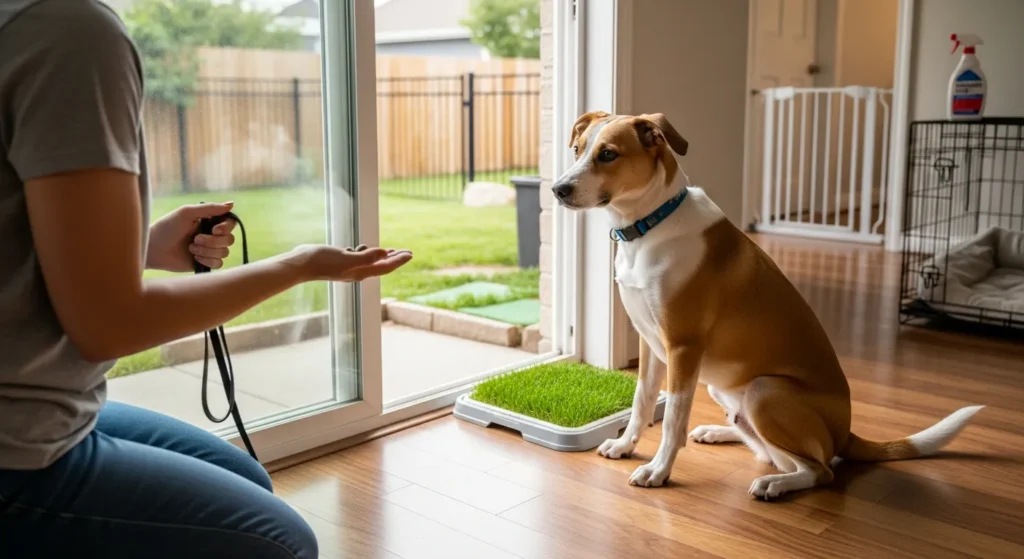
You love your dog, but you probably don’t love stepping in surprise puddles or finding that one corner of the rug that’s… always suspicious.
The good news: dog potty training doesn’t have to be a battle. With a clear plan, some consistency, and the right rewards, you can help your pup understand exactly where (and when) to go. Whether you’ve got a tiny new puppy, a rescue learning house rules, or an adult dog who never got solid training, this guide walks you through dog training for potty breaks in simple, doable steps.
Understanding How Dogs Learn Potty Habits
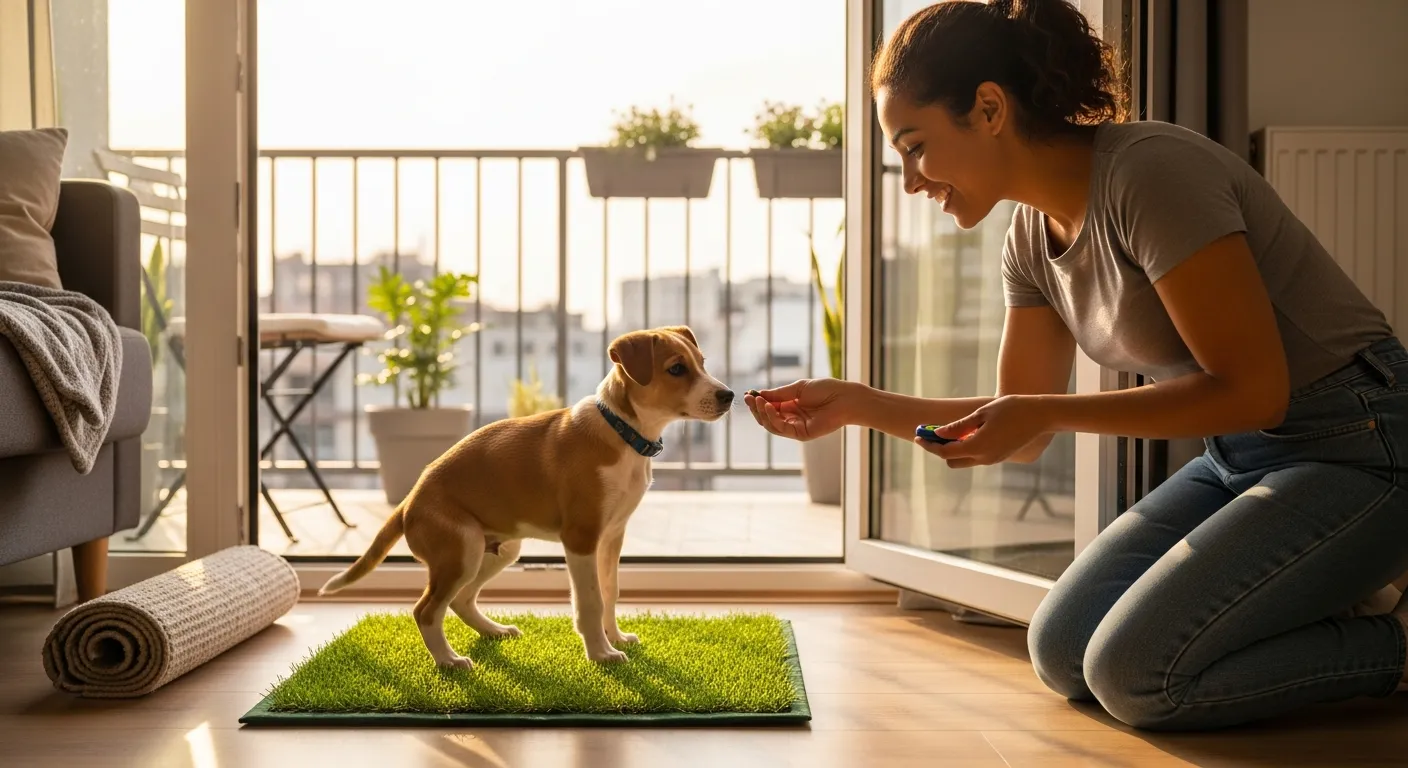
Dogs don’t come pre-programmed knowing that grass is for peeing and your rug is not. They learn potty habits through association and repetition:
- They feel the urge
- They go in a certain place
- Something good (or bad) happens afterward
When you consistently reward them for going in the right spot, their brain connects: “When I pee here, good things happen.“ That’s the core of dog potty training.
Puppies Vs. Adult Dogs Vs. Rescues
Different dogs start at different levels:
- Puppies are basically blank slates. They don’t know the rules, and they physically can’t hold it long. They need the most frequent trips and supervision.
- Adult dogs often learn faster because they can hold their bladder longer and have more control, if they’ve had any structure before.
- Rescue dogs may be anywhere on the spectrum. Some are perfectly house-trained: others were never allowed indoors and don’t know the rules yet. Some may also be anxious, which can affect potty habits.
If you’ve adopted a rescue, assume they don’t know the rules at first. Treat them like a big puppy: lots of structure, patience, and positive reinforcement.
How Long They Can Hold It At Different Ages
These are general guidelines: every dog is a little different. But they give you a starting point for your schedule:
- Under 3 months: about 1–2 hours max while awake
- Around 3–4 months: about 2–3 hours
- Around 5–6 months: about 4–6 hours
- Healthy adult dogs: typically 6–8 hours (though many do better with more frequent breaks)
Overnight, dogs can often last a bit longer, but young puppies usually still need at least one middle-of-the-night trip for a while.
If your dog suddenly can’t hold it as long as they used to, that’s a red flag for a vet visit, things like UTIs, diabetes, or kidney issues can cause more frequent urination.
Indoor, Outdoor, Or Both? Choosing The Right Potty Spot
There’s no single “right” answer here. It depends on your life and your dog.
Mostly outdoor potty training works best if:
- You have easy access to a yard or green space
- You’re home enough to take your dog out often
- You want a clear “outside only” rule
Indoor options (pads, grass trays) can make sense if:
- You live in a high-rise apartment
- You have mobility issues or can’t do frequent stairs
- Weather is extreme (very hot, very cold, or icy)
- You have a very small breed with a tiny bladder
Some owners do both: indoor pads for emergencies or bad weather, and outdoor potty as the long-term goal. Just remember: if your end goal is outdoor-only, you’ll eventually want a plan to fade out indoor options so your dog doesn’t get confused.
Setting Your Dog Up For Potty Training Success
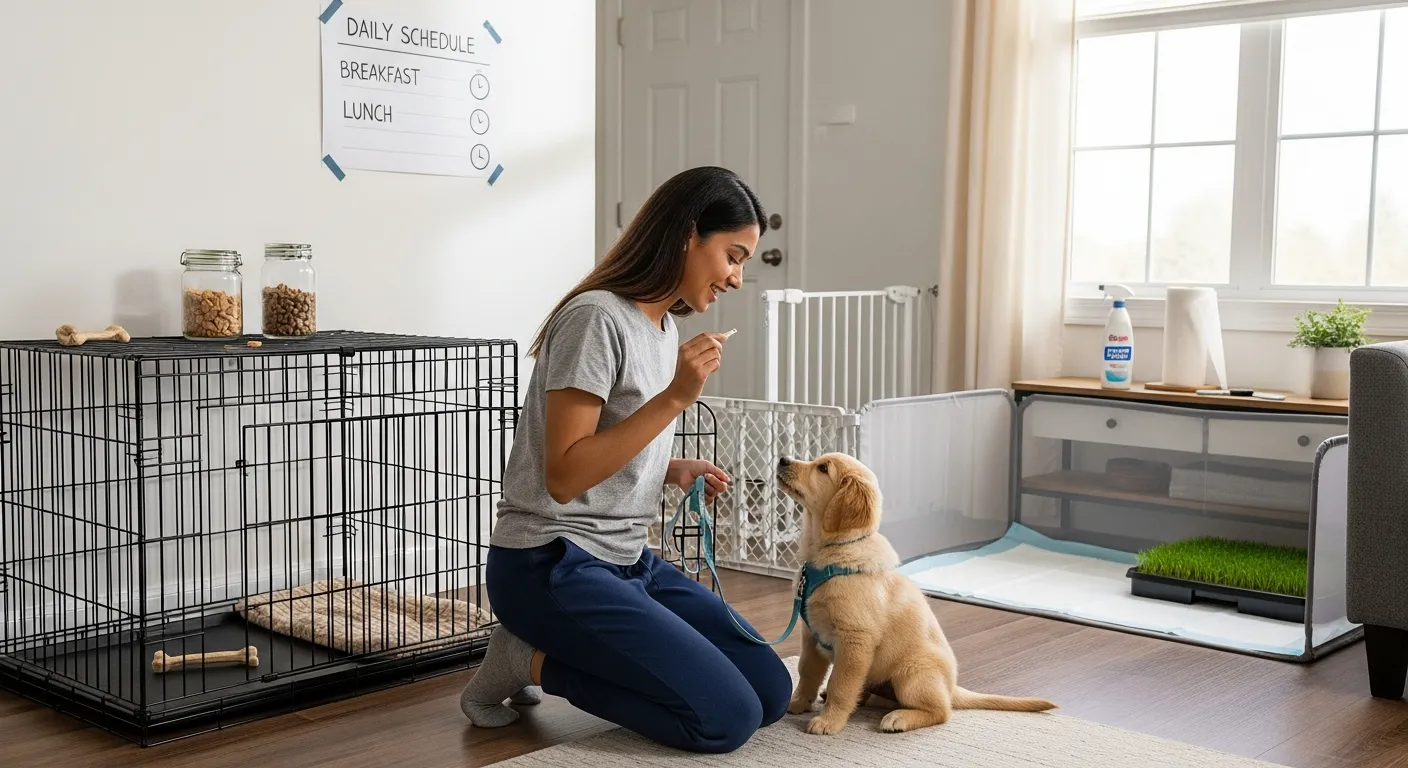
Before you focus on the actual dog training potty routine, set up your home and schedule so your dog can succeed. Think of it as childproofing, but for bladders and bowels.
Essential Supplies You’ll Need
Here’s a basic potty training toolkit:
- Leash – for quick trips outside and to keep your dog close and focused
- High-value treats – tiny, soft, and super tasty: given immediately after they go
- Enzymatic cleaner – removes urine odor so your dog isn’t drawn back to the same spot
- Crate (properly sized) – a safe, den-like space that helps prevent accidents when you can’t watch them
- Baby gates or playpen – to limit roaming and keep them in supervised areas
- Puppy pads or grass tray (if doing indoor potty training)
You don’t need fancy gadgets. What matters most is supervision, timing, and rewards.
Creating A Predictable Feeding And Water Schedule
A predictable schedule = more predictable potty times.
- Feed 2–3 set meals per day (for most dogs) instead of free-feeding all day
- Offer fresh water throughout the day, but avoid big water chugging last thing before bed
- Note when your dog usually needs to go after eating (many puppies need to go within 15–30 minutes)
When food and water are more predictable, their bathroom schedule becomes easier to predict too.
Using Crates, Playpens, And Baby Gates Safely
Crates and gates aren’t punishments, they’re tools to keep your dog safe and your house clean.
- Choose a crate just big enough for your dog to stand up, turn around, and lie down comfortably.
- Dogs usually don’t like to soil their sleeping space, which helps them learn to hold it.
- Use baby gates or a playpen to keep them in the same room as you so you can watch for early potty signs:
- Sniffing the floor
- Circling
- Suddenly wandering off
- Whining or heading to the door
If you see any of these, calmly grab the leash and head to the potty spot right away.
Step-By-Step Outdoor Potty Training Routine
Here’s a simple dog potty training routine you can follow every day.
Establishing A Consistent Potty Schedule
For puppies and new rescues, plan to take them out:
- First thing in the morning
- After every meal
- After naps
- After play sessions
- Before bedtime
- Every 1–2 hours in between for young puppies
For adult dogs new to your home, you may not need every 1–2 hours, but in the first week, it’s better to overdo it than underdo it.
Always take them to the same spot in your yard or outside area. The smell helps trigger the urge.
Using Cues, Praise, And Rewards Effectively
While your dog is sniffing in the potty area, calmly say your cue phrase, such as:
- “Go potty”
- “Do your business”
- “Hurry up”
Be consistent with the phrase you choose.
As soon as your dog actually starts peeing or pooping, stay quiet and let them finish. The moment they’re done:
- Use happy praise: “Yes. Good potty outside.”
- Give a treat within 1–2 seconds of finishing
This timing is crucial. If you wait until you’re back inside, your dog will think they’re getting a treat for coming indoors, not for going outside.
What To Do During The First Week
The first week is all about supervision and repetition:
- Keep your dog on a leash indoors or within a small gated area so you can watch them.
- Take them out more often than you think you need to.
- If they don’t go after 5–10 minutes outside, bring them back in, but keep them supervised or in a crate.
- Try again in about 15–20 minutes.
If an accident happens (and it will), just quietly interrupt if you catch them in the act:
- Say something like “Ah-ah, outside.“ in a calm voice
- Take them quickly to the potty spot
- If they finish outside, praise and treat
No yelling, rubbing noses in it, or scolding. That teaches them to hide from you when they need to go, not to use the right spot.
Indoor Potty Training: Pads, Grass Trays, And Balcony Setups
If going outside every couple of hours just isn’t realistic for you, indoor potty options can be a lifesaver, especially for small dogs, apartment living, or bad weather days.
When Indoor Potty Training Makes Sense
Indoor potty training is especially helpful if:
- You live on a high floor and can’t get down fast enough
- You work from home but can’t break away constantly
- Your dog is a tiny breed with a very small bladder
- You or a family member has mobility limitations
You can still teach outdoor potty later: for now, you’re giving your dog a clear, consistent indoor bathroom option.
Teaching Your Dog To Use Pads Or A Specific Surface
- Choose the location. Pick a quiet corner, balcony, or bathroom where the pad or tray will live.
- Limit access. Use a playpen or gate so your dog is in the same area as the pad when they’re likely to need to go.
- Encourage sniffing. Gently lead your dog onto the pad or tray when you think they need to potty.
- Add your cue. Say your potty phrase (“Go potty”) while they’re on the pad.
- Reward immediately. As with outdoor training, praise and treat right after they finish on the pad.
Change pads often so your dog isn’t avoiding a very dirty spot. For grass trays, clean them regularly based on the manufacturer’s directions.
Transitioning From Indoor To Outdoor Potty Spots
If your long-term goal is outdoor potty only, you can slowly move in that direction:
- Start with the pad or tray in its original indoor location.
- Move it a little closer to the door every few days.
- Then place it right by the door.
- Finally, move it just outside (porch, balcony, or just off the doorstep).
Over time, many dogs start to understand that the outside area is where they should go. Once they’re reliably going outside, you can gradually reduce the size or number of pads until you don’t need them anymore.
Handling Accidents Calmly And Correctly
Even with a solid dog potty training plan, accidents are part of the process. How you respond makes a big difference in how quickly your dog learns.
Why Punishment Backfires
Yelling, scolding, or rubbing your dog’s nose in a mess doesn’t teach the lesson you think it does. Instead, it usually creates fear and confusion.
Dogs don’t connect your anger with the act of peeing 30 seconds ago. They only understand, “My human is scary near this puddle.“ That can lead to:
- Hiding to pee in other rooms
- Peeing when they’re nervous
- Being afraid to potty in front of you (even outside)
Most veterinary behavior experts and organizations like the AVMA and ASPCA recommend positive reinforcement instead of punishment for house training.
Cleaning Up Accidents To Prevent Repeat Spots
Dogs have powerful noses. If they can still smell previous accidents, they’re more likely to go in the same area again.
- Blot up as much liquid as possible with paper towels.
- Use an enzymatic cleaner specifically made for pet urine and poop.
- Follow the directions carefully and let it sit long enough to break down the odor.
Avoid using just vinegar or regular household cleaners alone, they may not fully remove the scent your dog can detect.
Adjusting Your Routine When Accidents Happen
An accident isn’t your dog being “stubborn.“ It’s feedback about the routine.
Ask yourself:
- Did I wait too long between potty breaks?
- Was my dog overexcited, playing, or just woke up and I missed the signs?
- Did we have a change in schedule, visitors, or something stressful?
Then adjust:
- Add extra potty breaks during times they’re most likely to go
- Use the leash indoors more to watch for early signs
- Consider a vet visit if accidents suddenly increase, especially in a previously house-trained adult dog
Your goal isn’t perfection, it’s steady improvement over time.
Common Potty Training Problems And How To Fix Them
Some potty issues show up again and again. The good news: most have pretty straightforward fixes once you know what you’re looking at.
Nighttime Accidents And Early-Morning Wake-Ups
For young puppies, nighttime trips are normal at first.
To make nights easier:
- Do a last potty trip right before bed
- Keep your puppy in a crate near your bed so you can hear them stir or whine
- If they wake you, take them out calmly, no playtime, just potty, praise, back to bed
Over time, you can gradually push the last outing a bit later and the morning outing a bit earlier as their bladder matures.
Refusing To Go Outside Or Potty On Walks
Some dogs get distracted outdoors or feel anxious in busy environments.
Try this:
- Use a short leash and go directly to the potty area, no long wandering at first
- Stand fairly still and give them a few minutes to sniff
- Use your potty cue and stay calm and quiet
- After they potty, then start the fun part of the walk as an extra reward
If your dog seems scared outside (tucked tail, shaking, freezing), talk with your vet or a positive reinforcement trainer. They may need slow, gentle desensitization to outdoor sounds and sights.
Marking, Submissive Urination, And Excited Peeing
Not all indoor peeing is the same:
- Marking: small amounts of urine on vertical surfaces, often by intact males but any dog can do it
- Submissive urination: peeing when someone leans over them, scolds them, or reaches toward them
- Excited urination: peeing when guests arrive or during high excitement
Steps that can help:
- First, rule out medical causes with your vet
- Neuter/spay may reduce some marking in certain dogs
- Keep greetings very calm and low-key
- Ask guests to ignore your dog at first, no direct eye contact or reaching over their head
- Reward your dog for calm behavior and for choosing to sit instead of jumping
Punishment often makes submissive or excited peeing worse, because it increases anxiety.
When To Talk To Your Veterinarian Or A Trainer
It’s time to get extra help if:
- Your dog is suddenly having frequent accidents after being house-trained
- There’s blood in the urine, straining, or discomfort
- Your dog drinks and pees much more than usual
- You’ve followed a consistent plan for several weeks with no improvement
Your veterinarian can check for medical issues like urinary tract infections, bladder stones, or hormonal conditions. A certified positive reinforcement trainer or veterinary behaviorist can help with more complex behavior patterns.
Conclusion
Potty training your dog isn’t about being perfect, it’s about being consistent.
You:
- Give clear potty spots (indoor or outdoor)
- Stick to a schedule
- Supervise and manage the environment
- Reward the heck out of good choices
Your dog:
- Learns what works
- Starts to hold it longer
- Becomes more confident and relaxed in your home
If you treat dog potty training as a team project instead of a frustration test, you’ll see progress week by week. And before long, those mystery puddles will be a thing of the past, and you’ll both enjoy a cleaner, calmer home together.