
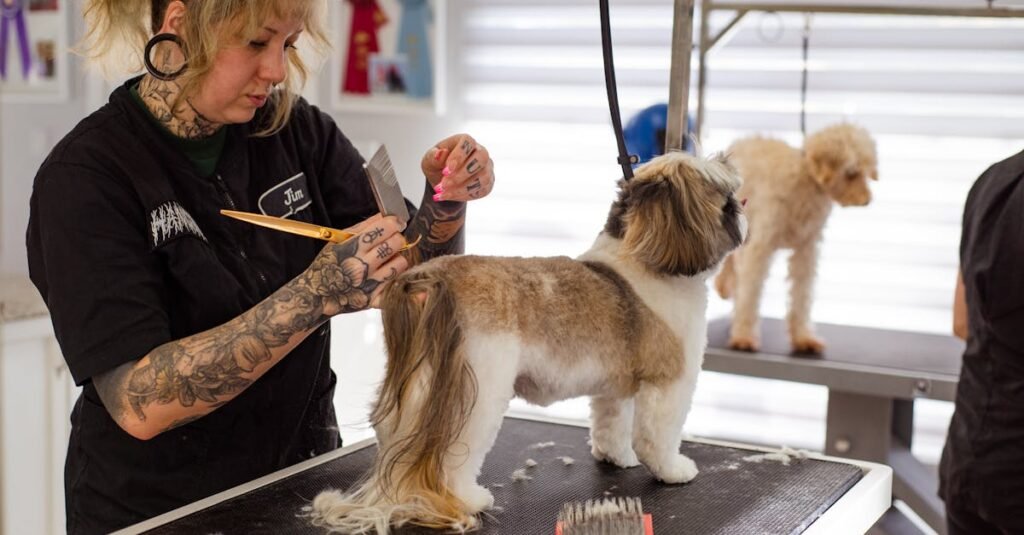
You know that moment when you look at your dog and think, “Okay… we’ve officially crossed into mop territory.” Maybe their bangs are blocking their eyes, their butt floof is collecting every leaf in the yard, or you’ve discovered a surprise mat behind an ear.
A dog haircut doesn’t have to be a drama-filled wrestling match, or an expensive mystery where you pick up your pup looking nothing like you expected. With a little planning, the right tools, and a calm approach, you can get a safe, comfortable trim at home or communicate clearly with a groomer so the end result matches what’s in your head.
This guide walks you through coat types, haircut schedules, popular styles, what to ask for at the salon, and how to keep things low-stress (for both of you).
Start With Your Dog’s Coat, Breed Type, And Lifestyle
Before you even think “clippers,” take a beat and look at the big picture: your dog’s coat type, their breed traits, and how they live day-to-day.
A weekend-hiking doodle who swims in every questionable pond is going to need a different grooming plan than a senior Shih Tzu who mostly naps and goes on slow neighborhood strolls.
Double Coat Vs. Single Coat: Why It Changes Everything
This one matters a lot, because the “wrong” haircut can cause long-term coat issues.
Double-coated dogs (think Golden Retrievers, German Shepherds, Siberian Huskies, many spitz breeds) have:
- A soft, dense undercoat for insulation
- A tougher topcoat/guard hair that helps protect from sun and weather
For double coats, the goal is usually deshedding and shaping, not shaving. Shaving can sometimes lead to patchy regrowth or a “cottony” texture, and it may reduce the coat’s natural ability to regulate temperature. Many vets and groomers caution against shaving double-coated breeds unless there’s a medical reason (like severe matting or a surgical need).
Single-coated dogs (many terriers, some hounds, and lots of mixes) don’t have that thick undercoat. Their hair may still shed, but the structure is simpler.
Then there are coat types that behave more like “hair” and keep growing:
- Curly coats (Poodles, Bichons, many doodles): low-shedding, high-matting risk
- Long coats (Shih Tzus, Lhasas, Collies): beautiful… and very willing to tangle
- Wire coats (Schnauzers, many terriers): often do best with hand-stripping or specific clipping patterns to keep texture
If you’re unsure what you’ve got, your groomer can tell you quickly, or your vet can help you understand what’s healthiest for skin and coat.
Puppy, Adult, And Senior Dogs: Comfort And Mobility Considerations
Age changes what “a good haircut” means.
Puppies
- Their first grooming visits should be short, positive, and low-pressure.
- Many groomers recommend a “puppy intro” appointment (face, feet, sanitary, light trim) before a full haircut.
- You’re building lifelong tolerance here, go slow and keep it upbeat.
Adult dogs
- This is the easy-middle zone: they can handle longer sessions, and you can set a consistent schedule.
- If your dog’s active outdoors, you may want practical trims (feet, belly, sanitary area) even if you keep the coat longer.
Senior dogs
- Comfort wins. Arthritis, stiff hips, and anxiety can make standing for a full groom tough.
- Ask for breaks, shorter sessions, or a simpler cut.
- Keeping hair shorter around feet and sanitary areas can help with traction and cleanliness.
If your older dog has new sensitivity to brushing, nail trims, or clipper vibration, mention it to your groomer and your vet, pain can show up as “grumpiness” during grooming.
How Often Dogs Need Haircuts (And What Changes The Schedule)
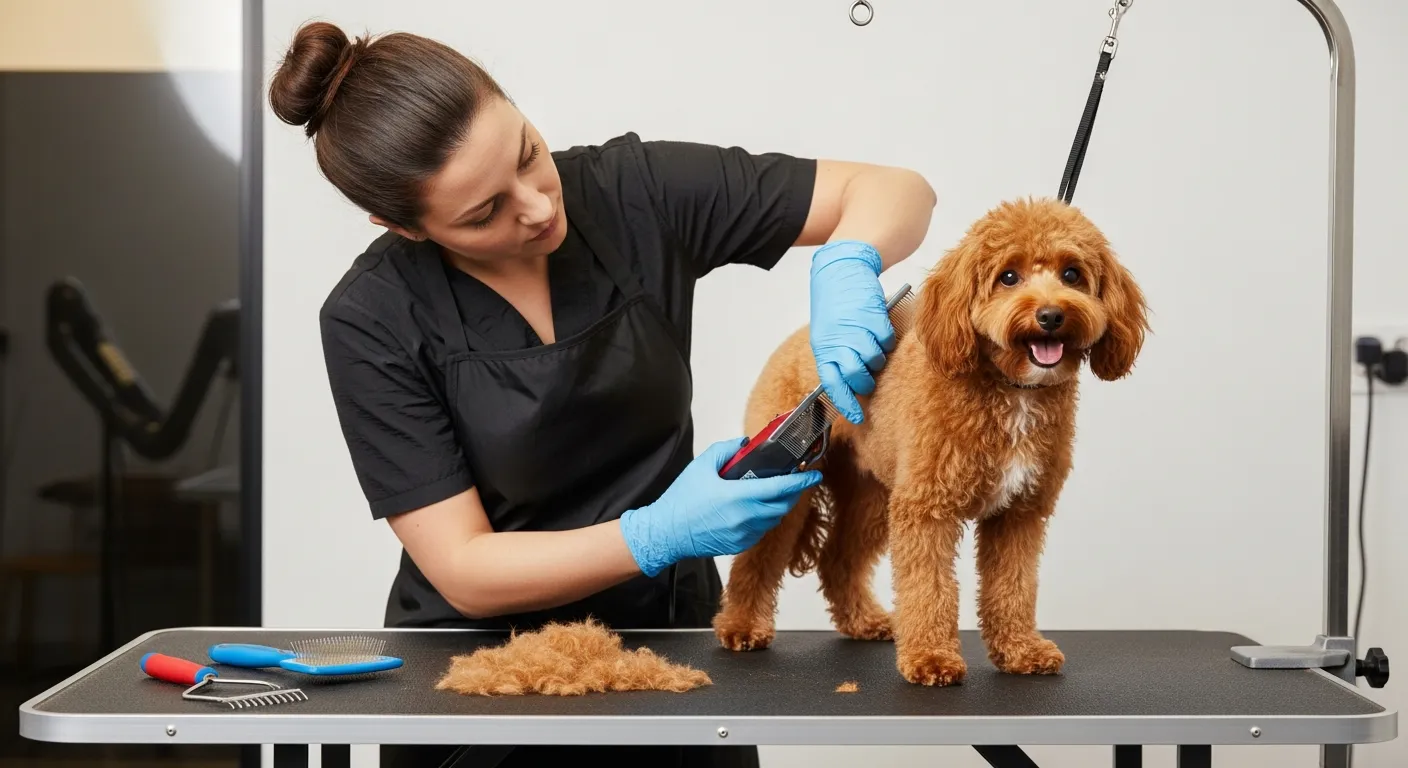
There’s no one perfect calendar for every dog haircut. The “right” schedule is the one that keeps your dog comfortable, mat-free, and clean, without turning grooming into a constant battle.
In general:
- Fast-growing/curly coats (Poodles, doodles, Bichons): often every 4–8 weeks
- Long coats kept long (Shih Tzu, Lhasa, Maltese): trims every 6–10 weeks plus frequent brushing
- Double coats: less about haircuts, more about regular brushing and deshedding, with occasional shaping
Coat Growth Speed, Matting Risk, And Seasonal Shedding
A few things push the schedule shorter:
1) Matting risk
If your dog gets mats easily, behind ears, under the collar/harness, in armpits, on the belly, you’ll need either:
- More brushing at home, or
- More frequent trims, or
- Both (often both)
Mats aren’t just cosmetic. They can pull on skin, trap moisture, and contribute to irritation.
2) Seasonal shedding
Double-coated dogs often “blow coat” in spring and fall. During those weeks, your best friend is:
- A slicker brush + undercoat rake (used gently)
- More frequent brushing sessions (short but consistent)
3) Lifestyle
Dogs who:
- Swim a lot
- Roll in sand/leaf piles
- Wear gear daily (harnesses, jackets)
…tend to tangle more and benefit from practical trims.
When A Shorter Cut Helps With Allergies, Heat, Or Hygiene
This part gets misunderstood, so here’s the honest version.
Allergies: A shorter haircut doesn’t “fix” allergies, but it can help you manage them.
- Less hair can mean fewer pollen bits stuck in the coat.
- You may be able to rinse/wipe down faster.
- It’s easier to spot red skin, hot spots, or yeast flare-ups.
Heat: Dogs don’t sweat like humans. For many dogs, especially double-coated ones, shaving isn’t automatically cooler and can actually increase sunburn risk. What does help in summer:
- Keeping the coat brushed out (airflow matters)
- Trimming feet/paw pads for traction
- Shortening “draggy” areas that collect debris
Hygiene: A shorter cut can be a lifesaver for:
- Dogs with chronic soft stool issues
- Seniors who get messy more easily
- Dogs who love mud season a little too much
A neat sanitary trim and belly/inner-leg tidy-up often gives you the hygiene benefits without taking the whole coat super short.
Popular Dog Haircut Styles (And When Each Makes Sense)
Haircut names can be confusing because different salons use slightly different labels. When in doubt, bring photos (more on that later). Still, these are the most common styles you’ll hear.
Teddy Bear, Puppy Cut, And Natural Trim
Puppy cut
- Usually means one even length all over (not necessarily “short,” just uniform)
- Great for curly/coated breeds when you want simple upkeep
Teddy bear cut
- Similar body length to a puppy cut, but the face is left a bit fuller and rounded
- Popular for doodles, Poodles, and small fluffy mixes
Natural trim
- Keeps the coat mostly long but cleaned up
- Think: tidy edges, trimmed feet, opened-up eyes
- Good for dogs whose coat you want to keep “as is,” just less wild
If you’re busy and brushing isn’t happening daily, go shorter than you think. A slightly shorter cut you can maintain beats a fluffy look that turns into mats in two weeks.
Sanitary Trim, Feet And Face Trim, And Paw Pad Clean-Up
These are the practical add-ons that make life easier, even if your dog doesn’t need a full dog haircut.
Sanitary trim
- Light trimming around the rear and genital area for cleanliness
Feet and face trim
- Clears hair from eyes/mouth
- Helps reduce food/water drips and that “mystery crust” situation
Paw pad clean-up
- Removes excess hair between paw pads
- Helps with traction on slippery floors
- Can reduce debris buildup (and that constant licking)
These trims are especially helpful for seniors, dogs with allergies, and dogs who track in everything.
Breed-Influenced Cuts Like Schnauzer, Poodle, And Spaniel Clips
Some styles exist because they match the coat texture and traditional breed function.
Schnauzer clip
- Typically a shorter body with a distinct beard and leg furnishings
- Works well with wire coats (often paired with hand-stripping for best texture)
Poodle clips (including Continental)
- Can range from practical to show-style
- Pet trims are often shorter and easier, while the Continental clip is more stylized with pom-poms
Spaniel-style trims
- Often keep feathering on ears/chest/legs but tidy the outline
- Good for Cockers and similar coats when you want that classic look without the full “floor-length” maintenance
If your dog is a mix, you can still borrow these styles. Just know coat texture decides what’s realistic, some coats don’t “fall” the same way as the Instagram version.
What To Ask For At The Groomer (So You Get The Cut You Expect)
Most haircut disappointment happens because you and your groomer are picturing two different things.
Your job: explain what you want in a way a groomer can actually execute.
Length Guide Comb Numbers, Scissor Finish, And Blending Notes
Instead of saying “not too short,” try this:
- Show photos from 2 angles (side and face). Bonus points if the dog has a similar coat.
- Ask for a comb length (guard) on the body. Groomers commonly use guide combs over a blade.
- Ask if the cut will be mostly clippered or scissored.
- Clipper work is efficient and consistent.
- Scissoring gives a softer, more blended finish (often looks more “teddy bear”).
Helpful phrases you can borrow:
- “Can we keep the body at about ___ inch, and leave the legs slightly longer?”
- “I like a round face, but please keep the eyes clear.”
- “Can you blend the neck into the shoulders so it doesn’t look like a helmet?”
Also: if you want the tail fluffy, say so. If you want it shorter for hygiene, say that too.
Mat Removal, Sensitive Areas, And Handling Preferences
Be upfront, groomers aren’t judging you. Mats happen fast.
Ask about:
- Mat removal policy: If your dog is matted, will they demat, spot-shave, or recommend a shorter overall cut?
- Sensitive areas: armpits, belly, ears, tail base, back legs
- Handling preferences:
- “My dog does better with breaks.”
- “They’re nervous about feet, can we keep that part quick?”
- “They don’t like the dryer: is towel-dry + kennel dry an option?”
One more tip that saves a lot of stress: ask what you can do at home between grooms to keep the coat in good shape. A decent groomer will happily tell you the exact brush and routine for your dog’s coat.
At-Home Dog Haircut Essentials And Step-By-Step Basics
Doing a dog haircut at home can be totally doable for maintenance trims. The key is to set realistic goals: you’re aiming for safe and comfortable, not “perfect show-dog symmetry.”
Tools Checklist: Clippers, Blades, Shears, Nail Care, And Drying
Here’s the stuff that actually helps (and what’s optional):
Must-haves
- Pet clippers (not human hair clippers, dog coat can burn out weak motors)
- Guide combs/guards (for safer, more even length)
- Slicker brush and metal comb (the comb is your truth-teller for mats)
- Straight or curved grooming shears (for face/feet finishing)
- Nail trimmers or a grinder
- Styptic powder (tiny nicks happen)
Strongly recommended
- Clipper oil (keeps blades cooler and smoother)
- Non-slip mat for the floor/tub
- High-value treats (think tiny chicken bits, not boring kibble)
Drying matters more than people think
For curly/long coats, a good dry makes the haircut easier and more even. If you can’t use a high-velocity dryer, do your best with towel + a gentle dryer setting, then brush while drying.
Prep, Bath And Dry, Clip, Scissor Detail, And Final Comb-Through
A simple order of operations that keeps things from going sideways:
- Brush and comb first
- If the comb can’t glide through, clipping over that area will snag.
- Bath (if needed), then dry fully
- Cutting dirty hair dulls blades faster.
- Clipping a damp coat can pull and leave tracks.
- Start with the body using a longer guard
- You can always go shorter.
- Move the clippers with the direction of hair growth for a smoother look.
- Legs next (slow and steady)
- Legs are where dogs get wiggly.
- Keep your free hand on the leg for stability.
- Sanitary area and belly (extra careful)
- Use a longer guard than you think.
- Skin is thinner here and more likely to nick.
- Scissor finish for face/feet
- Trim a little, step back, check your work.
- Keep hair out of eyes, but don’t chase perfection.
- Final comb-through
- The comb finds uneven spots immediately.
How To Prevent Nicks, Clip Burns, And Uneven Lines
Safety is the whole game.
To prevent nicks:
- Don’t clip over mats tightly against skin, separate or trim them carefully.
- Stretch skin gently around wrinkly areas (armpits, groin, elbows), but never pull hard.
- Go slow around ears, ankles, and the tuck-up (belly area).
To prevent clipper burn (irritated skin from heat/friction):
- Check blade temperature often with your fingers.
- Oil the blade and take breaks.
- Don’t press hard: let the clipper do the work.
To avoid uneven lines:
- Use a guard comb for the body.
- Work in good lighting.
- Brush the coat up and out as you go, especially with curly coats.
If you’re nervous, start with “maintenance trims” only: paw pads, sanitary, eye area, and a light tidy. That alone can make your dog cleaner and more comfortable between professional grooms.
Keeping It Calm: Stress, Reactivity, And Safety During Haircuts
Even the sweetest dog can get weird about haircuts. Clippers buzz, scissors flash, feet get grabbed, it’s a lot.
The goal isn’t to force your dog to “deal with it.” It’s to teach them that grooming is predictable, safe, and occasionally delicious.
Desensitization With Short Sessions And High-Value Rewards
If grooming is stressful right now, shrink the task.
Try this mini-plan over a week or two:
- Day 1–2: Touch paws → treat. Lift ear → treat. Comb one stroke → treat.
- Day 3–4: Turn clippers on across the room (don’t use them) → treat.
- Day 5–6: Clippers on nearby, touch the clipper body to shoulder (no cutting) → treat.
- Day 7+: Clip a tiny patch, stop while it’s going well.
Keep sessions under 5 minutes at first. You’re building trust, not finishing the haircut in one heroic afternoon.
Handling Tips For Wiggly Dogs And Kids-At-Home Interruptions
Real life happens. Someone rings the doorbell. A kid runs through yelling. Your dog suddenly decides your elbow is suspicious.
A few sanity-saving tips:
- Pick a quiet time (post-walk is usually best).
- Use a non-slip surface so your dog feels stable.
- Keep your body close to your dog for gentle support instead of restraining from a distance.
- For wiggly dogs, aim for two short sessions instead of one long one.
- If kids are home, set up a “do not disturb” rule for 15 minutes. Grooming accidents happen fast when you get startled.
And please skip the temptation to use punishment if your dog squirms. It usually backfires and makes the next session harder.
When To Stop And Call A Pro (Or Your Vet)
Stop and get help if:
- Your dog is severely matted close to the skin (home clipping can cause cuts)
- They’re snapping, freezing, or panicking
- You notice redness, odor, oozing, or significant dandruff
- Your senior dog seems painful when standing or being handled
Your veterinarian may recommend a sedated groom in rare cases, especially if matting is causing pain or skin infection. The AVMA (American Veterinary Medical Association) and many veterinary hospitals emphasize minimizing fear and stress during handling whenever possible, and your vet can help you choose the safest option for your dog’s situation.
Calling a pro isn’t “failing.” It’s you choosing safety.
Aftercare And Between-Cuts Maintenance
The easiest dog haircut is the one you don’t have to “rescue” later. A little between-cuts maintenance keeps the coat comfortable and saves you money on dematting fees.
Brushing Routines, Detangling Spray Use, And Mat Prevention
A realistic routine (that busy people actually stick to):
- Curly/long coats: 5–10 minutes of brushing 3–5x/week
- Double coats: brushing 2–4x/week, more during shedding season
- Short coats: a quick brush weekly still helps skin and shine
How to prevent mats where they love to form:
- Brush behind ears, under collar/harness straps, armpits, belly, and tail base.
- Use a detangling spray if brushing causes pulling.
- Finish with a metal comb. If the comb doesn’t pass through, a mat is still there.
Pro tip: if you can only do one thing, do the “hot spot zones” (ears, armpits, harness area). That’s where grooming problems start.
Ear, Eye, And Skin Checks: Catching Irritation Early
After a haircut (home or salon), do a quick once-over that night and again the next day:
- Skin: any red patches, tiny bumps, or razor irritation?
- Ears: head shaking, redness, smell?
- Eyes: squinting or watery eyes (sometimes hair clippings irritate)?
- Paws: licking more than usual (especially after paw pad clean-up)?
If irritation lasts more than a day or two, or your dog seems uncomfortable, check with your vet. Skin issues are easier to treat early.
Between cuts, keep it simple:
- Wipe paws and belly after muddy walks
- Keep nails trimmed (long nails change posture and can affect traction)
- Use grooming as bonding time, slow, calm, and predictable
Conclusion
A good dog haircut isn’t about chasing the “cutest” style, it’s about keeping your dog comfortable, clean, and able to move through life without mats tugging at their skin or hair poking them in the eyes.
If you remember three things, make them these:
- Match the plan to your dog’s coat type (especially if they’re double-coated).
- Set a schedule based on matting risk and lifestyle, not just the calendar.
- Keep grooming calm and bite-sized, short sessions and rewards beat forced marathons.
Whether you’re trimming at home or heading to the salon, you’ve got this. Start small, communicate clearly, and aim for “safe and steady.” Your dog doesn’t need perfection. They need you to make grooming feel like just another normal, no-big-deal part of being loved.