

You’ve just heard the words “kidney disease” at the vet, and your stomach drops. Your dog might look mostly normal, but now you’re suddenly second‑guessing every bowl of food you put down.
The good news: what you feed really can make a big difference.
With the right dog food for kidney disease, you can often slow the progression of the illness, help your dog feel more comfortable, and give them more good days with you. In this guide, you’ll learn what kidney disease means, what to look for in food, and how to make changes without stressing you or your dog out.
Understanding Kidney Disease In Dogs
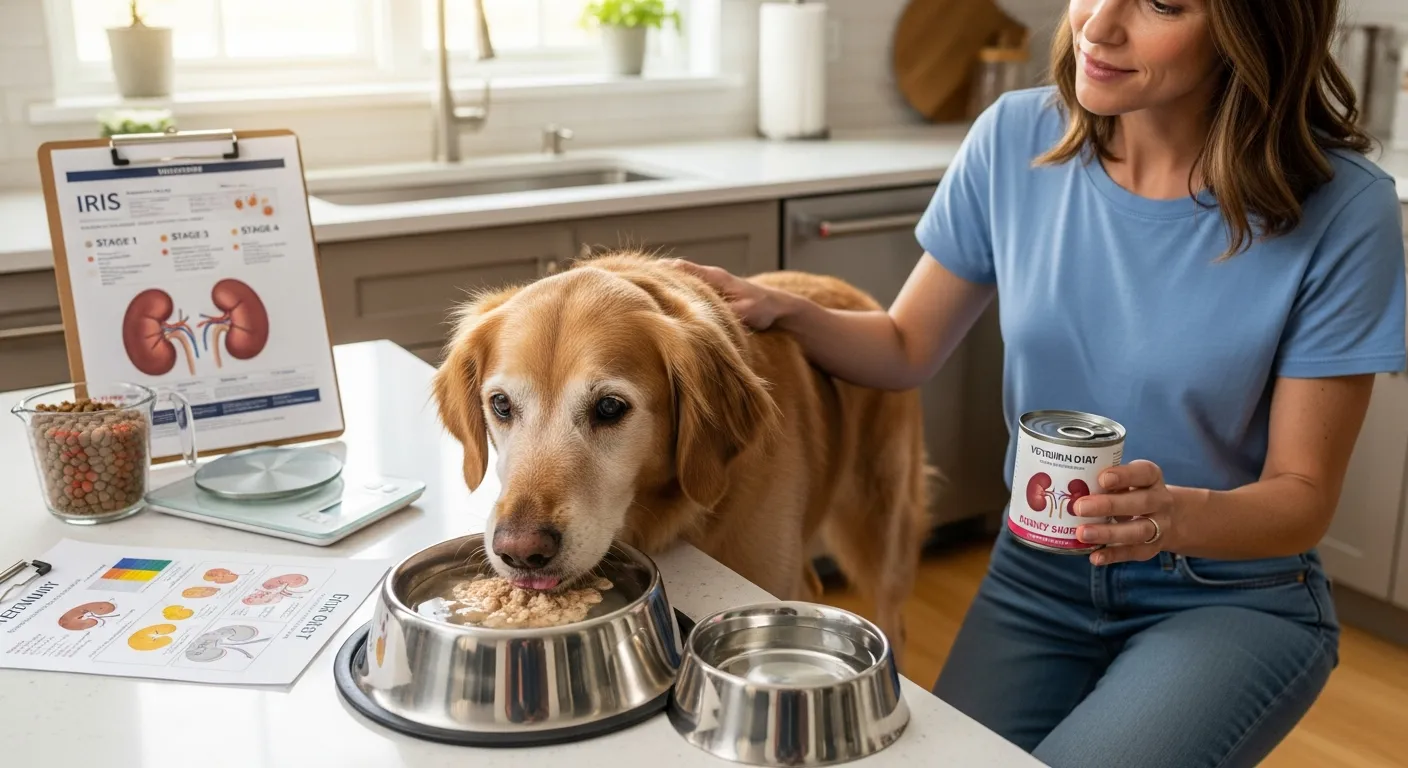
Kidney disease is common in older dogs, but even younger dogs can be affected. The kidneys act like the body’s built‑in filters. When they start to struggle, waste products build up in the bloodstream and your dog can feel pretty lousy.
What The Kidneys Do And Why Diet Matters
Your dog’s kidneys:
- Filter toxins and waste from the blood
- Help control blood pressure
- Balance fluids and electrolytes (like sodium and potassium)
- Help produce certain hormones
When the kidneys don’t work well (chronic kidney disease, or CKD), they can’t clear waste effectively. According to guidelines used by many vets (like the IRIS staging system), kidney disease is progressive, meaning it usually gets worse over time.
That’s where diet becomes powerful. By adjusting dog food for kidney disease, you can:
- Reduce the amount of waste the kidneys have to clear
- Limit minerals that can build up and cause damage (especially phosphorus)
- Support hydration and energy so your dog feels better day to day
Vets and organizations like the American College of Veterinary Internal Medicine generally recommend specially formulated kidney diets once kidney disease reaches around Stage 2.
Common Signs And Stages Of Kidney Disease
Kidney disease often creeps in quietly. In early stages, you might not notice anything at all.
Common signs include:
- Drinking more water than usual
- Peeing more often or having accidents
- Losing weight or muscle
- Decreased appetite or becoming picky
- Vomiting or nausea
- Bad breath (sometimes with a “urine” smell)
- Lethargy or just seeming “off”
Vets usually stage kidney disease based on bloodwork (creatinine, SDMA) and sometimes urine tests:
- Stage 1: Bloodwork may be almost normal. Often no obvious symptoms.
- Stage 2: Mild changes in kidney values: maybe a little appetite loss or weight loss.
- Stage 3: More obvious thirst, weight loss, vomiting, and lower energy.
- Stage 4: Severe illness, poor appetite, ulcers in the mouth, significant lethargy.
Where your dog falls on this scale helps your vet choose the right dog food for kidney disease and other treatments.
How Diet Supports Kidneys And Overall Comfort
A kidney‑friendly diet is designed to:
- Ease the kidneys’ workload by reducing waste products from protein breakdown
- Limit phosphorus and sodium, which can worsen kidney damage and high blood pressure
- Support hydration with moisture‑rich foods
- Help with nausea and appetite, so your dog actually wants to eat
Many owners notice that once they switch to a proper kidney diet recommended by their vet, their dog seems brighter, more comfortable, and more interested in food again. It’s not a cure, but it’s one of the most effective tools you have at home.
Key Nutritional Goals For Dogs With Kidney Disease
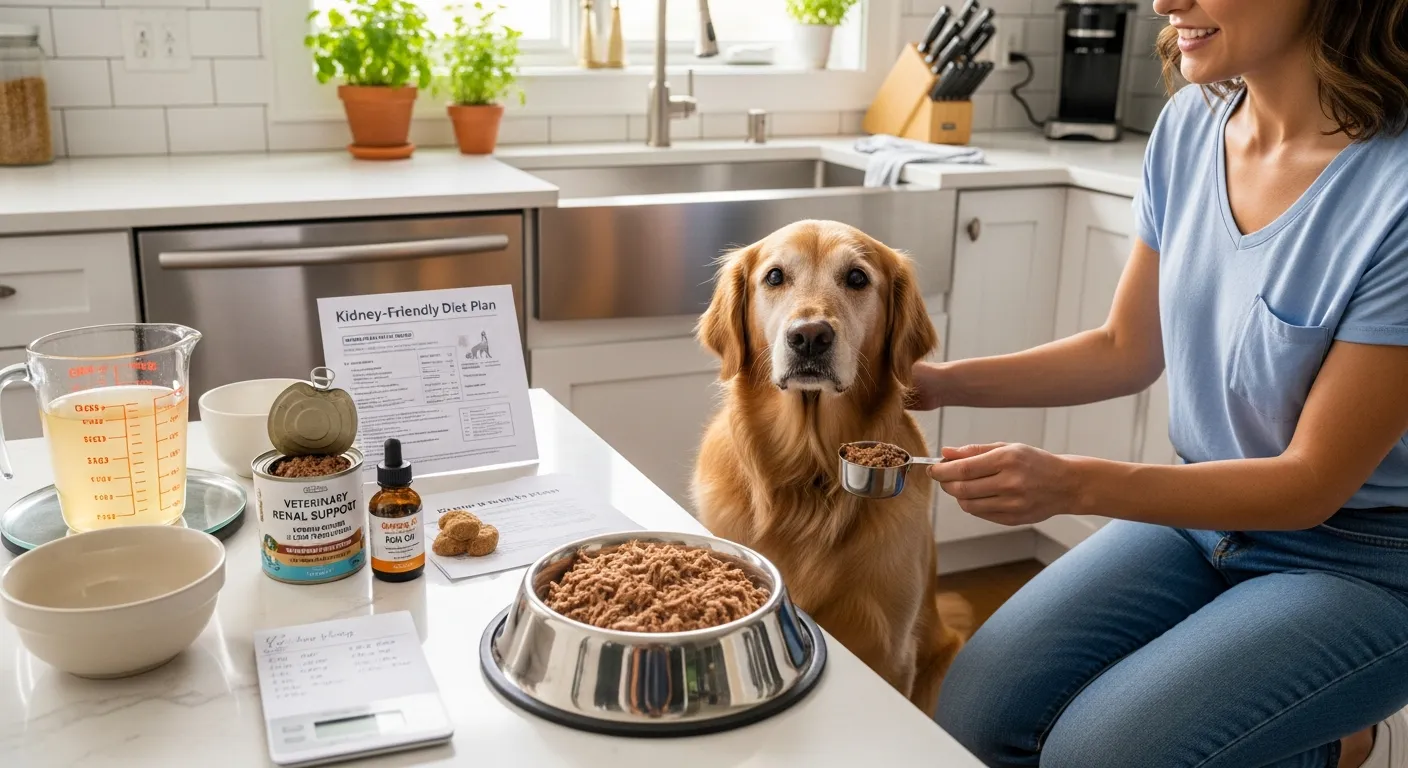
Not all dog food for kidney disease is created equal. Therapeutic kidney diets are built around a few core goals your vet will care about.
Protein: How Much And What Kind Is Best
You might’ve heard “low protein” for kidney disease, but that’s not the full story.
- Most kidney diets use moderate protein, not ultra‑low.
- The key is high‑quality protein that creates less waste when it’s broken down.
Too much protein can create more nitrogenous waste, which the kidneys have to clear. But too little protein can cause muscle loss and weakness. Good kidney diets walk this line carefully, which is why the American Animal Hospital Association (AAHA) and many specialists prefer prescription formulas.
Phosphorus, Sodium, And Other Minerals To Watch
Phosphorus is a big deal in kidney disease.
- High phosphorus accelerates kidney damage and can make dogs feel tired and weak.
- Kidney diets use restricted phosphorus levels and sometimes add binders if blood levels stay high.
Sodium is also reduced to help control blood pressure, which is often elevated in CKD.
When you’re scanning foods:
- Look for terms like “kidney support“ or “renal“ on vet diets.
- For non‑prescription foods your vet approves, they may aim for lower phosphorus (often under ~0.5% on a dry matter basis) and moderate sodium.
Moisture, Calories, And Maintaining A Healthy Weight
Many dogs with kidney disease:
- Lose weight
- Lose muscle
- Feel a bit queasy, so they don’t eat as much
You want foods that:
- Are calorie‑dense, so small meals still provide enough energy
- Have higher moisture (wet food, added water, or broth) to support hydration
If your dog is losing weight, your vet might:
- Recommend a more palatable wet kidney diet
- Suggest warming the food or adding a small amount of a vet‑approved topper
- Adjust feeding amounts or add extra small meals through the day
Essential Fatty Acids, Vitamins, And Supplements
Many kidney diets include:
- Omega‑3 fatty acids (often from fish oil) to help reduce inflammation in the kidneys
- Antioxidants (like vitamins E and C) to protect cells
- Adjusted levels of B vitamins, since these are often lost in the urine with increased drinking and peeing
Never start supplements on your own without checking with your vet. Even “natural” options can be a problem if they contain extra phosphorus, sodium, or herbs that affect blood pressure.
Choosing The Right Dog Food For Kidney Disease
This is where things can feel overwhelming, bags, cans, promises everywhere. Let’s break it down into simple choices you can discuss with your vet.
Prescription Kidney Diets From Your Veterinarian
Prescription (therapeutic) kidney diets are usually the first choice for dogs with Stage 2–4 disease. Brands your vet may suggest include:
- Hill’s Prescription Diet k/d
- Royal Canin Renal Support
- Purina Pro Plan Veterinary Diets NF (Kidney Function)
These diets are:
- Formulated specifically for kidney disease
- Tested in clinical studies to help slow disease progression and improve quality of life
- Balanced so your dog still gets the nutrients they need
You’ll typically need a prescription from your vet, and they’ll help you pick the exact version (wet vs dry, different flavors, etc.).
Over-The-Counter Options And Reading Labels
Sometimes, especially in very early kidney disease or when cost is an issue, your vet may work with you to choose a non‑prescription food that’s still kidney‑friendly.
Here’s what to look for (with your vet’s guidance):
- Lower phosphorus than standard adult foods
- Moderate protein, often from higher‑quality sources like chicken, turkey, or fish
- No added salt or salty ingredients (like broths high in sodium)
Ask your vet to help you interpret the label or contact the manufacturer for exact phosphorus and sodium levels on a dry matter basis.
Wet vs. Dry Food For Kidney Support
For most dogs with kidney disease, wet food has big advantages:
- Much higher moisture content, which supports hydration
- Often more palatable and easier to eat for nauseous or picky pups
Dry food isn’t always off the table: some dogs prefer it or need the crunch. You can:
- Mix wet and dry kidney formulas together
- Add warm water or low‑sodium broth (vet‑approved) to soften kibble
The “best” choice is the one that fits nutritional goals and that your dog will reliably eat.
When (And When Not) To Consider Home-Cooked Diets
Home‑cooked diets are tempting, you control the ingredients, and picky eaters may find them more appealing. But for kidney disease, this is tricky territory.
Only consider a home‑cooked kidney diet when:
- You’re working with a board‑certified veterinary nutritionist, or
- Your vet uses a recipe from a reputable veterinary source (such as a veterinary teaching hospital or services like BalanceIT or PetDiets)
Random recipes from blogs or social media are almost never balanced correctly for kidney disease. Too much phosphorus, too little essential nutrients, or the wrong protein level can make things worse.
If you do go the home‑cooked route, plan on:
- Regular check‑ins with your vet
- Periodic bloodwork to see how your dog is responding
- Sticking closely to the recipe, no improvising without professional guidance
Transitioning Your Dog Safely To A Kidney-Friendly Diet
Even the best dog food for kidney disease won’t help if it causes stomach upset or if your dog refuses to eat it. A slow, calm transition is key.
Working With Your Vet To Create A Plan
Before you change anything:
- Ask your vet which specific diet they recommend
- Talk about how quickly they want you to switch (usually over 7–10 days)
- Ask what to do if your dog refuses the new food or gets diarrhea or vomiting
Your vet may prioritize “eating something” over “perfect kidney diet“ in the very short term, especially if your dog is already underweight.
Gradual Food Changes And Avoiding Digestive Upset
A typical transition might look like:
- Days 1–3: 75% old food, 25% new
- Days 4–6: 50% old, 50% new
- Days 7–9: 25% old, 75% new
- Day 10+: 100% new kidney diet
Use this as a rough guide: some sensitive dogs may need more time.
To reduce tummy troubles:
- Keep mealtimes calm and consistent
- Don’t introduce new treats at the same time
- If you notice loose stool or vomiting, pause the transition and call your vet
Monitoring Appetite, Energy, And Bathroom Habits
During and after the switch, keep an eye on:
- Appetite: Are they finishing meals? Seeming more interested in food?
- Energy: A bit brighter? Same? More tired?
- Water intake: Still drinking a lot, or suddenly drinking less?
- Urination: Frequency, accidents, or struggling to pee
Write down what you see. These notes help your vet fine‑tune the diet and other treatments, like nausea meds or antacids, if needed.
Hydration And Treats For Dogs With Kidney Disease
Water is one of the easiest, and most overlooked, ways to support kidneys. Treats matter too: they can accidentally undo the good you’re doing with a careful diet.
Encouraging Drinking And Using High-Moisture Foods
Your goals:
- Keep your dog well‑hydrated, without forcing water
- Make water easy and appealing to drink
Try:
- Multiple water bowls in different rooms
- A pet water fountain if your dog likes running water
- Adding a little warm water or vet‑approved low‑sodium broth to food
- Choosing canned kidney diets or mixing wet food into dry
Never restrict water unless your vet specifically tells you to (which is rare for chronic kidney disease).
Kidney-Safe Treat Ideas And What To Avoid
Treats should make up no more than about 10% of daily calories, and they should fit kidney goals.
Kidney‑friendlier options (check with your vet first):
- Small pieces of carrot or green beans
- A few bites of apple (no seeds)
- Vet‑approved kidney‑safe commercial treats (your vet clinic may stock some)
Treats to avoid unless your vet says otherwise:
- Cheese and most dairy (high in phosphorus)
- Organ meats like liver (very high phosphorus)
- Bones, jerky, and high‑protein treats
- Salty snacks (deli meats, chips, etc.)
Managing Nausea And “Picky Eating” Days
Kidney disease often comes with waves of nausea. On those off days, your dog might:
- Sniff food and walk away
- Eat a few bites and stop
- Drool or lick their lips more
Ask your vet about:
- Anti‑nausea medications
- Appetite stimulants
- Antacids or other GI support if needed
On milder picky days, you can try:
- Warming the food slightly to enhance aroma
- Offering smaller, more frequent meals
- Hand‑feeding a bit to encourage interest
If your dog refuses food for more than 24 hours, or vomits repeatedly, call your vet or an emergency clinic, don’t wait it out.
Everyday Care And Emotional Support For You And Your Dog
Caring for a dog with kidney disease isn’t just about what’s in the bowl. It’s also about routines, communication with your vet, and taking care of your own heart in the process.
Creating A Comfortable Routine Around Mealtimes
Dogs with kidney disease usually do best with:
- Predictable meal times (2–3 meals a day)
- A quiet, low‑stress feeding area
- Plenty of time to eat without pressure
You might build a routine like:
- Short walk or potty break
- Meds (if needed), then meal
- Calm cuddle time or rest afterward
That gentle rhythm helps many dogs feel safe and can even improve appetite.
When To Call The Vet About Changes In Eating Or Drinking
Reach out to your vet if you notice:
- No interest in food for more than 24 hours
- Vomiting more than once or twice in a day
- Diarrhea lasting more than a day
- Sudden big changes in thirst or urination
- Weakness, collapse, or trouble breathing (emergency)
You’re not “bothering” your vet. Kidney disease can change quickly, and early intervention often prevents bigger crises.
Caring For Yourself While Caring For A Sick Pet
It’s completely normal to feel:
- Worried about every lab result
- Guilty when your dog won’t eat
- Overwhelmed by choices and costs
A few gentle reminders:
- You’re already doing so much by learning about dog food for kidney disease and working with your vet.
- Focus on comfort and connection, not perfection. Some days won’t go according to plan, and that’s okay.
- Lean on your support system, family, friends, kidney‑dog support groups, even your vet team.
Short walks, quiet snuggle time, and simple routines can be soothing for both of you.
Conclusion
Kidney disease is a heavy diagnosis, but it doesn’t mean your time with your dog is over. With the right dog food for kidney disease, plus good hydration and a thoughtful routine, you can often slow the disease and give your dog many more comfortable, happy days.
Key takeaways to keep in mind:
- Work closely with your vet to choose the right kidney diet (prescription when possible).
- Focus on moderate, high‑quality protein, low phosphorus and sodium, and high moisture.
- Transition slowly, watch appetite and energy, and don’t ignore changes in drinking or peeing.
- Treats and extras matter, pick kidney‑friendly options and avoid high‑phosphorus, salty snacks.
Most of all, remember that your dog doesn’t measure love in lab values. They feel it in the quiet moments: when you sit on the floor with them, when you offer a tasty kidney‑safe meal, and when you simply stay by their side. That care, combined with smart nutrition, is the best support you can give their kidneys, and their heart.