
You want a dog that loves your family…and would also think twice before letting a stranger walk through your front door uninvited.
That’s a completely fair goal. But when you start googling “best security dog breeds,“ it can get confusing fast. Some articles make it sound like you need a 120‑pound, teeth-baring guard on standby 24/7. Others scare you off protection breeds altogether.
The truth sits somewhere in the middle: a good security dog is first and foremost a good family dog. Protection is just one part of the package.
In this guide, you’ll learn how to choose the right type of protection (security dog vs. guard dog vs. watchdog), which breeds fit family life best, and how to train and care for them so they stay safe, stable, and loving in your home.
What Makes A Great Security Dog (Beyond Stereotypes)
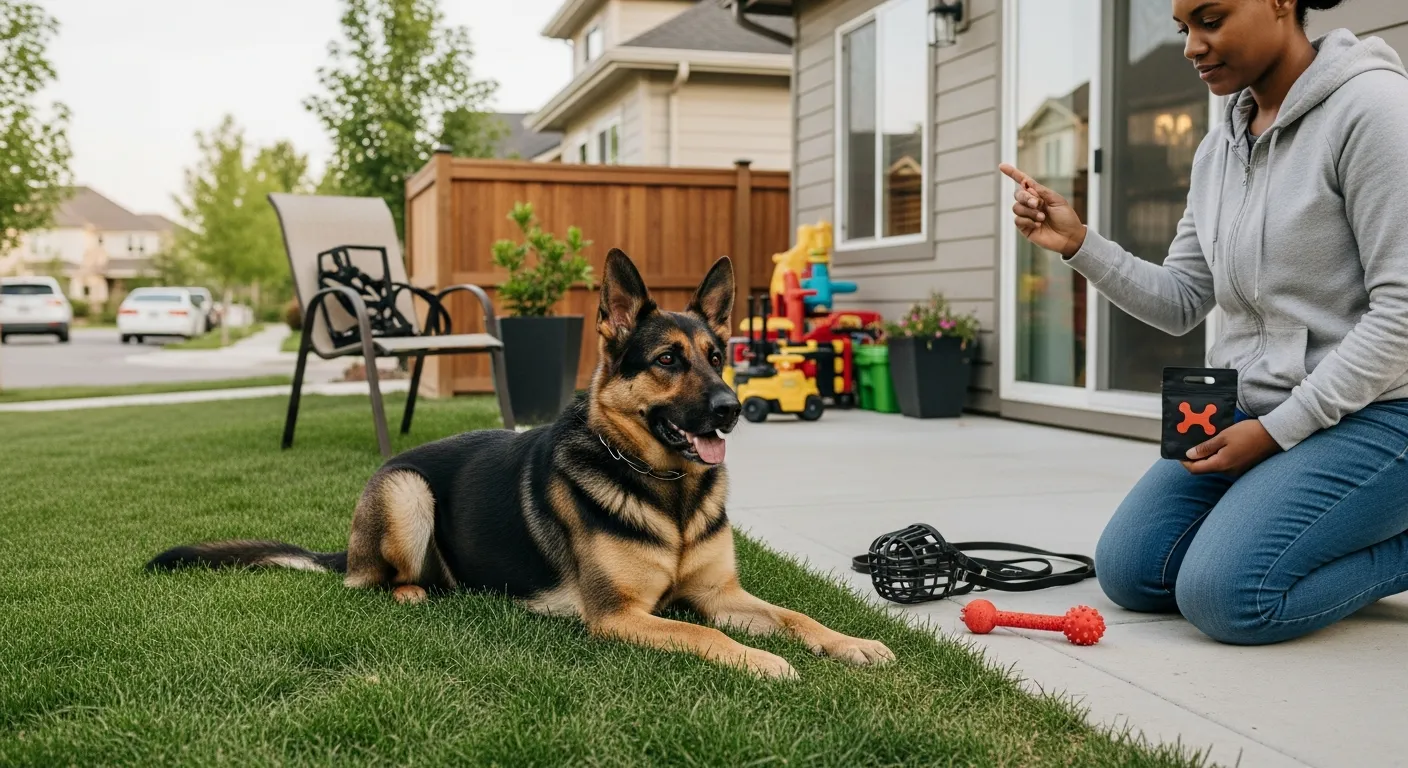
A lot of people picture a “security dog” as a huge, aggressive animal that’s always on edge. In reality, the best security dog breeds are usually calm, clear-headed, and highly trainable.
Modern police and military K‑9 programs (often referenced by groups like the AKC and working-dog clubs) choose dogs for intelligence, nerves of steel, and control, not random aggression.
Temperament Traits To Look For
When you’re evaluating a potential security dog, you want a thinking dog, not a reactive one. Look for:
- Confidence – not shy, not jumpy, OK with new people and environments
- Alertness – notices sounds and movement but doesn’t panic
- Discernment – can tell the difference between normal visitors and a real threat over time
- Family devotion – enjoys being with you, not stuck outside alone
- Trainability – eager to learn, motivated by food, toys, or praise
Breeds like German Shepherds and Doberman Pinschers are popular in security roles because they pick up new commands quickly and bond tightly to their people. Studies of canine intelligence (like those summarized by Dr. Stanley Coren and supported in AKC breed descriptions) show these breeds consistently ranking near the top for working and obedience intelligence.
What you don’t want:
- Extreme fear or skittishness
- Out-of-control reactivity (lunging at every dog or person)
- Unpredictable aggression
Those traits make a dog unsafe, not “tough.“
Life Stage, Exercise Needs, And Living Situation
Your lifestyle matters as much as the breed.
- High-drive working breeds (German Shepherd, Belgian Malinois, some Dobermans)
- Need serious daily exercise: running, training, games with structure
- Do best with owners who enjoy being active and like training
- Can develop anxiety or destructive behavior if bored
- Lower-energy but powerful breeds (Bullmastiff, some Rottweilers)
- Shorter, more moderate exercise needs
- Often content with a couple of good walks and playtime
- Still require mental enrichment (training, puzzle toys, scent games)
Think honestly about:
- Your available time for training and exercise
- Your space (apartment vs. house with yard)
- Who’s in the home (kids, older relatives, roommates)
A high-octane working-line German Shepherd in a tiny apartment with a busy owner is usually a recipe for stress, for both of you.
Ethical Considerations: Safety, Liability, And Welfare
Any dog capable of serious protection comes with responsibility.
A few key points:
- Socialization is non‑negotiable. From puppyhood, expose your dog to people, other dogs, kids, noises, car rides, etc. The American Veterinary Society of Animal Behavior (AVSAB) strongly supports early socialization for safer adult dogs.
- Use reputable breeders or rescues. Avoid anyone advertising “attack dogs” or emphasizing aggression. Good breeders focus on health and stable temperaments. Good rescues temperament-test dogs.
- Understand your local laws. In many areas, you’re legally responsible for bites, even if someone “started it.“ Some HOAs or insurance companies also have breed restrictions.
- Protect your dog’s welfare. A security dog still needs what every pet needs: vet care, pain control, mental stimulation, positive training, and time to just be a dog.
The goal is a safe, controlled protector, not a weapon you can’t turn off.
Security Dog vs. Guard Dog vs. Watchdog: What Do You Really Need?
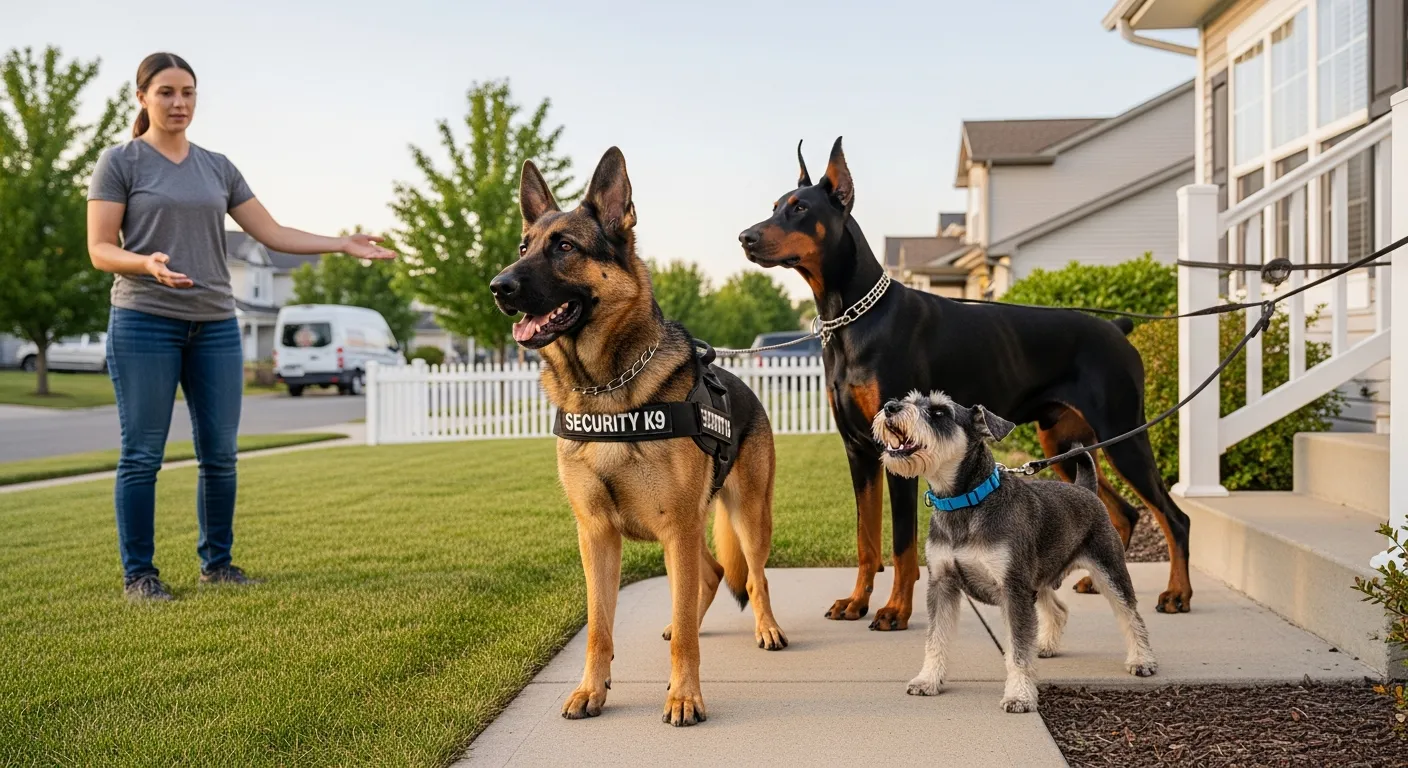
People use these terms like they mean the same thing, but they don’t. Knowing the difference helps you pick the right fit for your home.
- Security dog – Professionally trained to actively protect and often bite on command. Used in police, military, or high-security roles.
- Guard dog – Big presence and natural protectiveness. May deter intruders simply by being there and showing confidence.
- Watchdog – Main job is to alert you by barking when something seems off.
Most families don’t actually need a fully trained security dog in the professional sense. A solid family-friendly guard or watchdog is enough.
Matching Protection Level To Your Lifestyle
Ask yourself what would truly make you feel safer:
- You mostly want an early-warning system for deliveries, strangers, and odd noises → a watchdog is likely enough.
- You’d like a dog that will also look physically imposing and make strangers think twice → a guard-type breed may make sense.
- You live on a remote property, run a business, or have unique security concerns → talk to a professional trainer before jumping into a high-level working dog.
For example:
- Active owners who run, hike, and like training may love a Doberman or German Shepherd.
- Families with kids who want a playful but protective dog may do better with a Boxer.
When A Security-Focused Breed Is Not The Best Choice
A powerful protection breed might not be right if:
- You have very limited time for exercise or training
- You live in a dense apartment building with thin walls
- You’re uncomfortable around large, strong dogs
- You’re new to dogs entirely
In those cases, a smaller or medium watchdog breed, think Miniature Schnauzer, Sheltie, or some terriers, can give you great awareness without the same level of risk or responsibility that comes with a true protection dog.
Top Security Dog Breeds For Family Homes
These popular security dog breeds show up often in working roles and family homes. Remember: individual temperament and training matter more than the label.
German Shepherd: Versatile, Trainable, And Loyal
German Shepherds are one of the most common police and service dogs for a reason.
Pros
- Highly intelligent and trainable
- Strong natural guarding instincts
- Bond closely with their family, often especially with kids
- Great at dog sports, hiking, and obedience
Watch out for
- Need lots of mental and physical exercise
- Can develop anxiety or reactivity without structure
- Joint issues (hip and elbow dysplasia) are common, good breeding and joint support matter
For an involved owner who enjoys training, a German Shepherd can be a phenomenal family protector.
Doberman Pinscher: Alert Athlete For Active Owners
Dobermans are sleek, fast (they can reach around 30 mph), and famous for loyalty.
Pros
- Very people-focused: often called “velcro dogs”
- Naturally alert and protective without being constantly aggressive
- Short coat (less shedding than many shepherds)
Watch out for
- Need daily exercise and brain work
- Can be sensitive: heavy-handed training backfires
- Some health issues like dilated cardiomyopathy (heart disease), so regular vet checks are key
If you want a dog that will jog with you in the morning and curl up on the couch at night, but also stand tall if someone tries your gate, this might be your breed.
Rottweiler: Confident Guardian With A Soft Side At Home
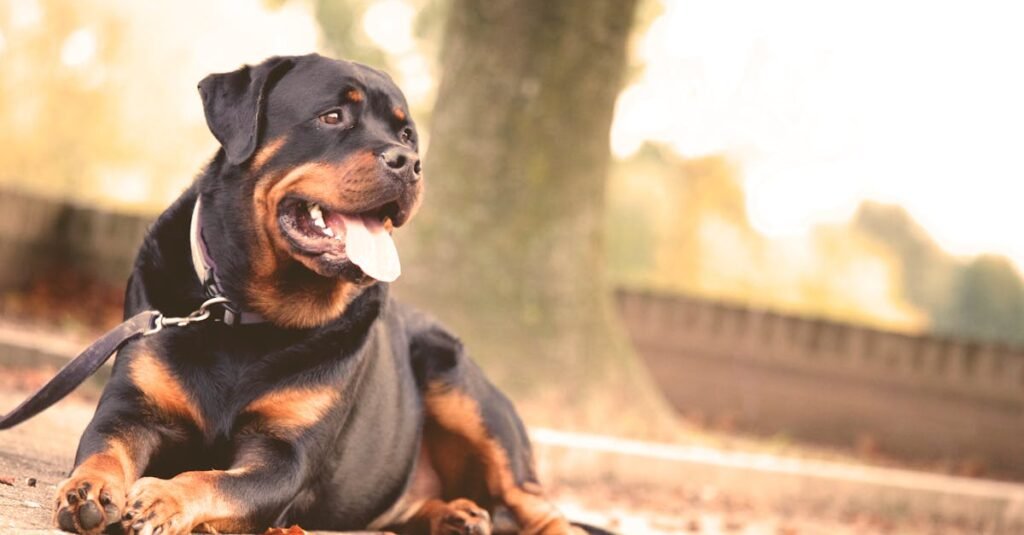
Rottweilers are powerful dogs who, when well-bred and socialized, are often calm and goofy with their people.
Pros
- Strong deterrent just by appearance
- Generally steady, confident temperament
- Deep bond with family, often very gentle with kids when raised together
Watch out for
- Need firm but kind training and very clear rules
- Can be reserved with strangers: must be well-socialized from puppyhood
- Prone to joint and some cardiac issues, good diet and weight management are critical
Many owners describe their Rottie as a “big softie” at home and a serious “don’t-mess-with-us“ presence outside.
Boxer: Playful Family Dog With Natural Watchdog Instincts
Boxers are often described as “eternal puppies” because of their goofy, high-energy personalities.
Pros
- Great with kids: playful and clownish
- Naturally alert and will bark when something’s off
- Very people-oriented and loving
Watch out for
- Need lots of play, walks, and interaction
- Short snout can make them sensitive to heat
- Some cancers and heart issues are more common, routine vet care is important
If you want a family dog first and a watchdog second, a Boxer can hit that balance nicely.
Giant Schnauzer: Intelligent Protector For Experienced Homes
Giant Schnauzers are big, bearded working dogs originally bred for droving and guarding.
Pros
- Very intelligent and trainable
- Naturally protective yet biddable with good training
- Low shedding (but need regular grooming)
Watch out for
- High energy and drive: need serious daily work
- Without structure, can become pushy or frustrated
- Grooming and mental stimulation are non‑negotiable
These dogs shine with experienced owners who enjoy training and want a serious working partner.
Bullmastiff: Calm, Powerful, And Naturally Protective
Bullmastiffs were bred as estate guardians, quietly stopping intruders rather than barking nonstop.
Pros
- Typically calm and steady indoors
- Don’t need marathon exercise sessions
- Naturally protective and physically imposing
Watch out for
- Shorter lifespan (like many giant breeds)
- Can drool and snore
- Must be carefully socialized to avoid over-guarding
For a home that wants a big, mostly laid-back dog with strong guardian instincts, but not super-high exercise demands, Bullmastiffs can be a great fit.
Best Watchdog Breeds For Urban And Suburban Living
If you live in an apartment or close to neighbors, you may want more alarm, less muscle.
Medium Breeds: Audible Alarms Without Intimidation
Medium-sized watchdogs can give you plenty of warning barks without scaring the whole block. Examples include:
- Australian Shepherds – Smart, loyal, and very tuned in to their people
- Shetland Sheepdogs (Shelties) – Naturally vocal and alert
- Standard Schnauzers – Protective and watchful, but more compact than Giants
These dogs usually thrive on training and games and do well in active suburban homes.
Small Breeds: Big Bark In A Compact Body
Smaller dogs can be fantastic little alarms:
- Miniature Schnauzers
- Terriers (like the Jack Russell or Westie)
- Dachshunds
They’re often fearless and quick to tell you if someone’s at the door, but easier to manage physically and usually a better fit for apartments.
Balancing Barking And Neighbor-Friendly Behavior
A barking dog can make you feel safer, but non-stop noise makes everyone miserable.
You can teach polite watchdog behavior by:
- Rewarding one or two barks, then asking for a “quiet” cue
- Closing curtains or blocking windows where your dog rehearses nuisance barking
- Using white noise or fans to reduce triggers in busy areas
- Working with a positive-reinforcement trainer if barking gets out of hand
The goal: your dog alerts you when something is truly different, not every time a leaf moves.
Training Your Security Dog Humanely And Effectively
Training is where a security dog becomes either a safe partner or a liability. The good news: modern, science-based methods recommended by organizations like AVSAB and the American College of Veterinary Behaviorists are both effective and kind.
Foundations: Socialization, Obedience, And Impulse Control
Before you even think about “guarding,“ your dog should have rock-solid basics:
- Name recognition and recall
- Sit, down, stay
- Leave it and drop it
- Loose-leash walking
Work on impulse control through games like:
- “Wait” before meals or going out the door
- Calmly watching people/dogs pass by, then getting a reward
- Settling on a mat while life happens around them
Good foundation training makes your dog easier to handle if something scary actually happens.
Teaching Controlled Guarding And Alerting Cues
For most homes, you don’t need formal bite work. Instead, focus on:
- A cue for “speak“ and “quiet“ – so you can turn barking on and off
- Teaching your dog to stand near you calmly when someone’s at the door
- Rewarding your dog for checking in with you instead of rushing ahead
If you’re considering more advanced protection training, always:
- Work with an experienced, certified professional who uses modern, humane methods
- Make sure they understand your family situation (kids, guests, neighbors)
Avoiding Aggression: Red Flags In Training Methods
Be cautious of anyone who:
- Promises to make your dog “aggressive” or “tough” fast
- Uses a lot of fear, pain, or intimidation (heavy prong/shock collar use, alpha rolls, etc.)
- Dismisses your concerns about safety
Research increasingly shows that harsh methods can increase anxiety and aggression. You want your dog to trust you more than they fear you.
Health, Enrichment, And Daily Routine For Security Breeds
Even the best security dog is still…a dog. They need a routine that keeps their body and brain in good shape.
Exercise And Mental Stimulation To Prevent Behavior Problems
Most security dog breeds are working dogs. Without a job, they invent one, often something like barking at everything or shredding your couch.
Build in daily:
- Physical exercise – brisk walks, jogs (for healthy adults), fetch, tug with rules
- Training sessions – 5–10 minutes at a time, a few times per day
- Brain games – puzzle feeders, snuffle mats, scent games, hide-and-seek
This doesn’t have to be fancy: it just has to be consistent.
Nutrition, Vet Care, And Joint Support For Large Breeds
Larger security breeds put a lot of stress on their joints and hearts.
Help protect them by:
- Choosing a complete, balanced diet appropriate for their life stage (talk with your vet or a veterinary nutritionist)
- Keeping them lean, extra weight is hard on hips, elbows, and knees
- Asking your vet about joint supplements (like omega‑3s or glucosamine) if appropriate
- Scheduling regular checkups, especially for breeds prone to heart disease or cancer
Catching problems early can add years of comfortable life.
Creating A Calm Home Environment For A High-Alert Dog
A dog that’s always “on duty” can burn out.
You can help your security dog relax by:
- Giving them a quiet, comfy spot where guests don’t bother them
- Teaching a “go to bed“ cue for when you need them to chill
- Playing calming music or using white noise during busy times
- Keeping routines predictable, similar walk, meal, and rest times daily
A calm, well-rested dog makes better decisions when something actually goes wrong.
How To Decide If A Security Breed Is Right For You
Before you fall in love with those intense German Shepherd eyes on a rescue site, pause and check in with yourself and your family.
Questions To Ask Yourself (And Your Family) First
- How many hours a day can you realistically spend on exercise and training?
- Are you comfortable handling a strong, powerful dog if they lunge or pull?
- Do you have kids, elderly family members, or frequent visitors who might be nervous?
- What are your housing rules and insurance policies around certain breeds?
- Is your main goal companionship, early warning, or serious protection?
There’s no wrong answer here, just better matches for each situation.
Working With Rescues, Breeders, And Trainers Responsibly
To stack the deck in your favor:
- Talk to breed clubs and reputable breeders – ask about health testing, typical temperament, and whether their dogs are suited to family life
- Work with ethical rescues that do temperament testing and are honest about behavior history
- Plan for training before you bring the dog home, have a positive trainer or class lined up
A good breeder, rescue, or trainer won’t just tell you what you want to hear. They’ll help you decide what’s realistic for your life right now.