

You’re picturing it already: a dog curled up at your feet, playing gently with your kids, greeting you at the door like you’re the best thing that ever happened.
But then the questions hit: What are the best family dogs? Should you pick a specific breed? Adopt a rescue? How do you know a dog will actually be good with your kids, your cat, and your lifestyle?
This guide walks you through what really matters when choosing a family dog, not just a cute face on a website. You’ll learn how to read temperament, match energy levels, and spot red flags, plus a few breed and mixed-breed suggestions to help you narrow things down.
Quick note: Any dog, purebred or mixed, can be a wonderful family dog with the right match, training, and care. Think “best family fit,“ not “perfect breed.”
What Makes A Great Family Dog?

When people talk about the “best family dogs,“ they’re really talking about personality and lifestyle fit, not just labels like “good with kids.“
Temperament And Personality Traits To Look For
In busy homes with kids, guests, and some level of chaos, you want a dog that’s:
- Confident but not pushy – not terrified of new things, but not bulldozing everyone either.
- Gentle and patient – especially important with kids and visitors.
- Resilient – able to handle noise, sudden movements, and the occasional dropped toy.
- Social and people-oriented – enjoying being around you, not hiding constantly.
- Eager to please and trainable – more likely to respond well to basic manners.
You’ll often see these traits in breeds like Labrador Retrievers and Golden Retrievers, which is why they’re classic family-dog choices. But those same traits can also be found in mixed-breed dogs.
When you meet a dog, pay attention to:
- Do they take treats gently, or snatch and grab?
- Are they curious about you, but not jumping all over you nonstop?
- Do they recover quickly from small surprises (a dropped object, a new person walking in)?
Those are everyday clues to a good family temperament.
Matching A Dog’s Energy Level To Your Lifestyle
This is where a lot of people go wrong.
High-energy breeds like Labradors, Vizslas, and Border Collies can be amazing with kids, if they get enough exercise and mental stimulation. If they don’t, you’ll see:
- Chewing
- Barking
- Jumping
- Zoomies at 10 p.m.
If your family loves hiking, running, or long weekend adventures, an active breed or mix can be a fantastic match.
If you’re more of a “two short walks and movie night“ household, look at calmer breeds like Boston Terriers or some more easygoing mixed breeds. A lower-energy dog doesn’t mean “boring”: it usually means more relaxed and cuddly inside the house.
Kid, Cat, And Other-Pet Friendliness
If you’ve got kids, another dog, or a resident cat, you’ll want a dog that’s naturally tolerant and social.
Breeds that tend to do well in multi-pet or kid-filled homes include:
- Beagles – pack-oriented, often enjoy other dogs and people.
- Newfoundlands – famous “gentle giant” types, often patient with kids.
- Many retrievers – social, bouncy, and people-loving.
But personality still matters more than breed. Ask rescues or breeders specifically about:
- History with children, cats, and other dogs.
- Whether the dog has shown guarding behavior over food or toys.
- How the dog acts when startled or handled (ears, paws, tail).
You’re looking for tolerance, not perfection. No dog should be expected to put up with rough handling, but a good family dog recovers quickly and doesn’t stay on edge.
Key Factors To Consider Before You Choose
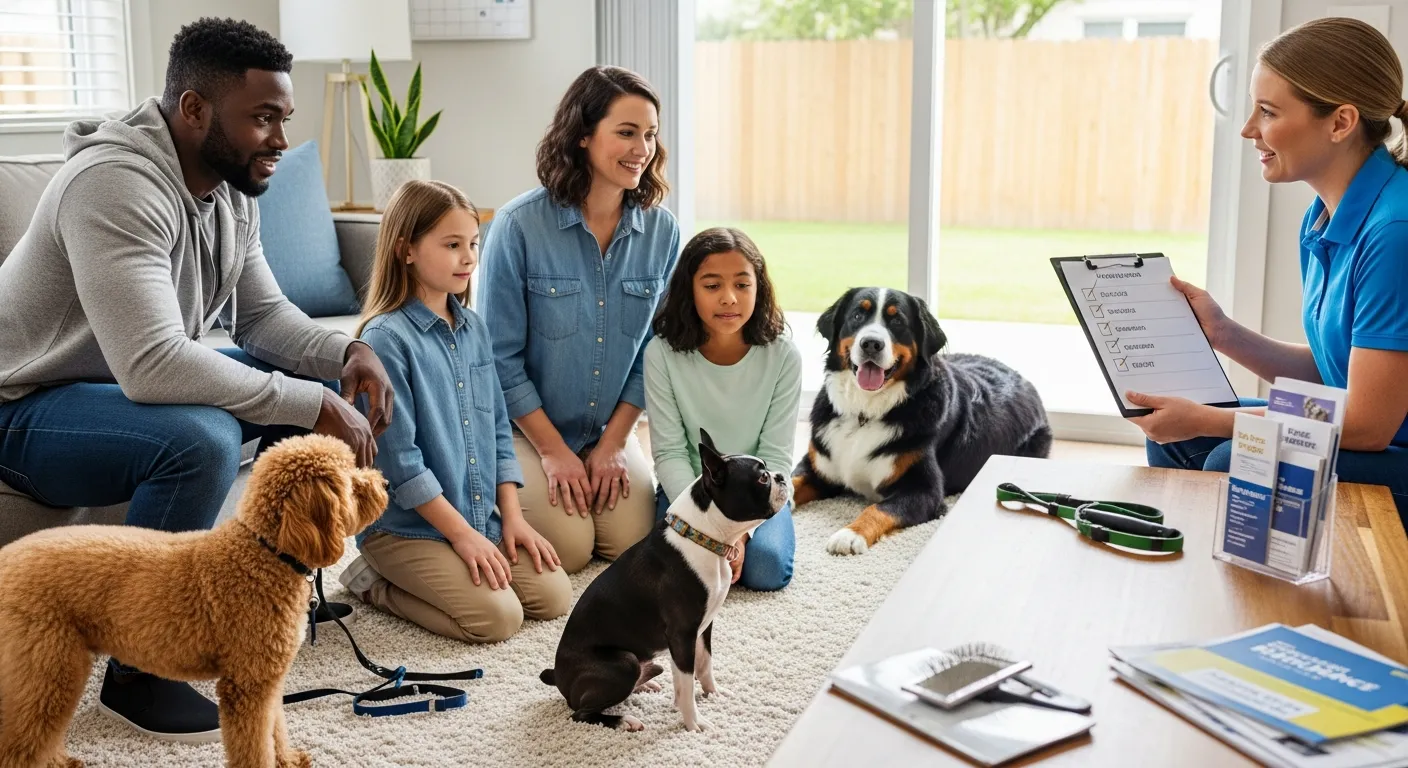
Before you fall in love with a photo online, take a realistic look at your life right now, not your fantasy future.
Size, Space, And Exercise Needs
Think about:
- Where you live – apartment, townhouse, big house with yard?
- How often you can walk or play – be honest here.
Some general guides:
- Small/medium dogs like Boston Terriers or Cavalier King Charles Spaniels (around 10–18 lbs) can do very well in apartments or condos, as long as they get daily walks and play.
- Large breeds like Newfoundlands (100–150 lbs) or Bernese Mountain Dogs are easier to manage when you’ve got more space and easier outdoor access.
Big dogs don’t always need more exercise than small ones, but they take up more physical space and cost more to feed and care for.
Grooming, Shedding, And Allergies
Ask yourself how you feel about hair… on everything.
- Poodles and many poodle mixes (“doodles”) tend to shed very little and can be more allergy-friendly, but they need regular professional grooming.
- Golden Retrievers and Bernese Mountain Dogs shed a lot and benefit from frequent brushing.
- Short-haired breeds still shed, but their hair can be easier to manage.
If someone in your home has allergies, talk with your veterinarian or allergist before adopting. Spending time with similar dogs first can help you test reactions.
Time Commitment, Training, And Budget
Every dog needs:
- Daily walks and potty breaks
- Training time (especially in the first 6–12 months)
- Vet care, vaccines, flea/tick prevention
High-energy or smart working breeds (like Irish Setters, herding breeds, or some terriers) need more training and mental work or they’ll invent their own hobbies, usually ones you don’t love.
Also consider budget:
- Giant breeds often have higher vet bills and usually shorter lifespans (often around 8–10 years).
- Training classes, pet insurance, grooming, and quality food add up, especially with bigger dogs.
Adoption Vs. Breeder: Finding A Reputable Source
You’ve got two main paths:
- Shelters and rescues
- Great for mixed breeds and adults whose personalities are already visible.
- Staff often know the dog’s temperament and can help match you with a family-friendly dog.
- Responsible breeders
- Focus on health testing and sound temperaments.
- Should be happy to answer questions and let you meet parents or adult relatives when possible.
Red flags (for both):
- Pressure to decide right now
- No health records
- No interest in your lifestyle or experience
Ethical breeders and good rescues want the dog to be a good fit, not just “out the door.“
Best Small And Medium Dogs For Families
Let’s talk about some smaller and mid-sized dogs that often do well in family homes. Remember, individuals vary, these are starting points, not guarantees.
Gentle Small Breeds And Mixes
Small dogs still need sturdy temperaments if kids are involved. A few commonly family-friendly options:
- Boston Terriers – Outgoing, sturdy, playful, and usually easygoing with kids. They’re small but not fragile and often adapt well to city life.
- Pug mixes, small mixed breeds – Look for dogs described as social, tolerant, and people-focused rather than overly nervous.
When meeting a small dog, make sure they’re not:
- Extremely fearful of handling
- Snappy when touched or picked up
Friendly Medium Breeds And Mixes
Medium-size dogs often hit a sweet spot: big enough to play, small enough to manage easily.
- Cavalier King Charles Spaniels – Typically cuddly, affectionate, and gentle. They often enjoy both playtime and couch time.
- Beagles – Social, pack-oriented dogs that often love kids and other dogs. They can be vocal and follow their noses, so secure yards and leashes are important.
- Retriever mixes and spaniel mixes – These can make excellent family dogs if you’re ready for some exercise and training.
Good Options For Apartments And Urban Living
You absolutely can have a great family dog in an apartment if you’re consistent with walks and enrichment.
Breeds and types that often do well:
- Cavaliers – Adaptable, not usually extreme in energy.
- Boston Terriers – Compact, cheerful, and often fine with moderate exercise.
- Calm adult mixed breeds that rescue staff describe as low-to-moderate energy.
For urban living, prioritize:
- Dogs comfortable with noise and crowds
- Dogs that don’t react heavily to every sound in the hallway
- Easy-to-handle size for elevators, stairs, and city walks
Best Large And Active Dogs For Families
If your family loves being outdoors and you don’t mind some mud and fur, a larger, active dog can be an incredible companion.
Large, Easygoing “Gentle Giants”
Some big breeds are known for their soft hearts:
- Newfoundlands – Often called “nanny dogs” because of their gentle, protective nature. They’re large, drooly, and usually very patient with kids.
- Bernese Mountain Dogs – Affectionate, loyal, and generally calm at home once mature. They do shed heavily and have relatively short lifespans.
These dogs need:
- Regular but not extreme exercise
- Space to move around
- Strong commitment to training (a 120-lb dog needs good manners.)
Active, Outdoorsy Family Companions
If your weekends are all about hikes, lakes, and parks, consider:
- Golden Retrievers – Friendly, patient, highly trainable, and usually great with kids and other pets.
- Labrador Retrievers – Outgoing, athletic, and very people-oriented. They often thrive with active families who enjoy fetch, swimming, and training games.
These classic “best family dogs“ need daily exercise and mental enrichment. Without it, they can become destructive or hyper.
Low-Shedding And Allergy-Friendly Choices
If you want a larger or active dog but worry about shedding and allergies:
- Poodles (Standard, Miniature) – Intelligent, athletic, and low-shedding. They do need regular grooming and mental challenges.
- Some poodle mixes – Can be lower shedding, but there are no guaranteed “hypoallergenic” dogs. Each individual dog (and each person’s allergies) is different.
Before committing, try spending time with a similar dog to see how your household reacts.
Why Mixed-Breed Dogs Can Be Great Family Pets
Mixed-breed dogs (“mutts”) are often overlooked when people search for the best family dogs, and that’s a shame.
Health And Longevity Benefits Of Mixed Breeds
Research published in veterinary journals suggests mixed-breed dogs tend to have lower rates of certain inherited genetic diseases compared with some purebreds. While any dog can have health issues, mixing lines can reduce the chance of specific breed-related problems.
In practical terms, that can mean:
- Fewer breed-specific orthopedic or heart issues (depending on the mix)
- Often longer lifespans, especially compared with giant purebred dogs
Of course, this isn’t a guarantee. You still want regular vet care, a healthy weight, and good nutrition.
Working With Shelters And Rescues To Find A Good Match
Shelters and rescues are full of dogs that never got the memo they’re not “designer” breeds.
To find a great family match:
- Be open about your home, kids, schedule, and experience.
- Ask which dogs have been fostered in homes with children or other pets.
- Focus on the dog’s actual behavior, not just the guessed breed mix on the kennel card.
A calm, resilient mixed-breed dog with a solid temperament will almost always beat a trendy purebred that’s nervous or intolerant in a family setting.
Meeting Dogs And Making The Final Choice
Once you’ve narrowed things down, the most important step is actually meeting the dog and asking good questions.
Questions To Ask About A Dog’s History And Behavior
Whether you’re at a shelter, rescue, or breeder, ask:
- Has this dog lived with kids, cats, or other dogs before?
- How does the dog react to strangers, loud noises, or handling?
- Any history of biting, serious guarding, or aggression?
- How is the dog with vet visits and grooming?
For puppies, you won’t have a long history, but you can ask about the parents’ temperaments and what early socialization they’ve had.
How To Introduce Dogs To Children Safely
You want your kids and your new dog to start off on the right paw.
- Keep the first meetings calm, no screaming, running, or grabbing.
- Teach kids to:
- Pet gently on the side or chest, not hug tightly around the neck.
- Leave the dog alone when it’s eating, sleeping, or hiding.
- Always supervise young children around any dog, no matter how friendly.
The American Veterinary Medical Association (AVMA) and pediatric groups agree: supervision and teaching kids how to interact are key to preventing bites.
Red Flags That A Dog May Not Be Family-Ready
Be cautious if you see:
- Intense, sustained fear or panic around normal situations
- Snapping, growling, or biting when gently handled
- Severe guarding over food or toys, especially around kids
Mild nervousness or shyness can often improve with training and time. But when in doubt, talk to your veterinarian or a certified trainer before bringing that dog into a home with children.
Setting Your New Family Dog Up For Success
Bringing home even the “best” family dog is just the beginning. What you do in the first days and weeks makes a huge difference.
First-Week Routine, Boundaries, And Training Basics
In that first week, focus on simple structure:
- Set a consistent schedule for meals, walks, and potty breaks.
- Decide the rules: couch or no couch? Bed or dog bed? Stick to them.
- Start basic training right away: sit, down, come, and polite leash walking.
Use positive reinforcement, treats, praise, toys, instead of punishment. The American College of Veterinary Behaviorists and major veterinary groups strongly support reward-based training as safer and more effective.
Enrichment, Play, And Building A Strong Bond
A happy family dog isn’t just walked. They’re engaged.
Try:
- Food puzzles or slow feeders at mealtime
- Short training games (5–10 minutes) with kids helping
- Fetch, tug (with rules), or sniffy walks where your dog can explore
These activities:
- Burn energy
- Reduce problem behaviors
- Help your dog bond with each family member
When To Involve Trainers Or Your Veterinarian
Don’t wait until things feel overwhelming.
Reach out for help if you notice:
- Persistent fear, anxiety, or reactivity
- Guarding food or toys
- Trouble settling, nonstop barking, or destructive behavior
Your veterinarian can rule out medical issues (pain, thyroid problems, etc.), and a qualified trainer or veterinary behaviorist can help you put a plan in place before little issues turn big.
Conclusion
There isn’t one single “best family dog.“ There’s the best dog for your family, the one whose temperament, energy, size, and needs actually fit your real life.
If you focus on:
- Calm, confident, social temperament
- Energy level that matches your household
- Kid- and pet-friendly behavior
- Realistic grooming, time, and budget needs
…you’ll be far ahead of most people who choose with their eyes alone.
Whether you end up with a Golden Retriever, a Boston Terrier, a gentle Newfoundland, or a mixed-breed rescue, the real magic comes from training, routine, and daily connection.
You don’t need a perfect dog. You need a dog that fits your family, and a family willing to show up, learn, and grow with them.
That’s what truly makes a dog a “best family dog.“