

Your kids keep sending you puppy videos. You’re scrolling rescue sites at night. You know you want a dog… but you also really don’t want to get this wrong.
Choosing a good family dog isn’t just about picking the cutest face (though that part’s fun). It’s about finding a dog whose temperament, energy, and needs actually fit your home, your kids, and your schedule.
In this guide, you’ll walk through what makes a great family dog, which breeds and mixes tend to do well with kids, how to choose the right age, and how to set your new dog up for success from day one.
What Makes A Good Family Dog?
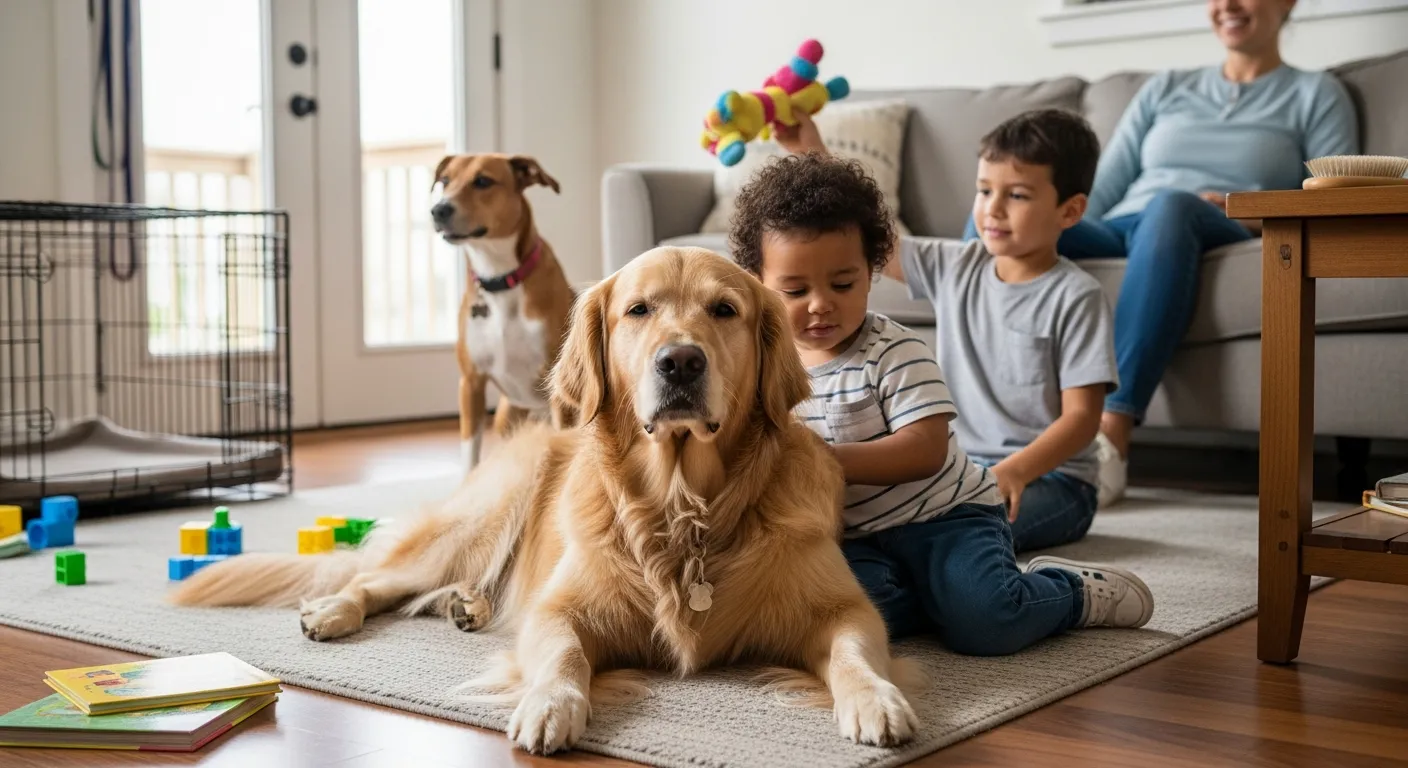
When people ask about “good family dogs,“ they’re usually picturing a dog that’s gentle with kids, playful but not wild, and happy just being part of the action.
According to organizations like the American Kennel Club (AKC) and many family-focused veterinary hospitals, the best family dogs usually share a few big traits:
- Steady, gentle temperament
- Low aggression toward people and other pets
- Patience with noise, handling, and chaos
- High trainability and eagerness to please
- Adaptability to different environments and routines
Let’s break down what that really looks like in everyday life.
Temperament Traits That Work Well With Kids
Temperament is the core of a good family dog. You want a dog who’s:
- Confident, not fearful – A nervous, easily spooked dog may struggle in a busy home with visitors, toys, and sudden noises.
- Resilient – If a toy drops, a door slams, or a toddler squeals, your dog should recover quickly, not stay stressed.
- Social and people-oriented – Dogs that enjoy being around people typically handle family life better.
- Patient and tolerant – Especially important with young kids who are still learning gentle hands.
Breeds like Labrador Retrievers and Golden Retrievers are classic examples because they tend to be outgoing, stable, and very people-focused. But remember: individual temperament matters more than breed label. A calm, patient mixed-breed can be a much better family dog than a poorly bred purebred Lab.
Energy Level, Exercise Needs, And Your Lifestyle
A “perfect” dog on paper won’t be a good family dog for you if their energy level doesn’t match your life.
Ask yourself:
- How much time do you realistically have for walks every day?
- Do you enjoy hiking, running, and being outdoors, or are you more of a movie-night-on-the-couch family?
- How active are your kids?
Rough guide:
- Low-energy dogs (like Bulldogs or some older rescues):
- Short walks and play sessions
- Great for relaxed homes, apartments, or families with mobility issues
- Moderate-energy dogs (like Beagles, Cavaliers):
- One or two decent walks a day plus playtime
- Good for families that enjoy some outdoor time but aren’t marathoners
- High-energy dogs (like Irish Setters, Vizslas, Border Collies):
- Need serious daily exercise and mental stimulation
- Best for very active families who love long walks, running, and training games
If you’re gone 9–10 hours a day and hate the cold, a super athletic working breed is likely to end up bored and frustrated, which often means chewing, digging, barking, and general chaos.
Size, Shedding, And Allergy Considerations
Size alone doesn’t make a dog good or bad with kids. A huge Newfoundland can be a total gentle teddy bear: a tiny dog can be stressed and snappy if handled roughly.
Think about:
- Space:
- Small/medium dogs like Boston Terriers or Cavalier King Charles Spaniels (around 10–25 lbs) often do well in apartments or smaller homes.
- Larger dogs like Labs or Newfoundlands generally need more room to move and a sturdy space for crates and beds.
- Shedding:
- Many popular family breeds do shed (Goldens, Labs, Beagles).
- Are you okay vacuuming more and brushing weekly?
- Allergies:
- No dog is truly “hypoallergenic,“ but some breeds (like Poodles and Bichon Frise) tend to shed less dander.
- If someone in your home has allergies, try spending time with similar dogs before adopting, and talk to your doctor.
The key is being honest about your tolerance for fur tumbleweeds and grooming appointments.
Top Family-Friendly Dog Breeds And Mixes
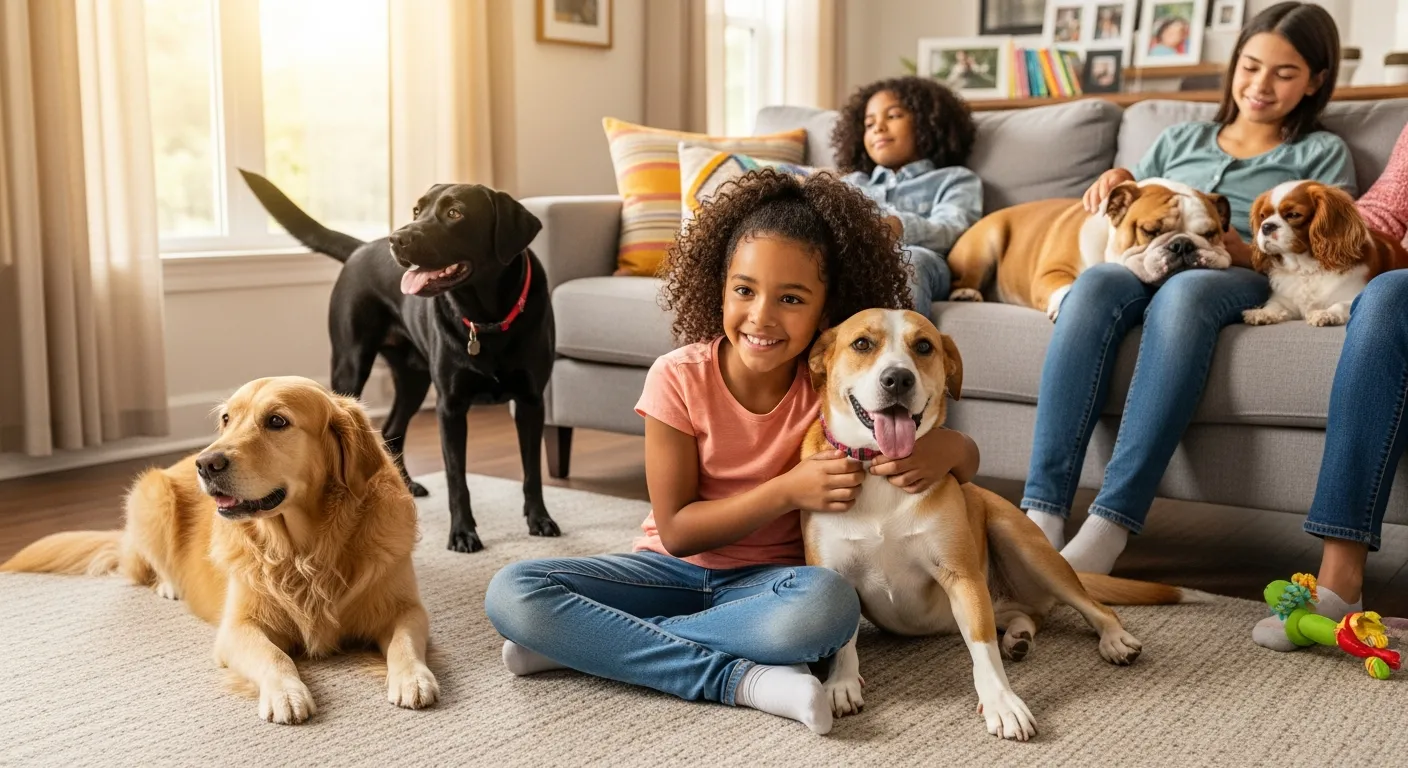
Every dog is an individual, but certain breeds and mixes have long histories as good family dogs. Here are some commonly recommended options and what they’re actually like to live with.
Gentle, Easygoing Companions
If you picture lazy Sunday cuddles and calm evenings, these types often fit well:
- Golden Retriever
Famous for a reason. Goldens are typically:
- Affectionate and very people-focused
- Highly trainable and eager to please
- Great with kids when socialized well
They do shed and need daily exercise, but their forgiving temperament makes them popular family dogs.
- Bulldog (English)
Usually low-energy, sturdy, and surprisingly sweet. Bulldogs often:
- Prefer short walks and long naps
- Do well in smaller living spaces
- Are tolerant of kids but need careful monitoring in heat (they overheat easily)
- Cavalier King Charles Spaniel
A small, gentle, snuggly companion. Cavaliers tend to:
- Love laps and close contact
- Be friendly with kids and other pets
- Need moderate exercise and regular grooming
Active, Playful Breeds For Busy Families
If your family hikes, runs, or spends time at the park, a more energetic dog can be a great match.
- Labrador Retriever
Labs are classic family dogs because they’re:
- Energetic but usually very patient with kids
- Food-motivated and easy to train
- Social and adaptable to new places
They do need daily exercise and can be wild as youngsters without training.
- Irish Setter
Known as cheerful, playful “redheads.“ They’re often:
- High-energy and goofy
- Very people-oriented and kid-loving
- Best with active families who enjoy time outdoors
- Beagle
Small to medium, cheerful, and curious. Beagles tend to:
- Be friendly and sociable
- Have a great sense of smell (and follow it.)
- Need secure fencing and consistent training
Small And Medium Dogs Suited To Apartments
If you live in an apartment or smaller townhouse, you can still have a wonderful family dog.
- Boston Terrier
Playful, clownish, and adaptable. Bostons usually:
- Do well in close quarters
- Enjoy play but don’t need marathon runs
- Are people-loving and often kid-friendly
- Pug
Charming and funny, with moderate energy. Pugs:
- Love being with their people
- Can be good with respectful kids
- Need extra care in hot weather
- Bichon Frise
A small, cheerful companion who:
- Tends to shed less than many breeds
- Enjoys play and short walks
- Needs regular grooming to keep the coat healthy
Why Mixed Breeds Can Be Wonderful Family Dogs
Mixed-breed dogs (“mutts”) often make fantastic family companions. Many shelters and rescue groups carefully assess their dogs’ temperaments around kids, other dogs, and cats.
Benefits of mixed breeds:
- Blended traits – You may get a nice balance of energy level and temperament from different breeds.
- Potentially lower genetic risk – Some studies suggest mixed breeds may have fewer issues linked to extreme purebred traits.
- More options in rescue – You can often meet dogs of different ages and sizes and see how they behave in real life.
When you visit a shelter, ask staff which dogs are known to be kid-friendly and enjoy handling. Their day-to-day observations are gold.
Puppy, Adult, Or Senior: What Age Is Best For Your Family?
Age is a huge factor in whether a dog will feel like a good fit. Puppies are fun, and also tiny tornadoes. Adult and senior dogs can be calmer and easier, especially for first-time families.
Pros And Cons Of Getting A Puppy
Pros:
- You can shape their training and habits from the start.
- They often adapt well to kids, other pets, and new environments when socialized early.
- Watching a puppy grow up with your children can be really special.
Cons:
- House training, chewing, teething, and frequent potty breaks.
- High energy and short attention spans.
- You’ll need time every single day for training, play, and supervision.
If everyone in your home works full-time outside the house and your kids are under 5, a young puppy may be a lot to juggle.
Benefits Of Adopting An Adult Dog
Adult dogs (usually 1–7 years) can be ideal family dogs.
- Their temperament is more predictable, you can see if they’re shy, outgoing, gentle, etc.
- Many are already house-trained.
- They’re often past the intense chewing/teething stage.
At shelters, ask to meet adult dogs that have lived with kids or have been tested around children. Staff can tell you who’s calm with handling, who loves fetch, and who prefers a quieter environment.
When A Senior Dog Is The Right Fit
Senior dogs (7+ years) can be beautiful matches for relaxed families or older adults.
- Usually lower energy and content with short walks and cuddles.
- Great for people who want companionship without endless fetch.
- Often very gentle and easygoing.
You’ll want to budget for possible medical needs (arthritis, dental care, etc.), but in return you get a dog who’s ready to slow down with you and just be loved.
Matching A Dog To Your Family’s Daily Life
Before you fall in love with a face online, look realistically at your day-to-day routine. The best family dog for you is the one that fits into your actual life, not your dream schedule.
Considering Work Schedules And Alone Time
Think about how long your dog will be alone most days.
- Puppies usually can’t hold their bladder more than a few hours.
- Many dogs struggle with long days alone without a dog walker or daycare.
Some breeds and individuals are more independent, Labs and similar breeds can often adapt to some alone time with proper training, enrichment toys, and a mid-day break.
Ask yourself:
- Can you hire a dog walker, use daycare, or come home at lunch?
- Are your kids old enough to help with walks and playtime?
Planning For Training, Walks, And Play
Even the calmest good family dog needs structure.
Plan for:
- Daily walks – Even low-energy dogs benefit from 20–30 minutes out.
- Short training sessions – 5–10 minutes, a few times a day, using treats and praise.
- Play and enrichment – Tug, fetch, puzzle toys, snuffle mats.
Highly trainable breeds like Collies, Goldens, and Labradors thrive when you build training into your routine. It doesn’t have to be fancy, simple cues like “sit,“ “stay,“ “leave it,“ and “come” make family life much calmer.
Safety And Boundaries With Children
Even the sweetest dog needs clear rules and supervision around kids. The American Veterinary Medical Association (AVMA) and pediatric groups all stress this.
- Always supervise young kids and dogs together.
- Teach kids to:
- Pet gently (no grabbing, pulling, or riding the dog)
- Leave the dog alone while eating, sleeping, or in their crate/bed
- Watch for stress signals like lip licking, yawning, turning away, or hiding
- Give your dog kid-free zones where they can rest.
Choosing patient breeds helps, but safety really comes down to teaching both kids and dogs how to respect each other.
Adopting Or Buying Responsibly
Whether you adopt from a shelter or buy from a breeder, how you get your dog matters just as much as which breed you pick.
Questions To Ask Shelters And Rescues
Good shelters and rescues want to make solid matches. Don’t be shy about asking:
- Has this dog lived with kids before? What ages?
- How does this dog react to strangers, handling, and grooming?
- How does this dog do with other dogs or cats?
- What’s their energy level like in the kennel and in a quiet room?
- Any known medical issues or past injuries?
Ask to see the dog in different settings, outside, in a visiting room, maybe on a short walk, so you can get a fuller picture.
Finding An Ethical, Health-Focused Breeder
If you decide on a purebred puppy, choose a breeder who focuses on health and temperament, not just looks.
Look for breeders who:
- Do recommended health screenings for the breed (hips, elbows, eyes, heart, etc.: you can check AKC or breed club websites for specifics).
- Let you meet the mother (and ideally other relatives).
- Ask you lots of questions to make sure their dogs fit your lifestyle.
- Provide a contract, health records, and a clear return policy if things don’t work out.
Avoid anyone who won’t let you see where the puppies are raised or pushes you to buy quickly.
Health Screening And Red Flags To Avoid
Be cautious if you see:
- No vet records or vaccine history provided.
- Parents never screened for common breed health issues.
- Multiple litters advertised year-round with lots of different breeds.
- Sellers willing to meet only in parking lots or public spaces.
Healthy dogs, whether purebred or mixed, are more likely to be able to keep up with your family for years, and face fewer painful medical issues.
Setting Your New Family Dog Up For Success
Once you’ve found your new dog, the first few weeks at home can make a huge difference in how smoothly they settle in.
First-Week Essentials: Routine, Space, And Supplies
Before your dog comes home, set up:
- A safe space – A crate or cozy corner with a bed where your dog can rest undisturbed.
- Basic supplies – Food and water bowls, leash, collar with ID tag, poop bags, a few toys, and a comfy bed.
- A simple routine – Rough times for meals, walks, potty breaks, and bedtime.
Dogs feel safer when they can predict what’s coming next. A consistent routine helps them relax and learn the rules of your home faster.
Basic Training And Socialization For A Calm Home
Training isn’t about having a “perfect” dog: it’s about clear communication.
Start with:
- Name recognition and coming when called
- Sit, down, and stay for polite manners
- “Leave it” and “drop it“ to keep kids’ toys and socks safe
- Crate or bed training so your dog has a calm place to settle
Use positive reinforcement, treats, praise, toys, rather than punishment. Studies consistently show that reward-based training leads to better behavior and better dog–owner relationships.
For socialization (especially with puppies):
- Gently expose your dog to different people, places, sounds, and surfaces.
- Pair new experiences with treats and praise.
- Avoid overwhelming them: watch for stress and go at their pace.
Supporting Your Dog’s Emotional Wellbeing
Even the best family dog can struggle if they’re constantly stressed or bored. Support their mental health by:
- Providing daily exercise appropriate to their age and breed.
- Using food puzzles or snuffle mats for meals.
- Scheduling quiet time away from kids and noise.
- Offering affection on their terms, let them choose when to snuggle or play.
If you notice ongoing anxiety, fear, or behavior issues, talk with your vet or a certified trainer. Many problems are very fixable with the right plan.