
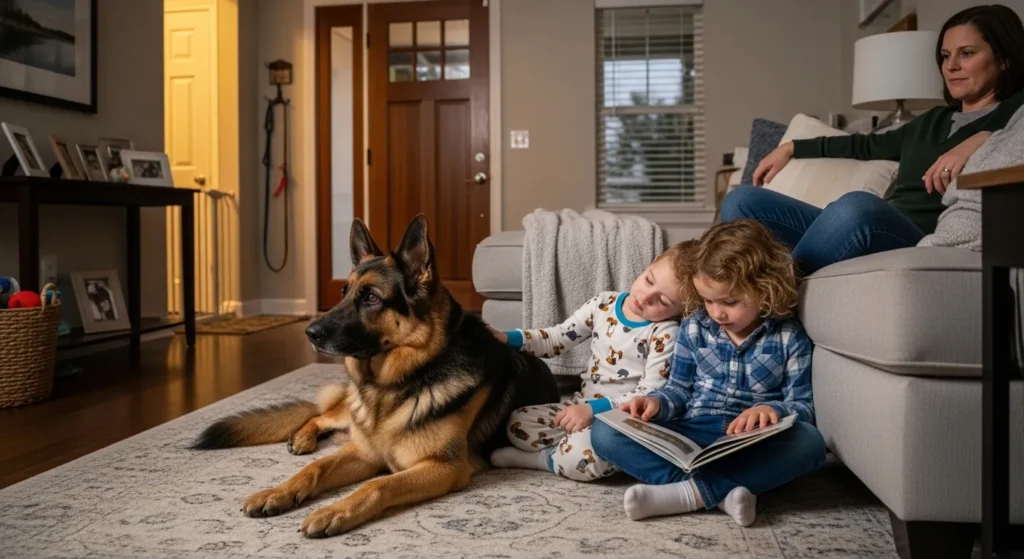
You want a dog that will cuddle your kids on the couch and make you feel safe when someone walks up to the door at night.
Totally fair.
The tricky part is that “guard dog” can sound scary or aggressive, while “family dog” sounds soft and easy-going. The good news? Some breeds really can do both, if you pick the right dog for your lifestyle and put the training and socialization in.
Below, you’ll learn what actually makes the best family and guard dog, which breeds tend to fit that role, and how to keep things safe and peaceful at home.
Feature image idea: A German Shepherd or Rottweiler calmly lying near kids in a living room, relaxed but alert.
What Makes A Great Family Guard Dog
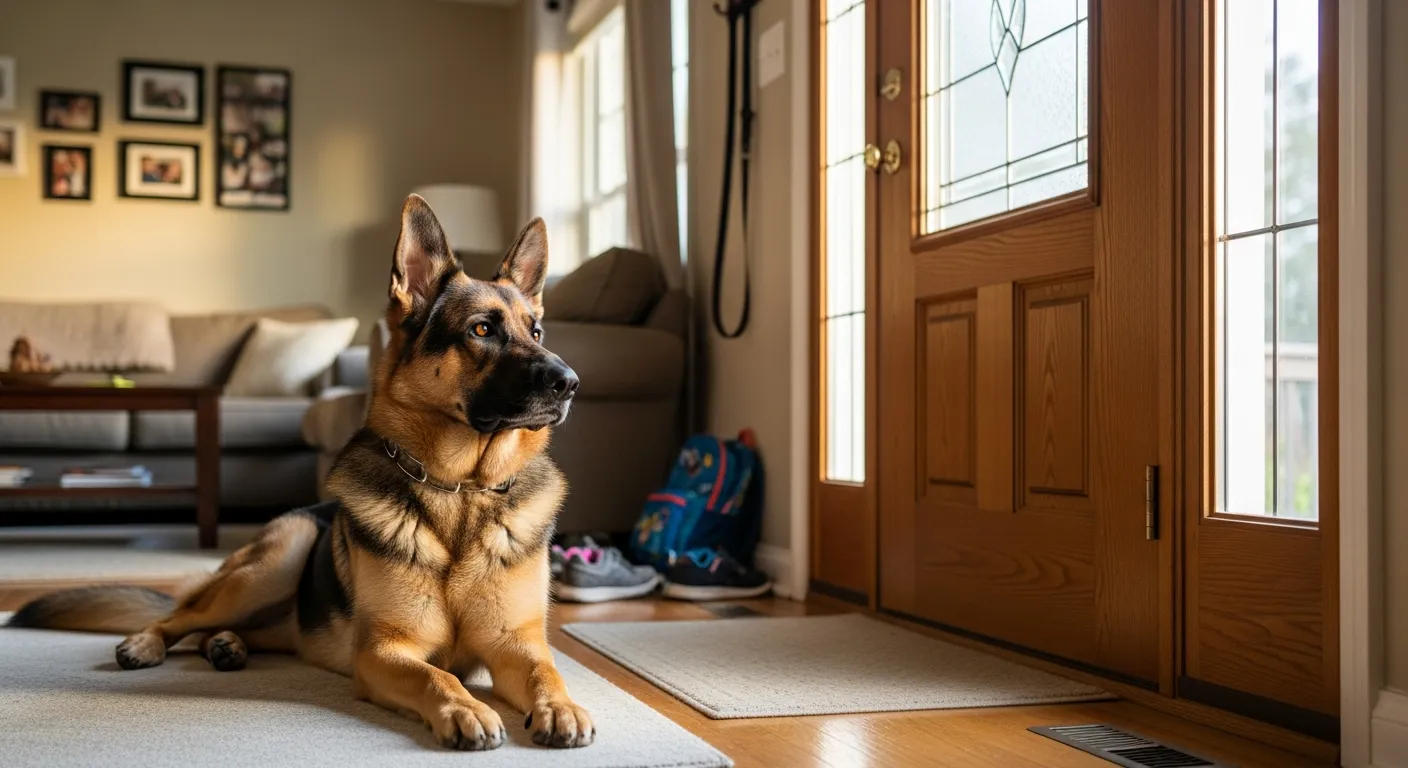
Before you look at specific breeds, it helps to know what you’re actually looking for. A good family guard dog isn’t just “big and barky.“ They’re a mix of:
- Stable, predictable temperament
- Natural protective instincts (without being hair-trigger)
- Trainability and impulse control
- An energy level that fits your life
According to groups like the American Kennel Club (AKC) and most veterinary behaviorists, temperament and training matter more than size alone.
Temperament: Gentle At Home, Confident With Strangers
The best protective family dogs have a kind of “split mode”:
- At home with family: Soft, affectionate, patient
- With strangers or odd situations: Alert, confident, cautious but not panicked
Breeds like German Shepherds and Doberman Pinschers are classic examples. They often:
- Bond very closely with their people
- Enjoy being near kids and “their” humans
- Watch strangers closely before deciding how to react
When you’re evaluating a pup or adult dog, look for a dog who:
- Recovers quickly from small startles (loud noise, dropped object)
- Shows interest in people but doesn’t fling themself at everyone
- Isn’t constantly anxious, pacing, or hyper-vigilant
A solid family guardian should feel confident, not nervous. Chronic fear and anxiety can actually increase bite risk, according to veterinary behavior research.
Protective Instincts Vs. Aggression
A lot of people quietly want a dog who will “go after” an intruder. In reality, most good guard dogs never need to bite anyone. Their size, bark, and posture do the job.
What you want is:
- Clear warning signals: Standing tall, barking, moving between you and the concern
- Good judgment: Dog doesn’t explode over every small noise or person walking past the fence
- Ability to stand down: When you say it’s okay, they relax again
Well-bred Bullmastiffs and Cane Corsos, for example, are known for being very protective but typically calm when well socialized.
Red flags for unsafe aggression include:
- Lunging and snapping with no warning
- Redirected aggression (biting family when frustrated)
- Guarding food or toys from people
If you see these, it’s a behavior-vet or certified trainer situation, not something to “tough out.“
Trainability, Energy Level, And Shedding Considerations
Guard-type dogs are often smart, which is great and also… a bit dangerous if you’re not ready to train.
Trainability:
- Very high: Doberman Pinschers, German Shepherds, Belgian Malinois
- Moderate: Rottweilers, Cane Corsos, Bullmastiffs
Higher trainability is great for busy families who can commit to short, regular training sessions. It makes it easier to teach solid obedience and a reliable “off switch.“
Energy level:
- High: Belgian Malinois, Norwegian Elkhound, Rhodesian Ridgeback, awesome for runners and hikers, tough for couch potatoes
- Moderate: German Shepherds, Rottweilers, Dobermans
- Lower–moderate: Bullmastiff, some Cane Corsos, Kuvasz
Pick a dog whose energy matches your daily reality, not your dream version of yourself.
Shedding & grooming:
- German Shepherds, Norwegian Elkhounds, and Bernese Mountain Dogs shed a lot
- Dobermans and Boxers are smooth-coated but still shed (just shorter hairs)
If you’ve got allergies or hate vacuuming, factor that in now, not later when you’re frustrated.
Top Family-Friendly Guard Dog Breeds To Consider
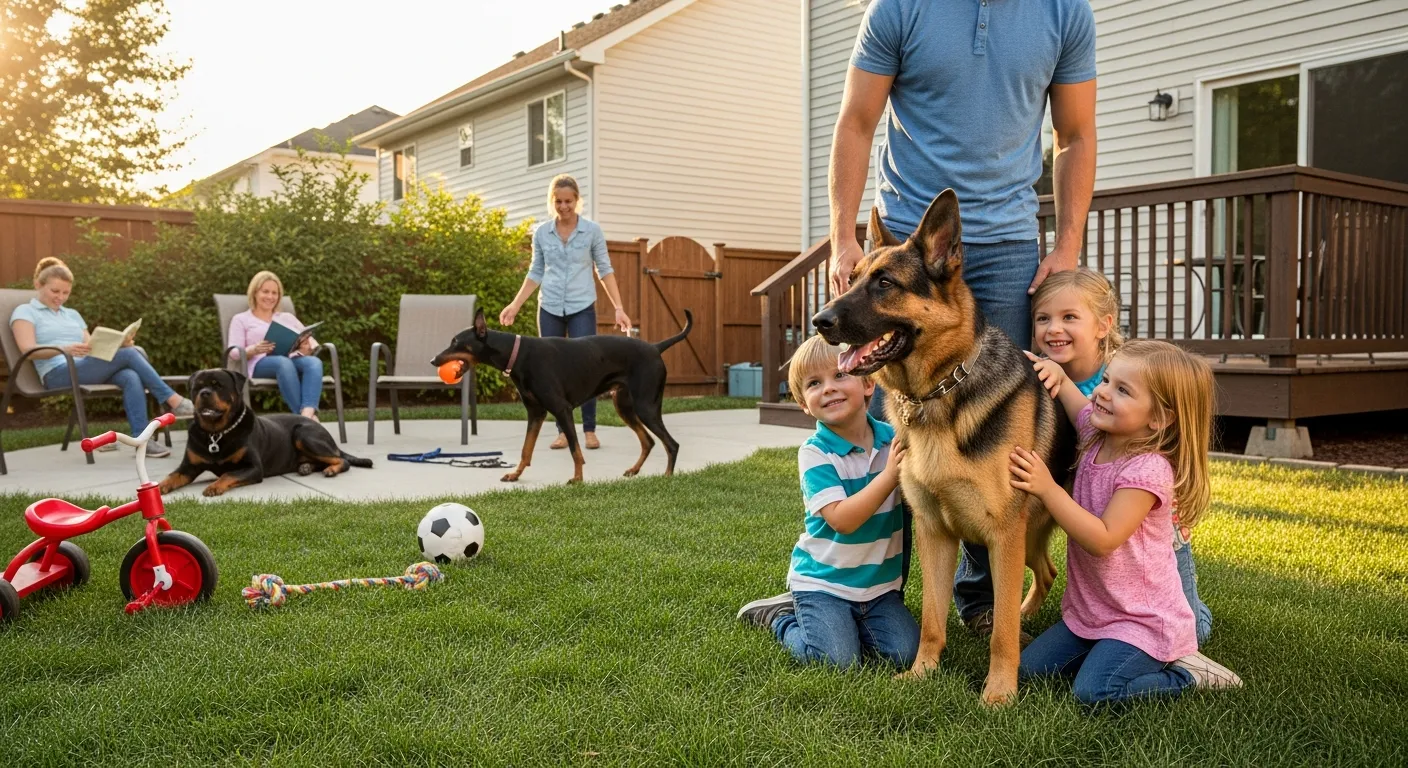
No single breed is “the” best family and guard dog for everyone. But some breeds consistently show up on lists from trainers, veterinarians, and organizations like the AKC because they balance protectiveness with family-friendliness.
Quick reminder: individual temperament and training matter more than breed label. Always meet the actual dog, ask about health and behavior history, and work with reputable breeders or rescues.
Large, Classic Guard Breeds For Active Households
These breeds are well-known guardians and often do best with active families who like training, walking, and mental games.
German Shepherd
- Why people love them: Extremely loyal, smart, and versatile, police work, service work, family dogs
- Family factor: Often very good with kids when raised and socialized properly
- Guard factor: Natural watchdog: confident bark and presence deter most strangers
- Needs: Daily exercise, training, and strong focus on hip/elbow health
Rottweiler
- Personality: Calm confidence, can be goofy with family, reserved with strangers
- Family factor: Usually very affectionate with their people: may be intense for homes with tiny kids if not well-trained
- Guard factor: Big, powerful, and protective, their presence alone is a major deterrent
- Needs: Consistent training, clear rules, and careful socialization to avoid over-guarding
Cane Corso
- Personality: Serious, loyal, and typically devoted to their family
- Family factor: Often excellent family dogs in experienced homes
- Guard factor: Strong natural guarding instinct, originally bred as estate guardians
- Needs: Firm but fair training, lots of socialization, and responsible ownership, not ideal for first-time dog owners
Medium-Sized Guardians For Suburban And Urban Homes
Maybe you don’t want a 120-pound drooling giant, but you still want real protection. These dogs can fit better into city or suburban life.
Doberman Pinscher
- Personality: Intelligent, sensitive, very people-oriented
- Family factor: Often called “Velcro dogs” because they like to be near you
- Guard factor: Naturally protective, sleek, and athletic, their look alone deters many strangers
- Needs: Plenty of exercise, mental work, and positive training: can be a great choice if you enjoy obedience or agility
Norwegian Elkhound
- Personality: Alert, friendly, confident
- Family factor: Often good with active families and older kids: originally a hunting breed
- Guard factor: Strong watchdog, will alert bark at anything unusual
- Needs: Lots of exercise and brushing: does best in cooler climates
Smaller Watchdogs For Apartments And Busy Families
Not every home can handle a big guardian. You can still have a good watchdog in a smaller package.
Staffordshire Bull Terrier
- Personality: Often extremely people-focused and affectionate
- Family factor: Nicknamed “nanny dogs” historically for their love of children (though, of course, supervision is still essential)
- Guard factor: More watchdog than true guard, will alert and may look intimidating to strangers
- Needs: Regular exercise, socialization, and training to channel their energy
Smaller dogs may not physically stop an intruder, but they can absolutely be your early-warning system and loving family companions.
How To Match The Right Guard Dog To Your Family
Instead of asking, “What’s the best family and guard dog overall?“ shift the question to: “What’s the best family and guard dog for us?“
Here’s how to sort that out.
Lifestyle, Schedule, And Activity Level
Ask yourself:
- How many real walks can you do per day?
- Do you like hiking, running, or just short strolls?
- How many hours is the dog alone on a typical weekday?
Examples:
- If you’re active and outdoorsy, a Rhodesian Ridgeback or German Shepherd can be a good fit.
- If you prefer a calmer house and shorter walks, a Bullmastiff, Kuvasz, or older rescue guardian mix might be better.
Guard-type breeds who don’t get enough exercise and mental work often become:
- Destructive
- Barky
- Over-reactive
…which makes home life stressful very quickly.
Kids, Other Pets, And Visitor Traffic
Think about who’s already in your life:
- Do you have young kids who run and squeal?
- Do friends and family visit often?
- Do you already have dogs or cats?
A few general thoughts:
- Gentle giants like Bernese Mountain Dogs can be wonderful with kids but need space and shed heavily.
- Many guard breeds are okay with other dogs when well socialized, but same-sex aggression can be an issue in some lines.
- If you have a busy social house, you’ll need a dog who can learn that visitors are usually “safe,“ and you’ll need a management plan (leashes, crates, baby gates).
Whatever breed you choose, early socialization, especially around kids and visitors, is non-negotiable.
Climate, Space, And Local Regulations
A few practical but important checks:
- Climate: Fluffy breeds like Bernese Mountain Dogs, Great Pyrenees, and Norwegian Elkhounds do better in cooler weather.
- Space: Giant breeds really benefit from a yard: city apartments can work with the right routine, but it’s more effort.
- Breed restrictions: Some cities, landlords, or insurance companies have rules about breeds like Rottweilers, “pit bull–type“ dogs, or Cane Corsos.
Before you fall in love with a specific breed, check:
- Local laws
- Landlord or HOA rules
- Homeowner’s or renter’s insurance policies
You don’t want to bring home a dog and then find out they’re not allowed.
Training Essentials For A Safe, Reliable Family Guard Dog
Even the most perfect breed on paper can become a problem if training is ignored. A “good guard dog“ is really just a well-trained, well-socialized dog with protective instincts.
According to the American Veterinary Society of Animal Behavior, using reward-based training leads to better behavior and less fear compared with harsh methods.
Early Socialization And Positive Exposure
From 8–16 weeks (and continuing well beyond that), focus on:
- Meeting a variety of people (ages, sizes, hats, wheelchairs, etc.)
- Watching kids play from a safe, controlled distance
- Seeing delivery people, mail carriers, and guests in calm scenarios
Keep it positive:
- Treats and praise when your dog notices something new and stays calm
- Space to move away if they’re unsure, don’t force interactions
This helps your dog tell the difference between normal life and real threats, instead of treating everything as danger.
Basic Obedience And Impulse Control
Your guard-type dog should have rock-solid basics:
- Sit, down, stay
- Come when called (even with distractions)
- Leave it / drop it
- Loose-leash walking
Short, 5–10 minute sessions a few times a day are enough for most dogs. Use:
- Tiny treats
- Toys (for play-driven dogs)
- Calm, clear voice
Impulse control games like “wait” before doors or food bowls teach your dog to think before they act, which is critical for any protective breed.
Teaching Controlled Guarding And A Reliable “Off Switch”
You don’t need to turn your dog into a professional protection dog. But you can teach a few simple, very useful skills:
- “Watch” or “who’s there?“ – Dog is allowed to alert and bark once or twice
- “Enough” or “thank you“ – Dog stops barking and comes to you for a reward
- Place/bed command – Dog goes to a mat or crate and relaxes when asked
This gives your dog a clear job:
- Notice something
- Alert you
- Then relax when you say it’s handled
If you’re unsure how to do this safely, look for a force-free trainer experienced with guard-type breeds.
Safety, Management, And Responsible Ownership
Owning a protective breed can be deeply rewarding, but it also comes with extra responsibility. You’re managing a powerful, confident dog in a world full of delivery drivers, neighborhood kids, and guests.
Setting Clear House Rules And Safe Zones
Your dog should know:
- Where they’re allowed and not allowed
- When it’s “work time” (on leash, greeting at door) vs. “relax time”
Practical tools:
- Baby gates to separate dog and kids during high-energy play
- A crate or quiet room as your dog’s safe zone
- Clear rules like “no rushing the front door”
Safe zones protect everyone, kids, guests, and your dog.
Supervising Interactions With Children And Guests
No matter how sweet your dog is, don’t leave them alone with young children. This isn’t about distrust, it’s just good risk management.
Tips:
- Teach kids to pet gently, not climb or hug tightly
- Show guests how to greet your dog calmly (no squealing, no leaning over their head)
- Use a leash, gate, or “place” command when new people come over
Most bites happen when a dog is stressed, cornered, or pushed too far, often by accident. Good supervision prevents those situations.
Health Care, Insurance, And Legal Responsibility
Large guard-type breeds are prone to certain health issues, like:
- Hip and elbow dysplasia
- Bloat (GDV) in deep-chested dogs (Rottweilers, Dobermans, Shepherds)
- Heart issues in some lines (e.g., dilated cardiomyopathy in Dobermans)
Work with your vet on:
- Screening tests for hips, elbows, and heart where appropriate
- A healthy diet and weight management to protect joints
- Spay/neuter timing (discuss pros and cons with your vet)
Because of their size and reputation, it’s also smart to:
- Carry liability coverage through your home or renter’s insurance
- Follow all local leash and fencing laws
- Use ID tags and microchips in case your dog ever gets out
Responsible ownership keeps both your dog and your community safe, and it helps protect the reputation of these breeds overall.