
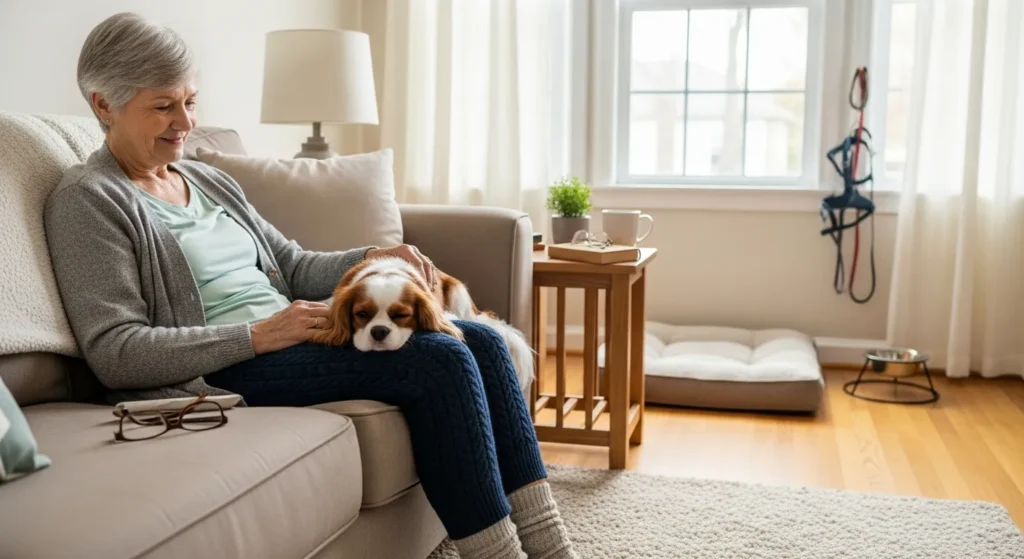
You’re thinking about adding a dog to your life, but you also want to be realistic.
You might be wondering:
- Can I handle the walks?
- What about vet bills and grooming?
- What’s the best dog for older people who want love and company, not chaos?
The good news: there are wonderful breeds and mixes that fit a quieter, more relaxed lifestyle. The key is matching the dog to your energy level, home, and health, not just falling for the cutest face.
This guide walks you through exactly what to look for, which breeds and mixes often work well for older adults, and how to adopt safely so you end up with a low-stress, loving companion.
What Older Adults Should Look For In A Dog
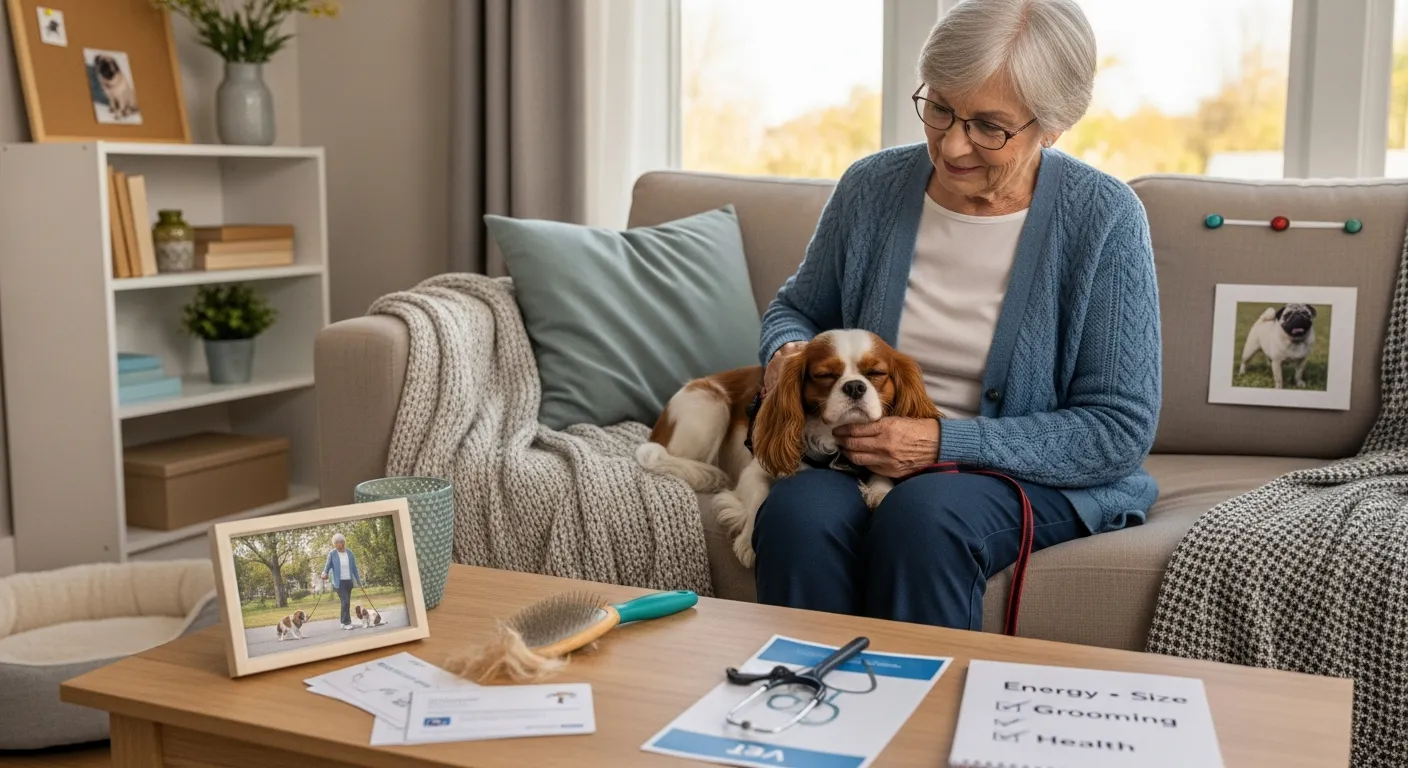
Choosing the best dog for older people isn’t about finding a “perfect” breed. It’s about finding a good match for your lifestyle, health, and home.
Energy Level And Exercise Needs
Be honest with yourself here. A dog’s energy level will affect your daily life more than almost anything else.
- If you like slow, short walks and calm evenings, look for low-to-moderate energy dogs.
- If you still enjoy longer walks or hikes, you can handle a bit more energy.
Breeds that usually do well with short walks and playtime:
- Pug – Short walks, lots of napping, very people-focused.
- French Bulldog – Enjoys play but doesn’t need miles of exercise.
- Cavalier King Charles Spaniel – Happy with gentle strolls and couch time.
High-energy breeds like young Labradors, Border Collies, or Australian Shepherds can be wonderful, but they’re often too intense unless you’re very active and steady on your feet.
Size, Strength, And Handling Safety
You want a dog you can physically manage, on walks, at the vet, and in emergencies.
- Small breeds (under ~20 lbs) are usually easiest to handle and lift if needed.
- Very strong dogs that pull hard can be a fall risk, especially on slippery sidewalks.
Good small-to-medium options for easier handling:
- Shih Tzu – Compact, sturdy, not typically strong pullers.
- Cavalier King Charles Spaniel – Gentle, moderate size.
- Boston Terrier – Small but solid, usually manageable on leash.
If you love larger dogs, look for ones known for being calm and easy on leash, and consider using a front-clip harness to reduce pulling.
Grooming, Shedding, And Allergies
Grooming can sneak up on you, both in time and cost.
- Low-shedding breeds can be great if you have allergies or don’t want hair everywhere.
- But some low-shedding dogs need regular brushing and professional grooming (every 4–8 weeks).
Examples:
- Bichon Frise or Havanese – Low-shedding, good for many allergy sufferers, but need brushing and grooming visits.
- Pug or Beagle – Short coat, more shedding, but easier at home.
Ask yourself:
- Do you mind brushing a few times a week?
- Are you okay budgeting for grooming appointments?
- Do allergies run in your family?
Temperament, Trainability, And Noise Level
Older adults often do best with dogs that are calm, affectionate, and not overly noisy.
Look for dogs that are:
- People-oriented and enjoy cuddling or staying close
- Trainable and food-motivated (easier to teach manners)
- Not constant barkers (important in apartments or senior communities)
Breeds often praised for gentle, trainable temperaments include:
- Cavalier King Charles Spaniel
- Boston Terrier
- Miniature Schnauzer (a bit more “alert,“ great for people who like a watchdog type)
Health, Lifespan, And Vet Costs
Smaller dogs tend to live longer on average (often 12–15 years). That can be a plus if you want many years with your companion, but it also means long-term planning.
Consider:
- Common breed health issues (for example, brachycephalic breeds like Pugs and Frenchies can have breathing problems: Cavaliers can have heart issues).
- Your budget for vet care, medications, and possible surgeries.
Ask the shelter, rescue, or breeder:
- What health screenings have been done?
- Are there known issues in this line or this dog (heart, joints, eyes, breathing)?
Your future self will thank you for doing that assignments now.
Small, Medium, Or Large: Which Dog Size Works Best For Seniors?
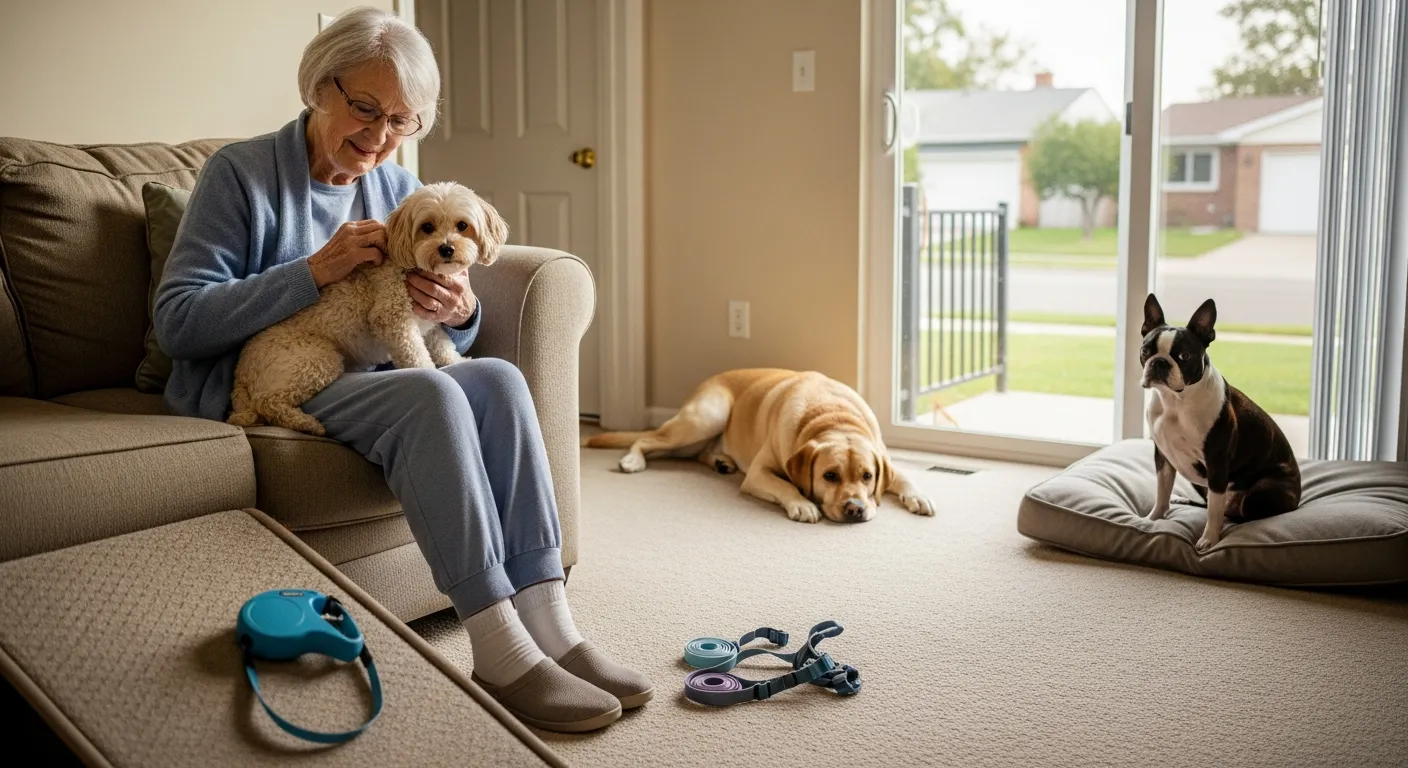
Overall, small dogs tend to be the best dogs for older people because they’re easier to lift, transport, and control. But that doesn’t mean a bigger dog is always a bad idea.
Pros And Cons Of Small Dogs For Older People
Pros
- Easier to pick up and help in and out of the car.
- Usually safer if you have balance issues: less force on the leash.
- Great for apartments or retirement communities.
Popular examples: Pomeranian, Maltipoo, Yorkshire Terrier, Shih Tzu.
Cons
- Some small dogs can be fragile: you have to watch your step.
- Certain small breeds can be yappy if not trained or if under-exercised.
If you choose a tiny dog, focus on gentle handling, using ramps or steps for couches/beds, and early training to prevent excessive barking.
When A Medium Or Larger Dog Can Be A Good Fit
Medium or larger dogs can work well if:
- You’re fairly active and enjoy regular walks.
- You feel steady on your feet.
- You like the “solid” feeling of a bigger dog.
Surprisingly low-maintenance larger breeds include:
- Greyhound – Often called “45-mph couch potatoes.“ They enjoy a couple of decent walks and then snooze.
- Labrador Retriever – Better for active older adults: choose an adult Lab with a calm temperament, not a hyper puppy.
The key is choosing an individual dog who’s already calm, not a high-octane youngster who needs marathon exercise.
Matching Dog Size To Your Home And Mobility
Think about:
- Home type: Apartment vs. house with a yard.
- Stairs: Do you have to climb them often? Could you carry a small dog if needed?
- Mobility: Any arthritis, joint replacements, or balance issues?
General guide:
- Apartments/condos – Small or small–medium dogs like Havanese, Boston Terrier, Pug.
- Single-family home with yard – Small, medium, or calm large breeds, depending on your activity level.
Try this quick check: picture yourself walking the dog on an icy or rainy day. Would that size and strength feel safe to you? If you hesitate, go smaller or calmer.
Best Dog Breeds And Mixes For Older People
Every dog is an individual, so there are no guarantees. But certain breeds and mixes tend to fit older adults especially well.
Tip: Don’t get hung up on only purebreds. Many mixed-breed dogs have wonderful, balanced temperaments and fewer health issues.
Gentle Lapdogs For Low-Energy Households
If you picture reading with a dog curled up next to you, these are worth a look:
- Cavalier King Charles Spaniel
Sweet, affectionate, usually gentle with everyone. Loves snuggling and moderate walks.
- Shih Tzu
Friendly, sturdy little companion. Needs grooming but usually adapts well to apartment life and slower routines.
- Pug
Clownish, loving, often low-energy. Great personality: watch their weight and breathing.
- Bichon Frise
Cheerful, usually good for allergy-prone homes, but does need regular grooming.
These make some of the best dogs for older people who want closeness and calm more than long hikes.
Calm Companions For Moderate Daily Walks
If you like getting outside once or twice a day for a decent walk, you can handle dogs with a bit more energy, as long as they’re not over the top.
- French Bulldog
Playful but doesn’t need huge amounts of exercise. Watch for heat sensitivity and breathing.
- Cocker Spaniel
Gentle, people-loving, enjoys daily walks and brushing sessions.
- Beagle
Friendly and curious, usually loves sniffy walks. Can be vocal: training helps.
These dogs do best with daily routines: regular walks, simple training, and mental games like sniffing mats or puzzle feeders.
Surprisingly Low-Maintenance Larger Breeds
A big dog isn’t always a high-energy dog. Some larger breeds are actually couch potatoes.
- Greyhound
Short coat, often very calm indoors, usually fine with a couple of good walks and some zoomies in a safe area.
- Adult Labrador or Golden Retriever
Once they’re out of the puppy/teen phase, many settle into loving, steady companions. Better for active seniors who enjoy daily walks.
If you’re considering a big dog, try to adopt or meet an adult whose temperament is already clear, rather than a puppy whose energy level is still unknown.
Why Mixed Breeds And Senior Dogs Deserve A Look
Mixed-breed and older dogs are often overlooked, but they can be fantastic choices for older adults.
Mixed breeds:
- May have fewer genetic health issues than some purebreds.
- Often have balanced temperaments.
- Shelters usually know their personalities well.
Senior dogs (7+ years):
- Tend to be calmer and already housetrained.
- Often fit well into quieter homes.
- Adoption fees can be lower, and some rescues help with senior-dog vet care.
If you want a low-stress companion right away, a middle-aged or senior mix from a rescue can be one of the best dogs for older people, hands down.
Choosing A Dog To Match Your Lifestyle And Health
Instead of asking, “What’s the best breed for seniors?“ try, “What kind of dog fits my life right now?“
If You Have Limited Mobility Or Chronic Pain
If walking is hard, or you deal with arthritis, back pain, or balance problems, look for:
- Small, light dogs you can lift if needed.
- Dogs that are naturally calm on leash and not pullers.
Good fits often include:
- Yorkshire Terrier
- Shih Tzu
- Bichon Frise
- Calm mixed-breed small dogs
You can meet their needs with:
- Short, slow walks
- Indoor play
- Food puzzles and snuffle mats for mental exercise
If You Are Active And Enjoy Daily Walks
If you move a lot, enjoy the outdoors, and feel steady physically, you have more options.
You may enjoy:
- Labrador Retriever
- Golden Retriever
- Beagle
- Cocker Spaniel
- Medium mixed breeds with moderate energy
Aim for adult dogs whose energy level you can see in real life. If you want to avoid being overwhelmed, skip the super high-drive working lines.
If You Live In An Apartment Or Smaller Home
For tighter spaces, focus on:
- Dogs that are quiet or easily trained not to bark.
- Smaller or small–medium breeds that don’t need a yard.
Examples:
- Havanese – Friendly, adaptable, low-shedding.
- Boston Terrier – Compact, generally moderate energy.
- French Bulldog – Apartment classic (but watch health and heat).
Also check your building or community rules: some have weight or breed restrictions.
If You Live Alone And Want Extra Security
If you’d like a dog that will alert you to visitors without being aggressive:
- Pomeranian – Tiny but vigilant: great little doorbell.
- Miniature Schnauzer – Alert, smart, tends to bark at strangers but bonds strongly with family.
- Mixed-breed small guardians – Many terrier mixes or small herding mixes make good “alarm” dogs.
Just remember: you want controlled alertness, not constant barking. Early training, routine, and plenty of mental exercise will help your dog feel secure and less reactive.
How To Adopt Safely And Set Up For Success
Once you know what you’re looking for, it’s time to actually find your new friend and set things up so both of you feel comfortable.
Where To Find The Right Dog: Shelters, Rescues, And Reputable Breeders
Good options include:
- Local shelters and humane societies – Great for mixed breeds and adult/senior dogs.
- Breed-specific rescues – Ideal if you have your heart set on a certain breed.
- Reputable breeders – Health-tested dogs, clear history: best if you want a puppy and can handle the work.
Look for groups that:
- Ask you detailed questions (it shows they care where the dog goes).
- Are honest about health and behavior.
- Allow a trial period or support after adoption when possible.
Questions To Ask And Red Flags To Watch For
Ask:
- “How much exercise does this dog really need?”
- “Does this dog pull on leash?”
- “Any history of biting, reactivity, or strong fear?”
- “What health issues has this dog had so far?”
Red flags:
- Vague answers like “Oh, he just needs lots of exercise.“ without details.
- Sellers or breeders who won’t show you health records or let you meet the parents (for puppies).
- Anyone pressuring you to decide right now.
Preparing Your Home And Support System
Before your dog comes home, set up:
- Non-slip rugs or mats to reduce fall risk for both of you.
- A comfy dog bed in a quiet corner.
- Food and water bowls in a spot that’s easy for you to reach.
- A simple harness and leash that you can clip on without straining.
Also think about your support system:
- A nearby vet you trust.
- A dog walker, neighbor, or family member who can help if you’re sick or recovering from surgery.
- Backup plans for vacations, hospital stays, or emergencies.
Creating A Simple, Sustainable Care Routine
The best dog for older people is one whose care fits into a simple daily rhythm you can keep up long-term.
Example of an easy routine:
- Morning: Short walk or potty break, breakfast, a few minutes of training.
- Midday: Short potty break or indoor play.
- Evening: Another walk, dinner, cuddle time, and a small puzzle toy.
Keep things predictable, most dogs feel calmer with a routine. And if something in the routine becomes too hard physically, it’s okay to adjust and ask for help.