
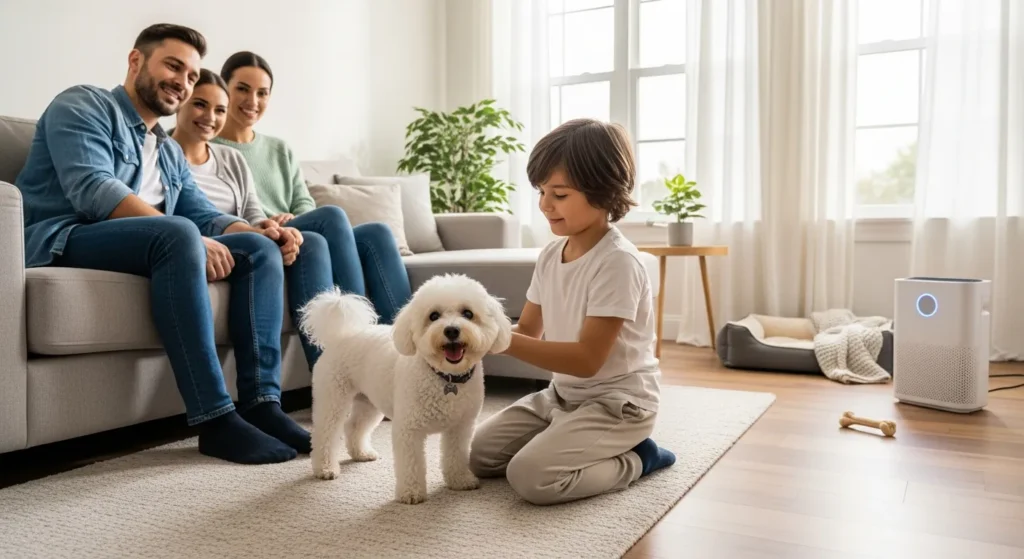
You love the idea of having a family dog… but someone in your house starts sneezing the second they walk into a friend’s place with a pup. Sound familiar?
If allergies are holding you back from getting a dog, the good news is that many breeds tend to be easier on allergy‑prone families. They’re often called “hypoallergenic dogs”, but there are a few myths to clear up before you fall in love with the first fluffy face you see on Instagram.
This guide walks you through what hypoallergenic really means, how to pick the right breed for your home, and some of the best hypoallergenic dogs for families of all sizes and activity levels. You’ll also get practical tips to keep allergens low so everyone can breathe easier.
What “Hypoallergenic” Really Means In Dogs
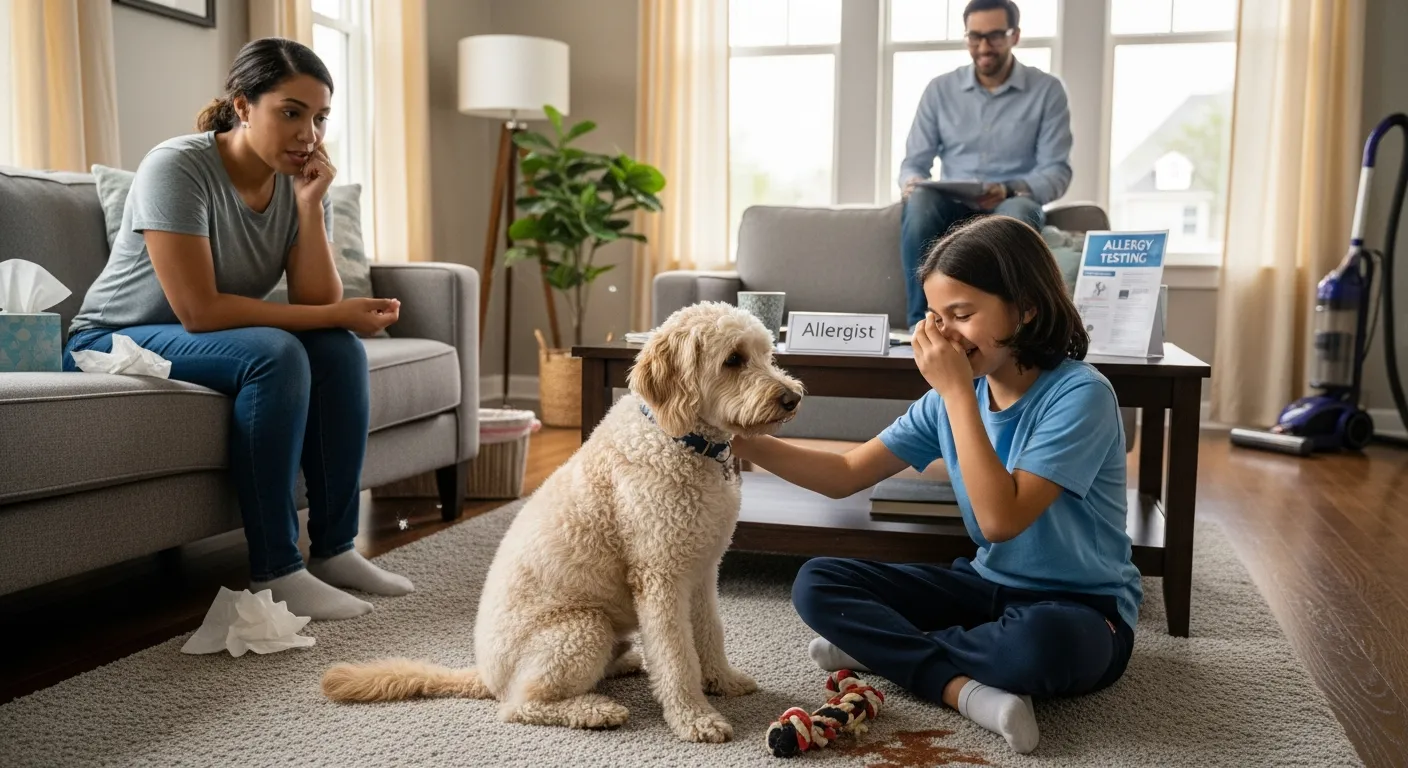
When people say “hypoallergenic dog,“ they usually picture a fluffy pup that magically doesn’t cause any allergies at all.
That dog doesn’t exist.
Hypoallergenic dogs aren’t allergen‑free, they simply:
- Shed less fur
- Tend to drop less dander (tiny flakes of skin)
- Often have coats that trap dander instead of letting it float around your house
Most dog allergies are triggered by proteins in dander, saliva, and urine, not the fur itself. According to organizations like the American Academy of Allergy, Asthma & Immunology, less shedding usually means fewer allergens drifting into the air, sticking to your clothes, and covering your furniture.
How Dog Allergies Work
If someone in your family is allergic, their immune system is basically overreacting to certain proteins from dogs. These proteins sit on:
- Dander (dead skin flakes)
- Saliva (think: licking, grooming, toys)
- Urine (on fur around the hind end, paws from walking outside, etc.)
When these proteins get into the nose, eyes, or lungs of a sensitive person, the body shouts, “Invader.“ and releases histamines. That’s when you see:
- Sneezing
- Stuffy or runny nose
- Itchy, watery, or red eyes
- Coughing or wheezing
- Hives or itchy skin where the dog licked or touched
Low‑shedding breeds help because they spread less of this allergen‑coated fur and dander through your home.
Signs Your Family May Be Reacting To A Dog
If you’re not sure whether symptoms are from dogs, dust, or pollen, pay attention to patterns:
- Symptoms get worse after visiting homes with dogs
- A child rubs their eyes or nose more when playing with a dog
- You feel better after a few days away from dogs
If this sounds familiar, consider talking to an allergist. A simple skin or blood test can give you much clearer answers and help you make a safer plan.
Limitations Of Hypoallergenic Breeds
There’s one big thing to keep in mind before you commit:
- No breed is 100% hypoallergenic
- Different people react differently to the same breed
- Even “hypoallergenic” crossbreeds (like doodles) can vary a lot dog to dog
So instead of thinking, “This breed won’t cause allergies,“ it’s better to think, “This breed may be easier on allergies, but we still need to test it out.“
That mindset will save you a lot of stress and disappointment later, especially if you have kids who will bond quickly with a new dog.
How To Choose A Hypoallergenic Family Dog
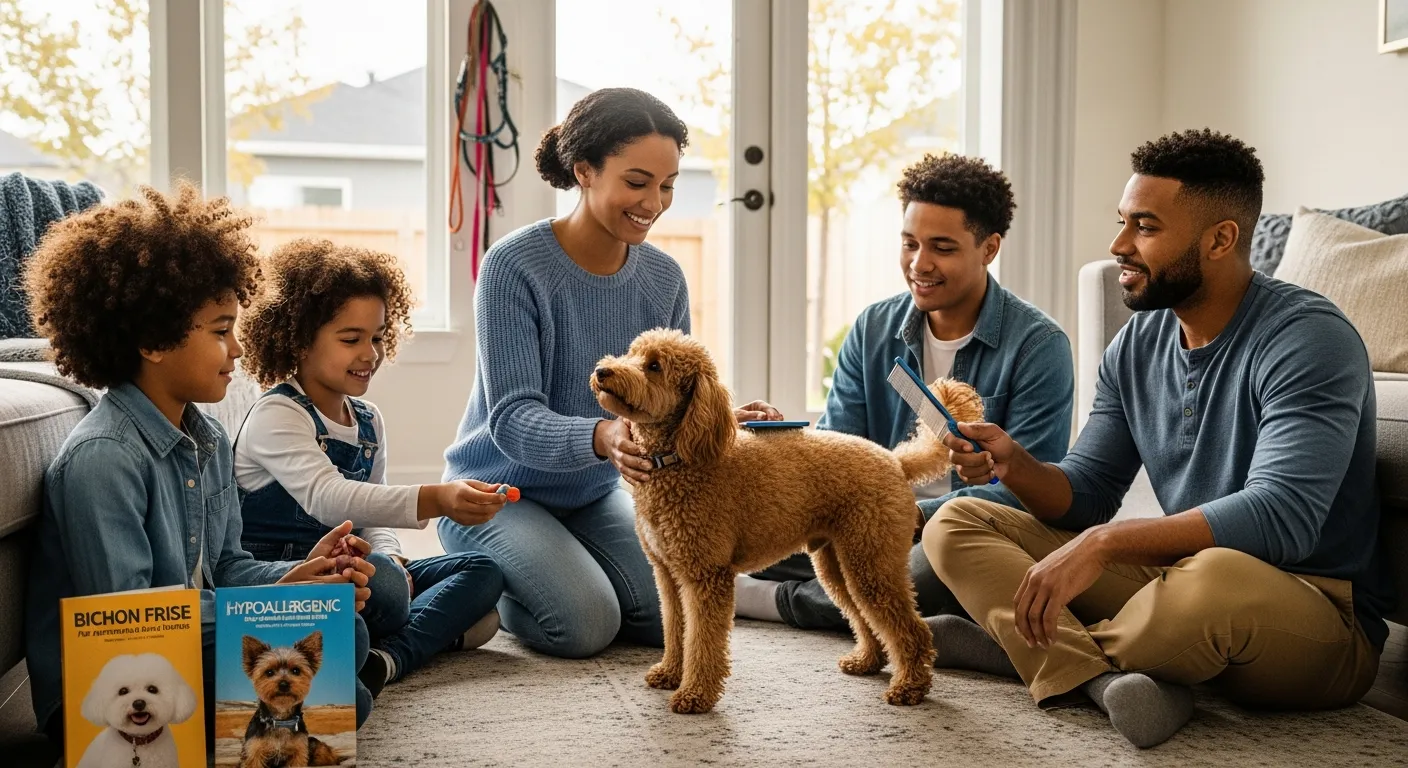
Before you fall in love with a particular look or trendy mix, step back and think about your daily life. The “best” hypoallergenic dog for your family isn’t just low‑shed: it’s the one whose needs actually fit your reality.
Match Energy Level And Size To Your Home
Ask yourself:
- How active is your family really, not ideally, but honestly?
- Do you live in an apartment, townhouse, or home with a yard?
- How many walks or play sessions can you reasonably provide each day?
Some quick examples:
- Apartments / smaller homes
Small, people‑oriented breeds like Maltese, Yorkies, and Bichon Frise can be perfect. They usually need short walks and indoor play.
- Suburban families who like walks and light hikes
Miniature Schnauzers, Soft Coated Wheaten Terriers, or Mini/Toy Poodles often do well. - Very active families
If you’re into running, hiking, or long weekend adventures, consider larger working or sporting breeds like Standard Poodles or Portuguese Water Dogs.
Consider Grooming, Time, And Budget
Many hypoallergenic breeds have hair more like human hair: it grows continuously and needs regular care.
Real talk: these coats are not low‑maintenance.
You’ll want to factor in:
- Brushing: often several times per week (or even daily) to prevent mats
- Professional grooming: every 4–8 weeks for clipping or trimming
- Bathing: about every 3–4 weeks for most breeds, unless your vet suggests otherwise
Curly or fluffy breeds like Bichon Frise, Poodles, and Wheaten Terriers especially need consistent grooming. If you’re not up for that, a lower‑maintenance coat (like a well‑kept Schnauzer clip) might be a better fit.
Meet The Dog Before You Commit
This step is especially important for allergy‑sensitive homes.
Try to:
- Spend at least 30–60 minutes with the dog indoors
- Pet them, let them lick your hands (if you’re okay with that), and interact normally
- See how everyone feels over the next 24 hours
If you’re adopting from a shelter or rescue, ask if you can:
- Do a trial overnight or weekend stay, if their policies allow
- Visit the dog multiple times before finalizing
If you’re working with a breeder, be clear about your family’s allergy concerns and ask to visit the parents too. Their shedding patterns can give you hints about what to expect.
Best Small Hypoallergenic Dogs For Families
Small hypoallergenic dogs are great for apartments, first‑time dog owners, or families who want a cuddly lap companion that doesn’t take over the whole couch.
Bichon Frise
Bichons are often described as cheerful little cotton balls. They usually:
- Have soft, curly, low‑shedding coats
- Are friendly, social, and generally good with kids
- Enjoy playtime but are still happy to hang out on the couch
They do best with owners who can stick to regular grooming and who want a dog that loves being in the middle of family life.
Maltese
If you want a classic lap dog, the Maltese is a strong contender.
- Silky, long, low‑shedding coat (often kept in a shorter “puppy cut”)
- Gentle and affectionate
- Typically does well in smaller spaces
They bond closely with their people and may not enjoy being left alone for long hours every day, so they’re great for families with flexible schedules or someone often at home.
Miniature And Toy Poodles
Poodles are one of the most popular hypoallergenic breeds for a reason.
- Very low‑shedding, curly coat that’s great for many allergy sufferers
- Highly intelligent and easy to train
- Come in multiple sizes, so you can pick what fits your home
Mini and Toy Poodles are ideal if you want a small dog who can still keep up with training games, tricks, and active kids.
Yorkshire Terrier And Crosses (e.g., Morkie)
Yorkies and mixes like the Morkie (Maltese + Yorkie) often have a fine, human‑like coat that sheds minimally.
- Small, portable, and well‑suited to apartment life
- Spunky personalities, big dog attitude in a tiny body
- Usually bond tightly with their family
Because they’re small and somewhat delicate, you’ll want to teach kids to handle them gently and supervise play, especially with younger children.
Best Medium Hypoallergenic Dogs For Families
Medium‑sized dogs can be a nice middle ground: sturdy enough for active families, but not so large that they feel overwhelming indoors.
Miniature Schnauzer
Mini Schnauzers are smart, spirited, and sturdy.
- Harsh, wiry outer coat with a softer undercoat
- Low shedding when properly hand‑stripped or clipped
- Usually good watchdogs without being overly intense if well trained
They tend to enjoy walks, play, and mental challenges like puzzle toys.
Soft Coated Wheaten Terrier
Wheatens are known for their happy, bouncy greetings.
- Silky, wavy, low‑shedding coat
- Friendly and people‑oriented
- Generally good with kids when well socialized
Their coat can mat if you slack on brushing, so they’re best for families willing to commit to grooming.
Portuguese Water Dog
Made famous as the Obama family dog, the Portuguese Water Dog is a great choice for active homes.
- Curly or wavy low‑shedding coat
- Energetic, athletic, and very people‑focused
- Loves water, swimming, and outdoor activities
They thrive when they have a job to do, even if that job is just “family adventure buddy.“
Lagotto Romagnolo
The Lagotto Romagnolo is an Italian breed originally used for truffle hunting.
- Curly, dense, low‑shedding coat similar to a Poodle type
- Usually medium energy: playful but not nonstop
- Often quite affectionate with their families
They’re still less common than some other breeds, so if you find one through a responsible breeder or rescue, expect to get lots of “What kind of dog is that?“ questions on walks.
Best Large Hypoallergenic Dogs For Active Families
If your family loves hiking, running, or spending most weekends outside, a larger hypoallergenic dog might be a perfect match.
Standard Poodle
Standard Poodles are often described by veterinarians and trainers as one of the most versatile family dogs.
- Low‑shedding, curly coat
- Extremely intelligent and trainable
- Athletic and eager to learn
Don’t let the fancy show clips fool you: Standards are hardy, fun, and usually love kids when properly socialized.
Irish Water Spaniel
The Irish Water Spaniel is another curly‑coated, low‑shedding sporting breed.
- Active, energetic, and playful
- Loves water and retrieving
- Needs plenty of exercise and mental enrichment
They’re best for families who truly enjoy an active lifestyle and can provide consistent training.
Giant Schnauzer
If you want a protective but trainable large dog, the Giant Schnauzer might catch your eye.
- Harsh, wiry, low‑shedding coat when groomed correctly
- Strong, energetic, and very loyal to their people
- Needs lots of exercise and clear boundaries
Because of their size and drive, Giants typically fit best with experienced owners or families willing to invest in professional training and socialization.
Popular “Doodle” Mixes: What Families Should Know
Doodles, like Goldendoodles, Labradoodles, Bernedoodles, Schnoodles, and Whoodles, are hugely popular with allergy‑sensitive families.
There’s a lot to like, but there are also some misunderstandings.
Why Doodles Appeal To Allergy‑Sensitive Families
Most doodles are crosses between a Poodle and another breed. Families are often drawn to them because:
- Poodles have low‑shedding coats
- They’re advertised as “hypoallergenic”
- They often have friendly, goofy personalities
When the genetics line up just right, some doodles do inherit a coat that’s easier on allergies.
Variability In Coats And Allergen Levels
Here’s the catch: genetics are messy.
Two doodle puppies from the same litter can have completely different coats. One may:
- Shed very little and be great for allergies
While the sibling may:
- Shed quite a bit and trigger symptoms
Even “multigenerational” doodles (bred doodle‑to‑doodle) can produce a range of coat types. That’s why veterinary dermatologists and allergy specialists often remind families that no breeder can honestly guarantee a dog will be allergen‑free.
Questions To Ask Responsible Breeders Or Rescues
If you’re interested in a doodle or any hypoallergenic mix, ask:
- How much do the parents shed?
Have you lived with them indoors and noticed allergy issues?
- What health testing have you done?
Look for hip, elbow, eye, and genetic testing appropriate to both parent breeds.
- Can we meet the puppy and parents in person?
Spend time handling the dog before committing.
- What support do you offer if allergies become a problem?
Responsible breeders and rescues will be honest and may offer a return policy if allergies are severe.
If a breeder promises you a 100% hypoallergenic dog or pressures you to decide quickly, that’s a red flag.
Daily Care Tips To Keep Allergens Low At Home
Choosing one of the best hypoallergenic dogs for families is only half the battle. How you care for your dog and your home can make a big difference in allergy levels.
Grooming And Bathing Routines
Regular grooming helps remove dander before it spreads around your home.
- Brushing:
Most low‑shedding breeds do best with brushing several times per week (some daily) using a slicker brush or comb recommended by your groomer.
- Bathing:
A bath every 3–4 weeks with a gentle, dog‑safe shampoo can help rinse away dander and saliva buildup. Always follow your vet’s guidance for your dog’s skin type.
- Professional grooming:
Keep up with trims and coat maintenance. Matted coats can trap more dander and even irritate the skin, which may increase shedding and discomfort.
Cleaning Habits And Allergen‑Friendly Spaces
You don’t have to live in a sterile bubble, but a few habits can really help:
- Vacuum carpets and rugs regularly with a HEPA filter vacuum
- Wash dog bedding, blankets, and soft toys weekly in hot water (if safe for the fabric)
- Use air purifiers with HEPA filters in main living areas and bedrooms
- Keep at least one allergen‑reduced “safe room“ (often the primary bedroom) where the dog doesn’t sleep, so allergy sufferers get a break at night
Vet Support, Diet, And Skin Health
Healthy skin means less flaking and less dander.
Ask your veterinarian about:
- Balanced nutrition with quality ingredients that support skin and coat health
- Omega‑3 fatty acid supplements (like fish oil), if appropriate, which can reduce dryness and inflammation
- Treating any skin problems quickly, things like fleas, mites, or allergies can make dogs itchy and flaky, increasing dander
And of course, if anyone in your home has significant allergy or asthma symptoms, loop in their allergist or primary doctor. They can help you build a plan that makes living with a dog more comfortable and safe.
Conclusion
You don’t have to give up on the idea of a family dog just because of allergies. While no breed is truly allergen‑free, choosing one of the best hypoallergenic dogs for families, and combining that with smart grooming and cleaning habits, can make a huge difference.
To recap your next steps:
- Look for low‑shedding breeds that match your family’s size, energy, and lifestyle
- Be realistic about grooming time and cost
- Always meet the individual dog and test allergy responses before committing
- Support your dog’s skin and coat health, and keep your home as allergen‑friendly as you reasonably can
With a bit of planning, you can find a dog who fits your life, keeps your family as comfortable as possible, and brings all the joy, laughter, and love that comes with having a furry best friend in the house.