
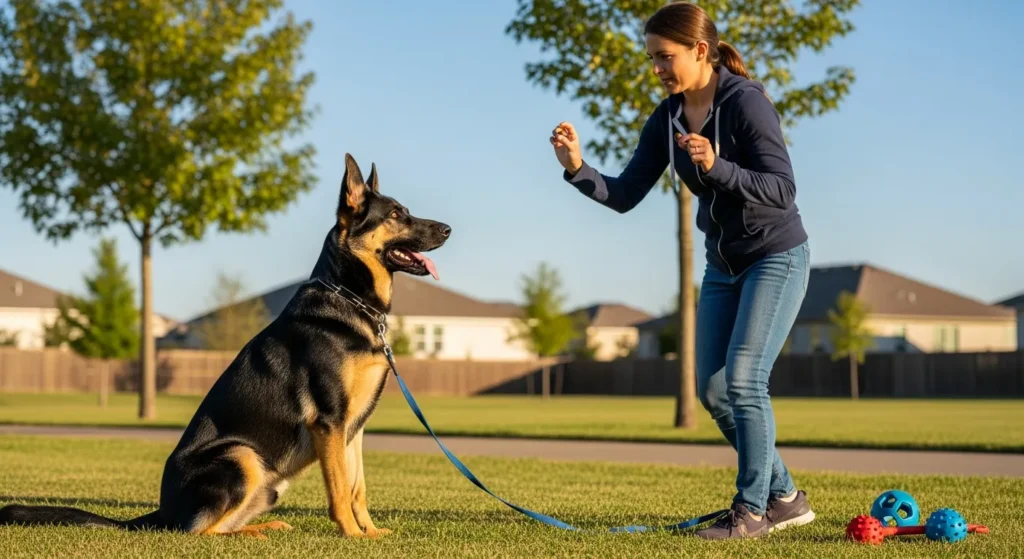
Your German Shepherd is smart. Like, scary smart.
That’s amazing… until that big brain and big body start bouncing off your walls, barking at every noise, and dragging you down the street. If you’ve ever searched “dog training German Shepherd“ at 11 p.m. while your pup zooms laps around the couch, you’re not alone.
The good news? With the right structure, training, and outlets, German Shepherds (GSDs) become incredible family companions, loyal, calm, and reliable.
This guide walks you through how to understand your Shepherd, what to focus on at each life stage, and practical training steps you can start using today.
Understanding The German Shepherd Mind And Body
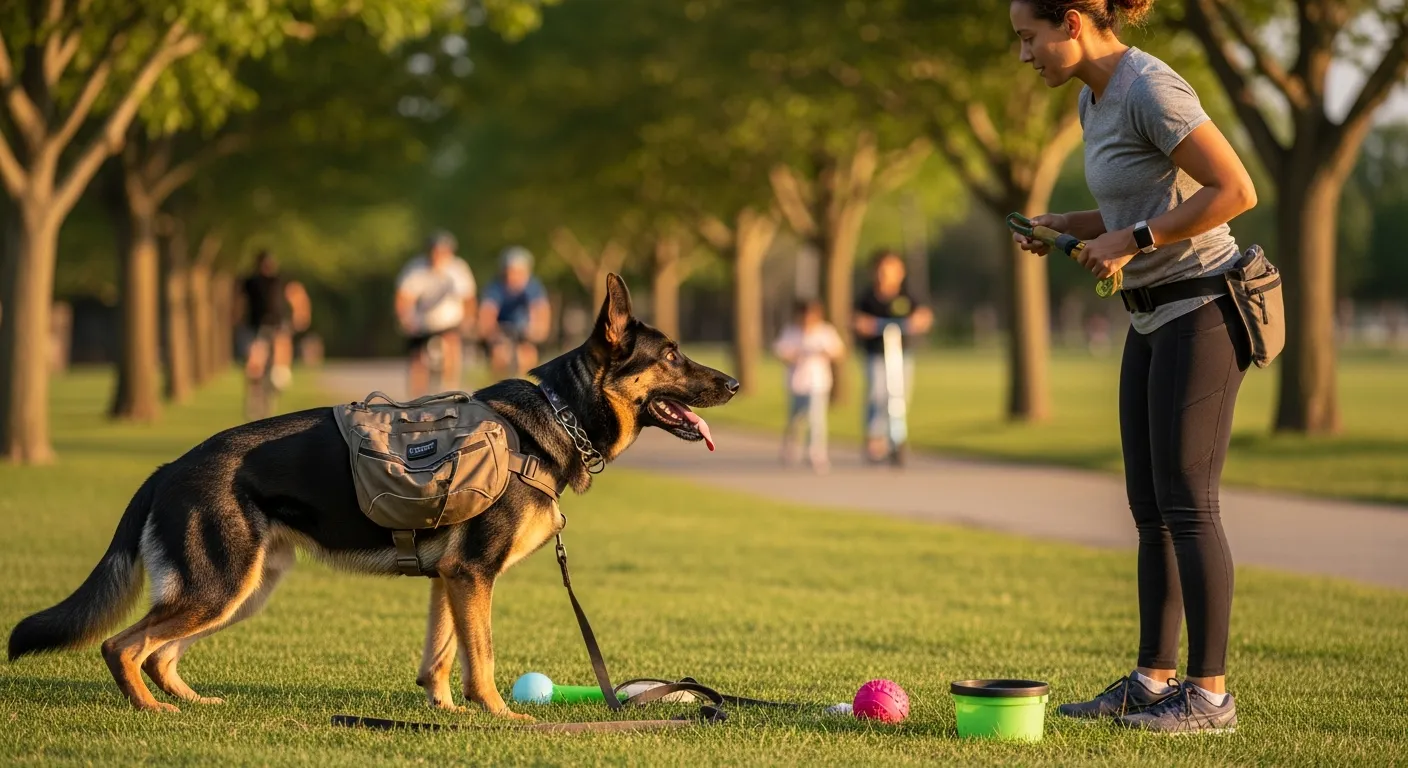
German Shepherds weren’t bred to be couch ornaments. They’re working dogs, originally developed to herd and protect livestock. That background still shows up in how your dog thinks, moves, and reacts.
Working-Breed Roots: What This Means For Daily Life
Because of their working roots, GSDs usually:
- Need 1.5–2 hours of physical exercise a day as adults (per many working-breed guidelines)
- Crave jobs: scent games, obedience, fetch with rules, or even carrying a backpack on walks
- Do best with clear structure and routines
For everyday life, that means your German Shepherd will usually be happiest when you:
- Give daily outlets for running, sniffing, and problem-solving
- Use training as a game, not a chore
- Avoid long stretches of boredom with nothing to do
A tired GSD is rarely a problem. A bored one almost always is.
Temperament Traits Owners Should Plan Around
Most German Shepherds share a few key traits:
- Loyal and people-focused – They bond deeply and want to be close to you.
- Highly intelligent – They pick up routines (good and bad) fast.
- Sensitive to your body language and tone – Harsh corrections can shut them down or make them anxious.
- Natural guarding instincts – They may be wary of strangers or react to strange sounds.
- High prey drive – Squirrels, bikes, and joggers can be very exciting.
When training, this means you’ll want to:
- Be consistent and fair, no random rules
- Use calm, confident leadership, not yelling
- Take guarding tendencies seriously and guide them early so they learn what’s a real threat and what isn’t
How Age, Genetics, And Past Experiences Shape Behavior
GSDs mature slowly. Many don’t feel truly “adult” until around 2–3 years old. That means teenage energy and testing boundaries can last a while.
Behavior is shaped by:
- Genetics – Working-line GSDs often have higher drive and energy than show or pet lines.
- Early socialization – Positive experiences with people, dogs, sounds, and handling between 8–16 weeks are critical.
- Past experiences – Rescue Shepherds may carry fear or anxiety from previous homes.
Your job isn’t to create a totally different dog: it’s to guide the dog you have. With patience and steady training, even nervous or over-the-top Shepherds can gain confidence and control.
Setting Your German Shepherd Up For Training Success
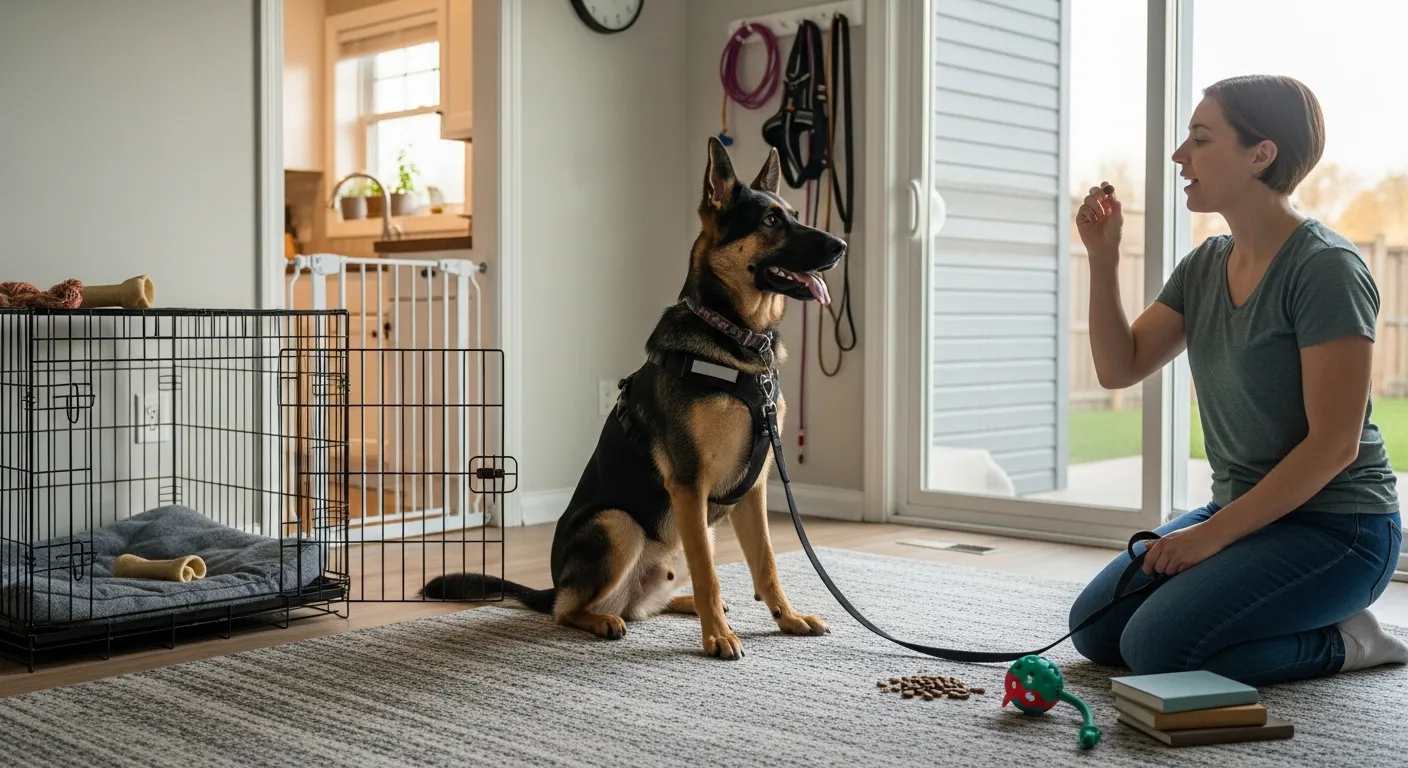
Before you worry about advanced obedience, set up your home and routines so your dog can actually succeed.
Home Setup: Safe Spaces, Management, And Routines
A few simple tools make life easier:
- Crate – Acts like a safe den, helps with house training, and prevents destruction when you can’t supervise.
- Baby gates or playpen – Limit access when you’re busy.
- Designated potty area – Keeps house training clear and consistent.
Create predictable routines:
- Regular wake, walk, feed, play, rest cycles
- Short crate time with a chew after exercise
- Calm evening routine to help your dog wind down
Routines help prevent separation issues and make your German Shepherd feel secure.
Choosing The Right Rewards, Gear, And Training Schedule
Most GSDs are very food- and toy-motivated. Use it.
Rewards:
- Small, soft treats your dog loves
- Tug toys or balls for high-drive dogs
- Praise and petting, especially for more handler-focused Shepherds
Gear:
- A flat collar or well-fitted front-clip harness for daily walks
- A 6-foot leash for training and manners
- A long line (20–30 ft) for recall practice
Aim for:
- 2–4 short sessions a day (5–10 minutes) rather than one long marathon
- Training built into daily life: asking for a sit before meals, doors, or leashing up
Positive Reinforcement Basics And Clear Communication
German Shepherds respond extremely well to positive reinforcement, rewarding what you want instead of only correcting what you don’t.
Focus on:
- Marking the moment your dog does the right thing: say “Yes.“ or click, then treat
- Keeping your voice warm and calm
- Avoiding constant command repetition, say it once, then help your dog succeed
Example: Teaching “sit”
- Hold a treat by your dog’s nose.
- Slowly move it up and back over their head.
- As their bottom hits the floor, say “Yes.“ and give the treat.
- Add the word “sit” once your dog is offering the behavior easily.
This simple style of communication works for nearly every cue.
Essential German Shepherd Puppy Training Foundation
If you’ve got a young pup (around 8–16 weeks), this is prime time. What you do now can prevent most of the big behavior problems later.
House Training, Crate Training, And Alone-Time Skills
For house training a GSD puppy:
- Take them out after waking, eating, playing, and chewing.
- Reward with a treat within 1–2 seconds of them finishing potty.
- Supervise indoors: use a leash or baby gate so they can’t wander off to have accidents.
Crate training tips:
- Feed meals in the crate with the door open at first.
- Start with 5–10 minute crate sessions while you’re home.
- Offer a safe chew or stuffed Kong so the crate feels positive.
Alone-time skills are key for a Velcro breed. Practice short departures (even just stepping outside for a minute) and return calmly.
Name Recognition, Focus, And Calm Behaviors
You want your Shepherd to snap their attention to you when you say their name.
Name game:
- Say your dog’s name once.
- When they look at you, say “Yes.“ and treat.
- Repeat in different rooms, then with mild distractions.
Also teach calm settling early:
- Reward your pup when they lie down on a mat near you.
- Use a chew or lick mat to help them relax.
- Keep play sessions short and end with a quiet activity.
Bite Inhibition, Chewing, And Gentle Mouth Manners
Puppy nipping is normal, especially in herding breeds. You’re teaching your GSD how to use their mouth gently, not never to use it.
When your puppy bites too hard:
- Say “Ouch” or “Too soft” in a neutral tone.
- Immediately end play or redirect to a toy.
Support good chewing by:
- Providing a variety of safe chews and toys
- Rotating them to keep things interesting
- Making sure your pup is getting enough sleep, overtired pups bite more
Impulse-control games (like waiting for a release word before grabbing a treat) help turn that intense mouth into a controlled one.
Core Obedience Skills Every German Shepherd Should Know
Between about 3–24 months, your GSD is soaking up training like a sponge, while also pushing boundaries. This is the perfect time to lock in core obedience.
Reliable Sit, Down, Stay, And Place
Focus on a few basics and make them rock-solid:
- Sit & Down – Used for everyday manners, like greeting people.
- Stay – Helps with door dashing, impulse control, and safety.
- Place – Go lie on a mat or bed and stay there until released.
Tips:
- Ask once, then help your dog with a lure or hand signal.
- Reward generously when they hold a stay, then slowly add distractions.
- Practice “place” during dinner or when guests arrive to prevent chaos.
Loose-Leash Walking And Heel For A Strong Dog
GSDs are powerful. Teaching loose-leash walking early will save your shoulders.
Start in a low-distraction area:
- Reward your dog any time they’re walking by your side with a slack leash.
- If they pull, stop. Wait for the leash to loosen or call them back to you, then continue.
- Use lots of direction changes so they learn to pay attention.
Later, you can add a more precise “heel” cue for busy areas or when you need tight control.
Come When Called And Emergency Cues
A solid recall can literally save your dog’s life.
- Start with a long line in a quiet space.
- Say your recall word (“Come.“ or a special word), cheerfully.
- When your dog turns toward you, praise like crazy and reward with top-tier treats or a favorite toy.
- Never call your dog to you for something they hate (like ending all fun every time) without sometimes making it worth it.
You can also teach an emergency cue, a special word that means “run to me, and the party of your life awaits.“ Use it rarely, reward massively.
Socialization And Confidence Building In A Powerful Breed
For a strong, protective breed like the German Shepherd, how you socialize matters as much as how much you socialize.
Safe People And Dog Introductions
Your goal isn’t to make your GSD love everyone. It’s to help them feel comfortable and neutral in normal situations.
- Introduce to friendly, calm adults and kids.
- Pair new people with treats tossed on the ground, no forced petting.
- Choose well-mannered, vaccinated dogs for playdates, not the dog park chaos.
Watch your dog’s body language and keep interactions short and positive.
Traffic, Noise, And City-Life Exposure
If you live in an urban or suburban area, plan gentle exposure to:
- Cars, bikes, buses, and scooters
- Construction sounds, fireworks noises (via low-volume recordings)
- Elevators, stairs, and different surfaces
Keep sessions brief and predictable. Let your dog observe at a distance where they’re still relaxed, then reward calm behavior.
Preventing Fear, Reactivity, And Over-Guarding
Many reactive Shepherds didn’t start out “aggressive”, they were overwhelmed or under-guided.
To prevent issues:
- Avoid stacking triggers (no three scary things at once).
- Step in early: if your dog is staring hard, barking, or stiff, calmly move them away.
- Reward them for checking in with you instead of fixating on triggers.
If you’re already seeing lunging, intense barking, or snapping, it’s worth talking to a force-free trainer or veterinary behaviorist. Early help goes a long way.
Common German Shepherd Behavior Challenges And How To Handle Them
Because of their energy and brains, GSDs tend to show the same handful of behavior issues. The good news: they’re very fixable with the right plan.
Nipping, Jumping, And Overexcitement
These usually come from too much energy and not enough impulse control.
Try this combo:
- Pre-visit exercise before guests arrive (walk + a bit of training)
- Ask for a sit or place before anyone greets your dog
- If your dog nips or jumps, end attention and turn away
Reward four paws on the floor and calm behavior heavily.
Pulling, Lunging, And Reactivity On Leash
Leash reactivity often looks like:
- Barking and lunging at dogs or people
- Exploding at the end of the leash but fine off-leash
Support your Shepherd by:
- Increasing mental and physical exercise so their bucket isn’t already full
- Crossing the street or moving away to a distance where they can still think
- Rewarding them for looking at you instead of staring at the trigger
Consistent practice in easier environments first is key.
Separation Distress, Barking, And Destructive Behavior
Because they’re so attached to their people, some GSDs struggle alone.
To help:
- Keep good crate and alone-time habits from the start
- Use food puzzles, stuffed Kongs, or safe chews when you leave
- Avoid long, emotional goodbyes or dramatic reunions
If your dog is panicking (salivating, trying to escape, injuring themselves), talk with your vet or a qualified trainer. True separation anxiety needs a step-by-step plan and sometimes medical support.
Exercise, Mental Stimulation, And A Sustainable Routine
Dog training for a German Shepherd isn’t just about commands, it’s about daily lifestyle. The right mix of exercise and down-time keeps your dog balanced.
.German Shepherd playing fetch for exercise
Daily Physical Exercise Needs By Life Stage
General guidelines (always adjust for your individual dog and your vet’s advice):
- Puppies: Several short play sessions, gentle walks, and exploration. Avoid long runs or repetitive jumping to protect growing joints.
- Young adults (1–3 years): Often need 1.5–2 hours of exercise split across the day, walks, off-leash running in safe areas, fetch with rules.
- Adults/Seniors: Still need daily movement but with intensity tailored to their joints and health.
Remember: more frantic fetch isn’t always better. Blend movement + thinking.
Mental Enrichment: Jobs, Games, And Training Sessions
Mental work can tire a GSD faster than another mile of walking.
Try:
- Scent games: Hide treats around a room or yard and say “Find it.”
- Puzzle feeders or snuffle mats for meals.
- Trick training: Spin, bow, roll over, tidy up toys.
- Short obedience refreshers: sits, downs, place, and recall with distractions.
A smart dog with a job is a much calmer roommate.
Balancing High Drive With Rest And Relaxation
Some German Shepherds will go and go… until they crash. You want to teach them how to switch off.
- Use a “settle“ cue on a mat and reward calm lying down.
- Build in quiet time after exercise and meals.
- Avoid constant ball throwing or all-day stimulation, it can create a dog who can’t relax.
Rest is when your dog’s brain processes learning and their body recovers. It’s as important as the training itself.
Conclusion
Staying Patient, Consistent, And Connected With Your German Shepherd
Living with a German Shepherd can feel like raising a furry toddler in a superhero suit. There will be days you’re proud and days you’re frustrated. That’s normal.
If you remember nothing else, keep these points in mind:
- Structure beats chaos. Clear routines and house rules help your GSD relax.
- Train the dog you have. Adjust for their age, genetics, and past experiences.
- Work their brain and body. Daily exercise plus mental games prevent most behavior problems.
- Reward what you like. Catch your Shepherd being good and pay them well for it.
- Ask for help early. A positive, force-free trainer with German Shepherd experience is worth their weight in gold.
With patience, consistency, and a bit of humor, you can turn all that energy and intelligence into exactly what you wanted from “dog training German Shepherd“: a confident, well-mannered best friend who’s truly part of the family.