
Your dog stares at you, squats on the rug… and you’re grabbing paper towels again. It’s frustrating, a little gross, and you might be wondering if you’re messing this whole potty training thing up.
You’re not. Potty training is one of the most common struggles dog owners face, and it’s completely fixable with a simple, consistent plan.
In this guide, you’ll learn exactly how to train a dog for potty, step by step, using kind, vet-approved methods that work for puppies, adult dogs, and rescues. No yelling, no rubbing noses in messes, just clear routines and positive reinforcement that help your dog understand where to go and build habits that last.
Understanding How Dogs Learn Potty Habits
Dogs don’t come pre-programmed to know that grass is okay and your rug isn’t. They learn toileting habits through association, routine, and instinct.
- Dogs naturally avoid soiling the place they sleep and rest. This is why crates and small safe areas can help.
- They repeat what gets rewarded. If going outside earns them treats and praise every time, they’re more likely to choose that.
- They form strong habits around timing and location. Same door, same spot, same words, that’s how you create a clear picture in their mind.
According to organizations like the American Veterinary Society of Animal Behavior (AVSAB), positive reinforcement and consistency are the most effective and humane ways to teach bathroom habits.
How Puppies And Adult Dogs See Toileting
Puppies and adult dogs are at very different stages physically and mentally.
Puppies:
- Have tiny bladders and weak control.
- Often need to go every 1–2 hours when awake.
- Can’t “hold it” very long overnight at first.
- Don’t yet know the difference between carpet, tile, or grass.
For puppies, potty training is mostly about management and timing, getting them to the right spot before they have a chance to fail.
Adult dogs:
- Physically can hold their bladder longer.
- May have old habits (good or bad) from previous homes.
- Sometimes need to “re-learn“ where to go in a new environment.
Adult dogs, including rescues, usually learn faster than young puppies, especially if you use high-value rewards (like tiny bits of cooked chicken or cheese) every time they potty in the right place.
Realistic Timelines And What “Trained” Really Means
“Potty trained” doesn’t mean your dog will never have another accident again. It means they are:
- Reliable about going in the right place most of the time.
- Able to hold it long enough for a normal schedule.
- Giving you clear signals (standing by the door, pacing, whining) when they need out.
Typical timelines:
- Young puppies (8–16 weeks): You’re mostly preventing accidents. Expect several weeks of close supervision.
- Puppies (4–6 months): Many are mostly reliable with a steady routine, but still have occasional accidents.
- Adult dogs: With consistent training, many can be mostly potty trained in 2–4 weeks.
Progress isn’t perfectly linear. You’ll have good days and “how is there this much pee in one dog?“ days. That’s normal.
Setting Your Dog Up For Success Before You Start
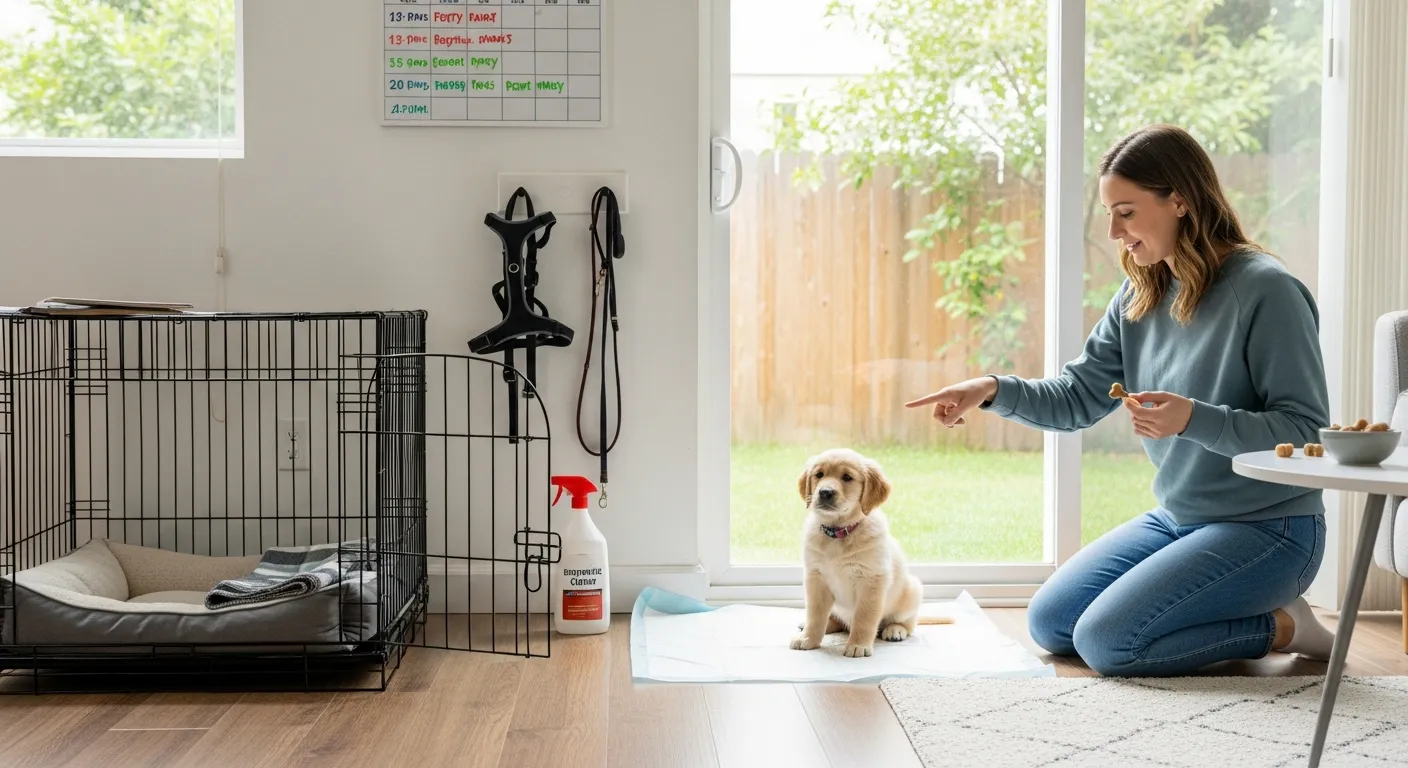
You’ll save yourself a lot of stress if you set up your home and routine before serious potty training starts.
Choosing Indoor Vs. Outdoor Potty Spots
Outdoor potty training is the long-term goal for most families, but sometimes you need an indoor option, especially in:
- High-rise apartments
- Extreme weather (very hot, very cold, storms)
- Medical situations for you or your dog
Outdoor spot:
- Choose a small, consistent area of grass, gravel, or a specific corner of the yard.
- Always walk your dog to the same spot first.
Indoor spot (if truly needed):
- Use puppy pads, a grass pad, or a dog litter box.
- Place it in the same area, away from the dog’s bed and food.
- Avoid giving both full indoor freedom and outdoor options at the same time, this can confuse your dog. Pick one primary plan and stick with it.
Many owners start with pads and then gradually move them closer to the door, then outside, until the dog fully transitions outdoors.
Essential Supplies You Actually Need
You don’t need a shopping cart full of gadgets. The basics are simple:
- Crate sized so your dog can stand, turn around, and lie down, but not big enough to use one corner as a bathroom.
- Leash and collar/harness for escorted potty trips.
- High-value treats for rewards (tiny, soft pieces work best).
- Enzymatic cleaner (like Nature’s Miracle or a similar pet-safe brand) to break down urine/poop odor.
- Puppy pads or grass pad (optional, for indoor setups).
These tools help you guide your dog, limit accidents, and fully clean any mistakes so they’re not drawn back to the same spot.
Creating A Predictable Feeding, Water, And Sleep Schedule
Dogs’ bodies quickly adjust to routine. A consistent schedule helps you predict when they’ll need to go.
Aim for:
- Meals at the same times each day (for most dogs, 2–3 set meals).
- Water available, but avoid huge gulps right before a long crate time or bedtime.
- Potty breaks:
- Right after waking up (morning and naps)
- After meals
- After active play or zoomies
- Before bed
When you feed your dog on a schedule, their bathroom needs become more predictable, which makes accidents much easier to prevent.
Step-By-Step Potty Training Routine
Here’s the basic daily structure for how to train a dog for potty in a gentle, effective way.
- Supervise closely whenever your dog is loose.
- Use a crate or pen when you can’t watch them.
- Take them to the potty spot often, on a leash.
- Use a simple cue word, like “go potty” or “toilet.”
- Reward immediately with treats and praise when they go.
Repeat this routine every day. Consistency is what turns random successes into a solid habit.
Using Crates, Pens, And Tethers Safely And Kindly
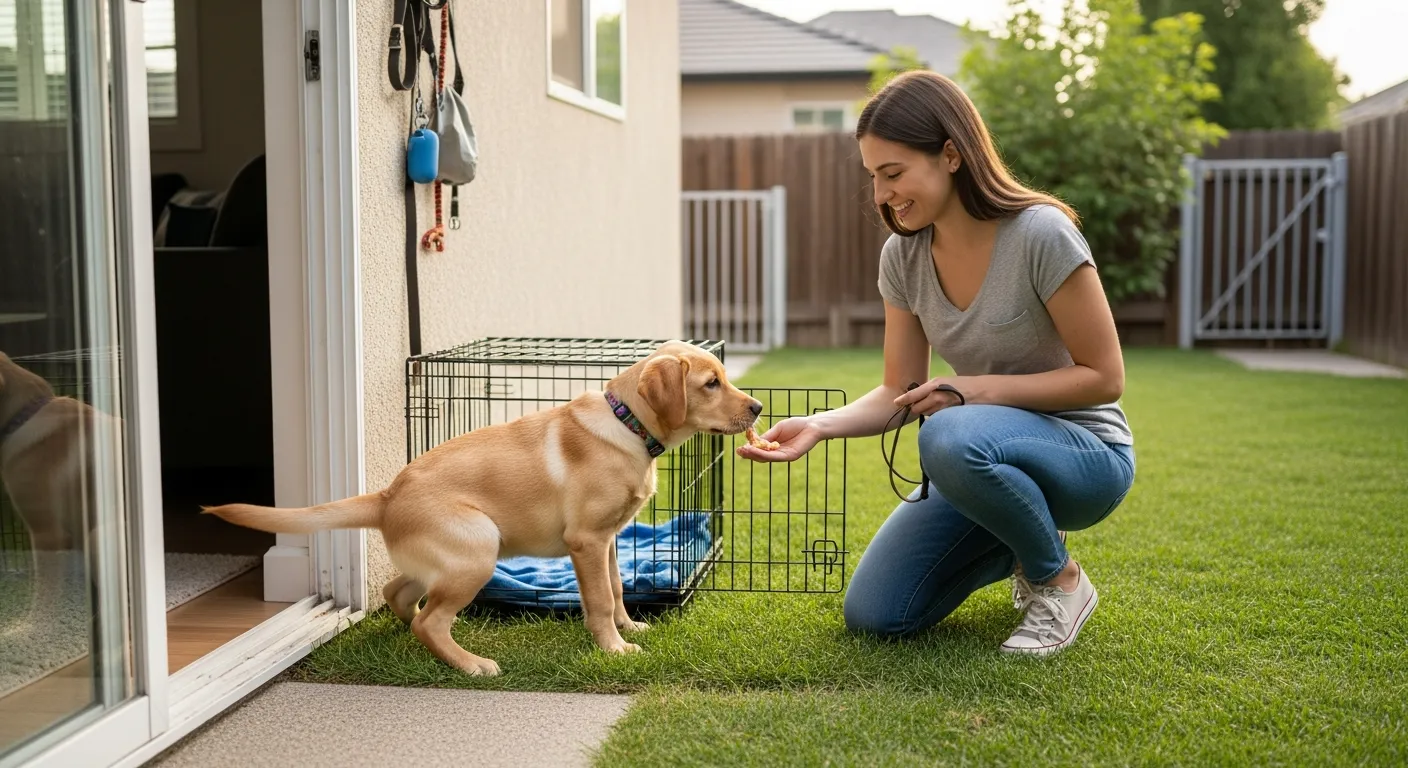
Crates and pens aren’t punishments: they’re management tools and can feel like safe dens when introduced kindly.
- Choose a crate just big enough for comfort, not big enough for a bathroom corner.
- Give a soft bed or blanket and a safe chew.
- Never use the crate to punish your dog.
When you’re home but busy (Zoom calls, cooking), you can also:
- Use a tether: clip your dog’s leash to your belt or a sturdy piece of furniture near you, so you see early signs like sniffing and circling.
- Use a small playpen with their bed and maybe a pad (if you’re doing indoor training).
According to the American Veterinary Medical Association (AVMA), short, positive crate times combined with frequent breaks can help prevent separation stress and accidents.
When To Take Your Dog Out (Age-Based Guidelines)
A simple rule for puppies is: age in months + 1 = approximate maximum hours they can hold it (during the day), and that’s a maximum, not a goal.
Puppies:
- 8–12 weeks: every 1–2 hours when awake
- 3–4 months: every 2–3 hours
- Always:
- Right after waking
- Right after eating or drinking
- After play and excitement
Adult dogs:
- First thing in the morning
- After meals
- After long naps
- Before bed
- At least every 4–6 hours during the day, depending on the dog
If your dog is having accidents between scheduled trips, shorten the time between outings.
What To Do At The Potty Spot, Step By Step
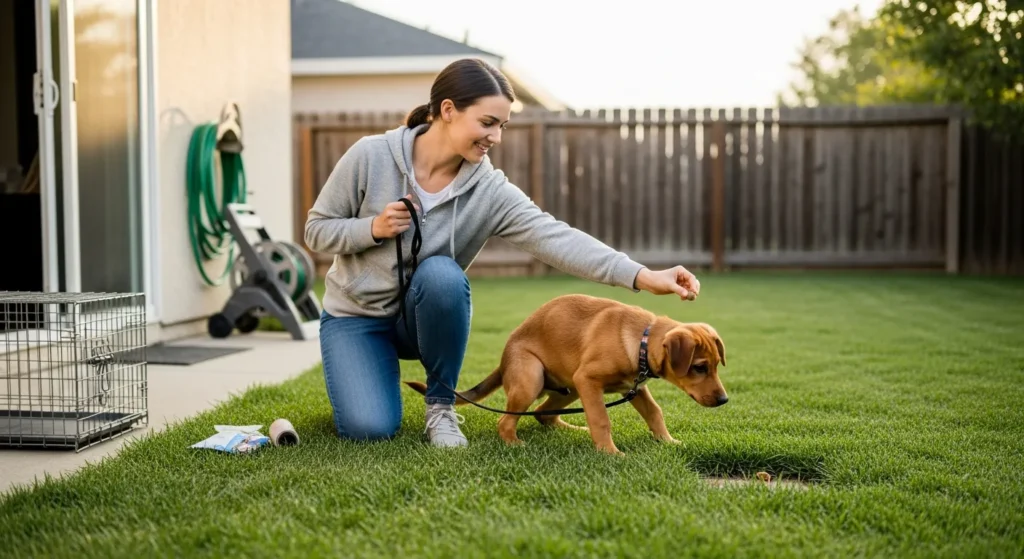
- Put your dog on a leash, even in a yard. This keeps them focused.
- Walk to the same potty spot each time.
- Stand still and say your cue softly: “Go potty“, just once or twice.
- Ignore attempts to play: you’re there on a mission.
- When your dog starts to go, stay calm and quiet.
- As soon as they finish: praise warmly and give treats right there.
- After a successful potty, then you can add a short walk or playtime. This teaches them that going outside doesn’t end the fun.
If your dog doesn’t go within 5–10 minutes, bring them back inside and place them in the crate or tethered area for 15–20 minutes, then try again.
Rewarding The Right Behavior At The Right Time
Timing is everything.
- Give the treat within 1–2 seconds of finishing.
- Use a happy voice: “Yes. Good potty outside.”
- Use small, super tasty rewards so you can repeat this many times a day.
You can also pair potty success with:
- A quick game of tug
- A sniffy walk
- Gentle petting and praise
Over time, your dog will learn: “Going here makes amazing things happen.“
Handling Accidents Calmly And Correctly
Even with the best routine, accidents happen. How you respond can either speed up training or set it back.
Never punish:
- Don’t yell.
- Don’t rub their nose in it.
- Don’t drag them to the spot and scold.
These old myths create fear and confusion. Many behavior experts, including the AVSAB, warn that punishment can lead to anxiety, hiding to pee, or even fear of going in front of you.
Instead, think of accidents as information, not failure. Your dog simply wasn’t given a good enough chance to succeed.
How To Clean So The Smell Truly Goes Away
Dogs have powerful noses. If they can still smell urine, they’re more likely to reuse the same spot.
To clean properly:
- Blot up as much liquid as possible with paper towels.
- Use a pet-safe enzymatic cleaner according to the label (this breaks down the urine proteins, not just masks the smell).
- Avoid steam-cleaning urine spots on carpet, heat can set the stain and odor.
- Let the area dry completely before letting your dog back there unsupervised.
If an area has been used repeatedly, you may need to re-clean a few times or use a blacklight to find hidden spots.
What To Do When You Catch Your Dog In The Act
If you see your dog actively peeing or pooping indoors:
- Say a neutral interrupter, like “Oops.“ or “Ah-ah.”
- Gently and quickly move them to the potty spot (pick up small dogs: guide larger ones on leash).
- If they finish in the correct spot, praise and treat.
- Clean the indoor area thoroughly with an enzymatic cleaner.
No drama, no anger, just redirect and reward the right choice.
Common Mistakes That Slow Down Potty Training
Some very normal habits can accidentally confuse your dog:
- Inconsistent schedule – different feeding and potty times every day.
- Too much freedom too soon – letting a puppy roam the whole house before they’re reliable.
- Crate that’s too big – they can sleep on one side and pee on the other.
- Rushing back inside immediately after they potty – they learn to hold it to extend outdoor time.
- Not rewarding every success in the early weeks – dogs repeat what pays off.
If progress stalls, tighten up supervision, go back to basics, and reward like crazy for outdoor (or correct indoor spot) potty.
Special Situations: Apartments, Work Schedules, And Older Dogs
ogsReal life isn’t always “perfect routine and fenced yard.“ You can still have great potty training with a bit of planning.
Potty Training In Apartments And Without A Yard
If you live in a high-rise or don’t have an easy outdoor space:
- Choose a consistent indoor spot (pads, grass pad, or dog litter box).
- Place it away from the dog’s bed and food.
- Keep your dog on leash to that spot when it’s potty time, just like going outside.
- Reward generously for using the pad.
If your long-term goal is outdoor-only:
- Start with pads near the door.
- Move the pad slightly closer to the door every few days.
- Eventually place the pad just outside or replace it with grass.
Apartment dwellers often benefit from a midday dog walker or neighbor check-in, especially for young puppies.
Balancing Potty Training With A Busy Workday
If you’re away from home for 8–10 hours, your dog simply can’t hold it that long, especially puppies or seniors.
Options that help:
- Hire a dog walker or pet sitter for a midday break.
- Ask a trusted neighbor, friend, or family member to help for the first few weeks.
- Use a larger playpen with a defined toilet area (pads on one side, bed and water on the other) if you absolutely can’t get help.
When you’re home:
- Stick to a very consistent routine.
- Give your dog plenty of chances to go outside.
- Keep rewards high-value so using the right spot feels worth it.
Helping Rescue Or Older Dogs Learn New Habits
Rescue dogs and seniors are absolutely trainable, but they may come with:
- Confusing past experiences
- Weak bladder control
- Anxiety in new environments
To help them:
- Treat them like a big puppy at first: frequent breaks, supervision, and crates/pens used kindly.
- Keep a simple journal for a week: when they eat, drink, and have accidents. You’ll start seeing patterns.
- Use extra-high-value rewards outside, think tiny bits of meat or favorite snacks.
If an older dog suddenly starts having accidents after years of being clean, talk with your vet. Issues like urinary tract infections, arthritis, or cognitive decline (doggy dementia) can affect bathroom habits.
When To Worry: Medical Or Anxiety-Related Issues
Sometimes potty problems aren’t just a training issue. The American Animal Hospital Association (AAHA) and other veterinary groups recommend ruling out medical causes when house-soiling doesn’t improve with consistent training.
Red Flags That Call For A Vet Visit
Call your veterinarian if you notice:
- Sudden increase in accidents after being previously trained
- Straining or crying while peeing or pooping
- Blood in urine or stool
- Very frequent urination or tiny dribbles
- Strong, unusual urine odor
- Drinking much more water than usual
- Licking the genital area excessively
- Accidents only when jumping, running, or after long naps (could be pain-related)
These can be signs of:
- Urinary tract infections (UTIs)
- Bladder stones
- Kidney disease
- Diabetes
- Arthritis or spinal pain
Your vet can do a physical exam and urine tests to find and treat the cause, which often solves the potty problems.
When To Reach Out To A Trainer Or Behaviorist
If your dog is healthy but you’re still struggling, a professional can make a big difference.
Consider reaching out if:
- You’ve followed a consistent routine for 3–4 weeks with little improvement.
- Your dog seems fearful about going outside or in front of you.
- Your dog has separation anxiety and soils only when left alone.
- You feel overwhelmed or stuck.
Look for a force-free, reward-based trainer or a veterinary behaviorist. They’ll help you adjust your plan, read your dog’s body language, and troubleshoot issues specific to your home.
Conclusion
Potty training isn’t about having a “perfect” dog. It’s about giving your dog clear guidance, a predictable routine, and lots of chances to get it right.
If you:
- Stick to a consistent schedule
- Use crates, pens, and supervision to prevent accidents
- Take your dog to the same potty spot and use a simple cue
- Reward generously and immediately for success
- Handle accidents calmly and clean them well
…you’ll see steady progress, even if there are a few bumps along the way.
Be patient with yourself and your dog. In a few weeks or months, today’s messes will just be part of the story you tell about how far you both came, and you’ll be enjoying a much cleaner, calmer home together.