
You bring home a new dog, buy a nice kennel, set it up… and your dog looks at it like it’s a trap. Or they go in fine, but the second you close the door? Whining. Barking. Scratching.
Kennel training (also called crate training) doesn’t have to feel stressful or “mean.“ When you do it right, your dog’s kennel becomes a cozy den where they choose to relax, nap, and feel safe.
In this guide, you’ll learn how to kennel train your dog using kind, science‑based steps you can actually follow in real life, even if you work, have kids, or adopted a nervous rescue.
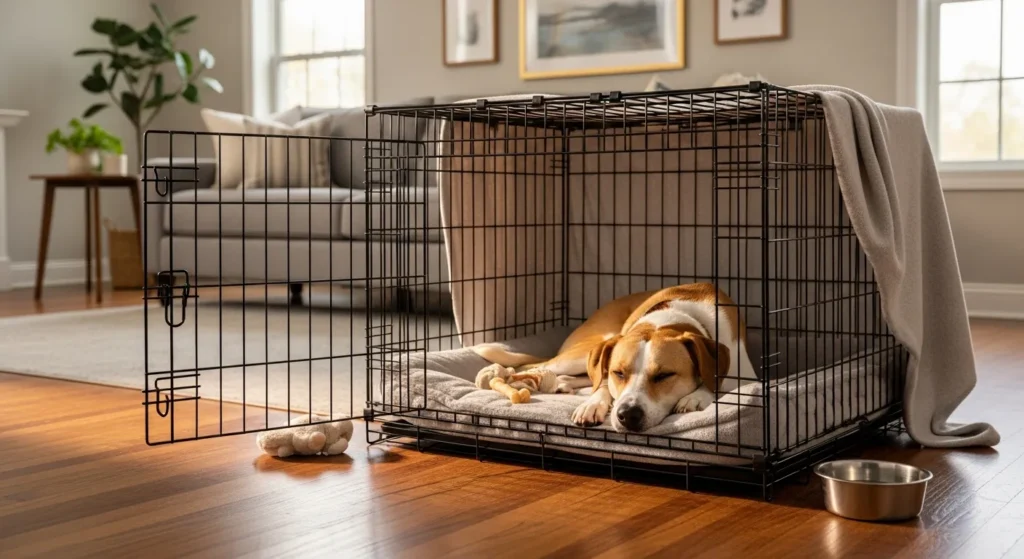
Feature image idea: A relaxed dog lying in an open crate with soft bedding, looking content and sleepy.
Why Kennel Training Can Be Good For Your Dog
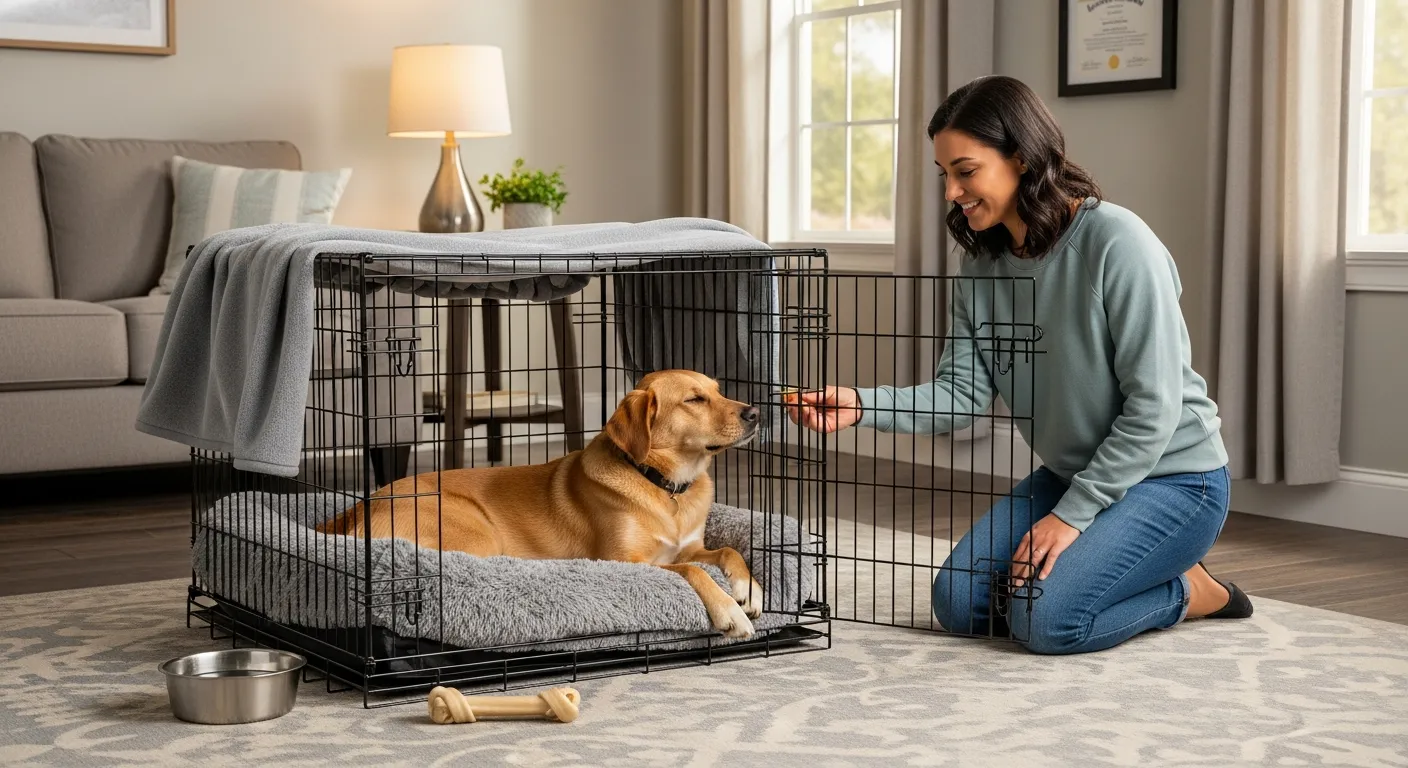
Kennel training isn’t about “locking your dog up.“ It’s about giving them a safe bedroom of their own.
When it’s done with positive reinforcement, most dogs learn to love their kennel. The American Kennel Club and many veterinary behaviorists support crate training when it’s used correctly and not for punishment.
Here’s how a kennel can help your dog (and you):
- Security and calm: Dogs are natural den animals. A covered, cozy space helps many of them relax, especially during storms, guests, or busy evenings.
- Easier housetraining: Dogs usually avoid going to the bathroom where they sleep. A properly sized kennel makes potty training much more predictable.
- Prevents destruction and accidents: While you’re out or distracted, the kennel keeps your dog from chewing cords, getting into trash, or eating something dangerous.
- Safer travel: If your dog is used to a crate, car rides, vet visits, and boarding are less scary.
- Helps with routine: A kennel is a clear signal: now it’s time to rest. That’s great for hyper puppies and anxious dogs.
The key is that the kennel is always a good place, never a time‑out corner or punishment zone.
How To Choose The Right Kennel Or Crate
Before you start crate training, you need the right setup. The “perfect” kennel is one your dog feels safe in and you can use easily every day.
Size guidelines
Your dog should be able to:
- Stand up comfortably
- Turn around fully
- Lie stretched out on their side
…but not have so much extra space that they can sleep at one end and potty at the other.
For puppies, many wire crates come with dividers you can move as they grow. That way you don’t have to keep buying new sizes.
Types of kennels
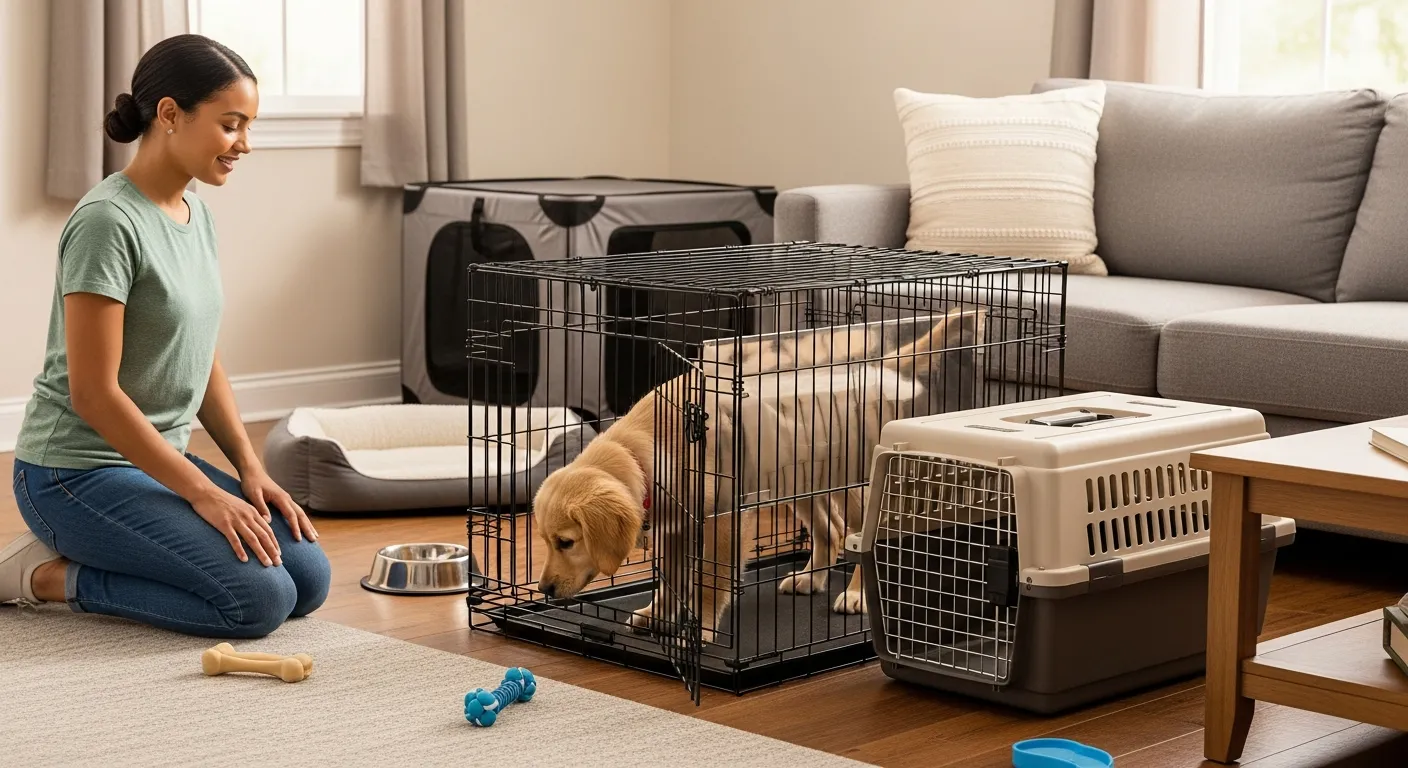
- Wire crates: Great airflow, good visibility, often foldable. Many dogs like being able to see what’s going on.
- Plastic/travel kennels: Cozier, more “den‑like,“ and airline‑friendly. Nice for dogs who feel safer with less visual stimulation.
- Soft crates: Best for calm, already‑trained dogs. Not ideal for chewers or escape artists.
Whatever you pick, place it in a family area, think living room or bedroom, not a cold garage or isolated basement. Your dog shouldn’t feel banished when they’re in their kennel.
Setting Up A Safe, Cozy Kennel Space
You want your dog’s first impression to be, “Oh, that looks comfy,“ not “Yikes, a cage.“
Make it inviting:
- Add a soft bed or crate mat (washable is best).
- Include 1–2 favorite toys, like a plush or a safe chew.
- For anxious dogs, drape a light blanket over part of the kennel to make it feel den‑like without blocking airflow.
- Toss in an item with your scent, an old t‑shirt can actually help.
If your dog will be in the kennel for longer stretches during the day:
- Use a non‑spill water bowl or bottle attached to the side.
- Make sure the kennel is away from direct sun, drafts, or loud speakers/TVs.
Double‑check that all latches work properly and there are no sharp edges or bent wires.
Optional supporting image idea: Close‑up of a nicely set‑up crate with a bed, one toy, and a light cover over the top.
Step‑By‑Step Kennel Training Plan
Here’s a practical kennel training plan you can follow in short sessions. Most dogs progress over days to a few weeks. Nervous rescues may need longer, and that’s okay.
Introducing The Kennel Positively
First goal: your dog should think, “Good things live in there.“
- Keep the door open. Let the kennel be part of the room, not a trap.
- Toss treats inside. Gently toss a few high‑value treats or kibble into the crate and let your dog go in and out on their own.
- Use a happy cue word. Say something like “kennel” or “crate” in a cheerful tone as they step in, then praise warmly.
- Feed near or in the kennel. Start with the bowl just inside the door, then gradually move it farther back.
Do this several times a day for just a few minutes. Don’t shove or force your dog inside: that can create a long‑lasting fear.
Building Up Short, Happy Stays
Once your dog is willingly going in for food or treats, you can start closing the door briefly.
- Ask them to “kennel,“ toss a treat in, and when they go in, gently close the door.
- Stay nearby and count 30–60 seconds, then quietly open the door before they fuss.
- Give them a treat inside the crate for staying calm, then release with a cue like “okay.”
- Slowly build up to 1–5 minutes with you in the same room.
Tip: Stuffed Kongs or long‑lasting chews can turn kennel time into “special snack time,“ which most dogs love.
Extending Kennel Time And Adding A Routine
Now you’re aiming for 10–30 minutes with you occasionally out of sight.
- Ask for “kennel,“ give a treat, close the door.
- Sit in the room for a few minutes, then get up and walk around.
- Step out of the room for very short periods (start with 30 seconds, then 1–2 minutes, and so on).
- Vary your timing so your dog doesn’t predict exactly when you’ll return.
A few important rules:
- Always give a potty break before longer kennel time.
- Pair kennel time with exercise. A dog who’s had a walk or play session will relax much more easily.
- If your dog starts to whine, wait for even one second of quiet, then calmly let them out. You don’t want to accidentally reward the noise.
Most healthy adult dogs can comfortably stay crated for 3–4 hours during the day at first, building up to around 4–6 as they mature and settle, but always aim for plenty of exercise and interaction outside of that.
Nighttime Kennel Training And Sleep Tips
Nighttime kennel training is usually easier, because your dog is naturally more tired.
- Place the kennel near your bed at first so your dog can see and hear you. This is especially helpful for puppies and rescues.
- Do a calm bedtime routine: potty break → short cuddle or quiet play → “kennel” with a small treat → lights down.
- If your dog whines, first ask: Do they need to potty? Young puppies often genuinely need a break every few hours.
- For a puppy potty trip: keep it boring and quiet. Out, pee/poop, back in the kennel. No big play session.
Try not to let your dog out because they’re fussing, or they’ll learn that crying = door opens. Aim to wait for a tiny pause, then follow through on what they need (like a potty trip or just reassuring presence).
Creating A Daily Kennel Routine That Works For Real Life
For kennel training to stick, it has to fit your real schedule, not some perfect fantasy routine.
Here’s a simple structure many families use:
- Morning: Potty → breakfast in the kennel → short rest in crate while you get ready → potty → walk/play.
- Midday (if needed): Short kennel time after a walk or play session, not when your dog is super wired.
- Before you leave: Potty → a few minutes of calm play or training → kennel with a safe chew → you leave quietly.
- Evening: Family time out of the kennel, then a short crate break during dinner if needed, then bedtime routine.
A few tips to keep things smooth:
- Put your dog in the kennel 5–20 minutes before you actually leave so your departure doesn’t become a big emotional moment.
- Mix it up sometimes: kennel them for short, happy periods even when you’re not leaving, so they don’t only associate it with alone time.
- Keep good things happening in and around the kennel, treats, chews, calm praise.
This kind of predictable rhythm is great for anxious dogs: it helps them know what’s coming next.
Common Kennel Training Problems And How To Fix Them
Most dogs hit at least one bump in the road with crate training. Here’s how to handle the big ones without losing your mind.
Separation Whining And Barking
If your dog howls the second you close the door, they’re probably overwhelmed.
Try this:
- Go slower. Shorten kennel sessions to where your dog can stay calm, even if that’s just 30 seconds.
- Practice lots of mini sessions during the day, 10–20 times of “in, treat, close door, 30 seconds, out.”
- Only let them out when they’re quiet, even if it’s just a brief pause between barks.
- Work on independence outside the crate too: settle on a bed while you move around, play with puzzle toys alone, etc.
If your dog is panicking (heavy panting, drooling, trying to break out), talk with your vet or a certified trainer/behaviorist. True separation anxiety sometimes needs a more customized plan.
Refusing To Go In Or Rushing Out
If your dog slams the brakes in front of the kennel:
- Go back a step and just reward any interaction, sniffing the crate, putting one paw inside, etc.
- Toss treats or a favorite toy just inside the doorway so they can grab it, then gradually a little farther back.
- Never physically shove them in: that can create a long‑term fear.
For dogs who blast out the second the door opens, teach a quick “wait”:
- Crack the door slightly.
- If they start to push out, close it gently.
- When they pause, open again.
- Release with “okay.“ and praise.
They’ll learn that calm behavior makes the door open faster.
Accidents In The Kennel
If your dog is peeing or pooping in the crate, don’t panic, but don’t ignore it either.
Check these things:
- Crate size: Is it too big? Use a divider for puppies.
- Schedule: Young dogs may need potty breaks every 1–3 hours when awake. Take them out right before kennel time.
- Clean‑up: Use an enzymatic cleaner so they don’t keep smelling old accidents.
If accidents continue and your dog is otherwise house‑trained, ask your vet to rule out issues like urinary tract infections or digestive problems.
Special Considerations For Puppies, Rescues, And Senior Dogs
Different dogs need slightly different kennel training plans.
Puppies
Puppies have tiny bladders and big feelings.
- A common guideline is: age in months + 1 hour (while awake) as a max crate stretch, and even that can be a lot for some pups.
- Expect nighttime potty breaks.
- Keep kennel sessions short and positive, with plenty of naps and play in between.
Rescue and shelter dogs
Many rescues have unclear or rough histories. Some might have been crated too much or in stressful conditions.
- Move extra slowly with each step of training.
- Keep sessions extremely positive and low‑pressure.
- Consider keeping the kennel door open for days or weeks at first and just rewarding any calm time they choose to spend inside.
If your rescue shows signs of real panic (not just mild whining), it’s worth talking with your vet or a certified trainer. A customized plan can make a big difference.
Senior dogs
Older dogs can absolutely learn to love a kennel, but they may have:
- Joint stiffness or arthritis
- More frequent potty needs
- Less tolerance for hard or cold surfaces
Make it easier by:
- Using extra‑soft bedding or an orthopedic mat
- Making sure the entry is low enough so they don’t have to hop
- Giving more frequent potty breaks and shorter stretches in the crate
Optional supporting image idea: An older dog resting comfortably in a crate with a thick orthopedic bed and the door open.
Conclusion
Kennel training your dog isn’t about perfection, it’s about progress and trust.
If you keep the kennel cozy, go at your dog’s pace, and pair it with treats, play, and routine, it can become one of your best tools for a calmer, safer home. You get less destruction and chaos: your dog gets a familiar den where they can truly relax.
If you ever feel stuck, check in with your vet or a qualified trainer. With a little patience and the right plan, most dogs, from tiny puppies to seniors and rescues, can learn that their kennel is a safe place to rest, not something to fear.